
Punjab cuisine
Shahi Zarda
Shahi Zarda is a traditional Punjab Pakistani dish. Shahi Zarda is the jewelled sweet rice of Pakistani celebrations — fragrant basmati tinted gold with saffron, studded with dry fruits, nuts, and cardamom. A Mughal-era dish that still anchors every walima and mehndi spread.
Zarda without a wedding feels slightly illegal in Punjab.
Zarda was a fixture in Mughal royal kitchens, made with aged basmati, rose water, expensive saffron, and whatever nuts the emperor was feeling that day. Somewhere between 16th-century Delhi and present-day Lahore, it became democratised — now it's served in enormous deghs at every Pakistani celebration, from Eid to engagement parties to funerals. Yes, funerals. It is genuinely that important. The key to great zarda is balance: sweet but not cloying, fragrant but not perfumed-soap-level, with each rice grain separate and glistening. It's not as simple as it looks.
Ingredients
Instructions
- SOAK AND PREP: Rinse the basmati chawal (rice) under cold water until the water runs clear — this removes excess starch that would make the grains sticky. Then soak in fresh cold water for 30 minutes. While soaking, bloom your saffron: warm 4 tbsp milk or water to just hand-hot, add saffron threads, stir once, and set aside. If using yellow food colour, dissolve it in 2 tbsp water separately. Blanch and prep your nuts — remove skins from pistachios and almonds by soaking in boiling water for 5 minutes, then slipping off the skins. FUN FACT: Soaking rice is not optional for zarda — dry rice added to boiling water fractures unevenly and the grains split, giving you a mushy clumped result instead of the separate, glistening grains zarda is famous for.
- PARBOIL THE RICE: Bring a large pateela (pot) of water to a rolling boil — at least 4-5 litres for 3 cups of rice. Add the crushed elaichi pods (cardamom), laung (cloves), and a pinch of salt. Drain the soaked rice and add it to the boiling water. Cook uncovered on high heat for exactly 6-7 minutes — the rice should be 70% cooked. HINT: Test by pressing a grain between your fingers — it should still have a firm, chalky centre. If it's fully cooked at this stage, your zarda will turn to mush in the dum step. Immediately drain through a colander and spread on a tray to stop cooking.
- MAKE THE SUGAR SYRUP: In a wide degh (heavy pot), combine the cheeni (sugar) with 1.5 cups water. Bring to a boil over medium heat, stirring until sugar dissolves. Then stop stirring and boil for 3-4 minutes until you have a light one-string syrup. WHY: The sugar syrup coats and sweetens the rice during dum without waterlogging it. If the syrup is too thin (no-string), the rice absorbs too much water and becomes mushy. If too thick (hard-crack stage), it makes the grains crunchy. One-string means a thin thread forms when you pinch a drop between thumb and forefinger and pull apart. Add the bloomed saffron and food colour (if using) to the syrup and stir.
- FRY THE NUTS AND RAISINS: In a separate small pan, heat 2 tbsp of the ghee over medium heat. Add the drained kishmish (raisins) first — they plump and caramelise in about 1 minute, so watch them. Remove and set aside. In the same pan, fry the slivered badam (almonds) until faintly golden, about 2 minutes. Then fry the pista (pistachios) for 1 minute — they colour faster than almonds. If using kaju (cashews), fry until just pale gold, about 90 seconds. HINT: Each nut has a different burn point. Fry them separately or in order from slowest to fastest to avoid turning your expensive garnish into expensive charcoal.
- COMBINE RICE AND SYRUP: Pour the remaining ghee into the degh over medium heat. Add the parboiled, drained rice and gently fold it through the ghee — try not to break the grains. Pour the saffron sugar syrup over the rice and fold gently to combine. The rice will immediately turn golden. Add the kewra water and gulab jal (rose water). Fold in the fried raisins and half the nuts. HINT: At this stage the rice looks wet and underdone — this is correct. The remaining moisture and steam in the dum step will finish the cooking.
- DUM (STEAM): To do dum, first spread the rice in an even layer in the degh. Place a flat tawa (griddle) under the degh — this distributes heat and prevents the bottom from burning. Cover the degh with a tight-fitting lid. If the lid isn't tight, seal the edges with a rope of atta dough (flour dough) or cover with foil first and then the lid. Cook on high heat for 2 minutes, then reduce to absolute minimum — the lowest your stove will go — for 15-20 minutes. WHY: Dum (which means 'breath' in Urdu) uses trapped steam to gently finish cooking the rice from all sides simultaneously. The grains swell and separate, absorbing the saffron syrup flavour. No direct heat on the rice — only gentle, diffused steam.
- REST AND SERVE: Turn off the heat and leave the lid on for 10 minutes without opening — this resting period lets the steam settle and the flavours meld. Then open and gently fluff the rice with a fork or the handle end of a chamcha (ladle) — use broad, gentle lifting motions rather than stirring to keep grains intact. Taste a grain: it should be sweet, fragrant with cardamom and saffron, perfectly cooked through, and each grain separate. Transfer to a serving platter and scatter the remaining fried nuts on top. The presentation should be golden and jewelled — this is a celebration dish, so make it look like one.
Chef's Secrets
- The sugar syrup quantity matters: too much and the rice drowns, too little and it's under-sweet. 1.5 cups water to 2 cups sugar gives you the right volume for 3 cups rice.
- Never skip the tawa (flat griddle) under the pot for dum — direct heat on the bottom creates a crunchy, burnt bottom layer (tadig in Persian cooking — delicious on its own but not what we want here).
- Zarda tastes better the next day once the saffron and kewra flavours have deepened. Make it the night before an event and reheat gently with a sprinkle of water.
- For a Lahori festive presentation: spread the zarda on a large thali (tray) and decorate with silver warq (edible silver leaf), extra saffron threads, and a ring of alternating green pistachios and white almonds around the edge.
- If your zarda comes out sticky instead of separate: your sugar syrup was too thin (add less water next time) or you overcooked the rice in the parboiling step. Both are fixable with experience.
Common Questions
How long does Shahi Zarda take to make?
Total time is 1h 20m — 40m prep and 40m cooking.
How many servings does this recipe make?
This recipe makes 8 servings, and is rated medium difficulty.
Which region of Pakistan is Shahi Zarda from?
Shahi Zarda is from Punjab, Pakistan — one of the country's most distinctive culinary traditions.
What do you serve with Shahi Zarda?
Serve warm or at room temperature — zarda is flexible. Traditional accompaniment at weddings alongside biryani and korma. Also served on its own at Eid breakfast. Goes unexpectedly well alongside a cup of chai.
Goes Well With
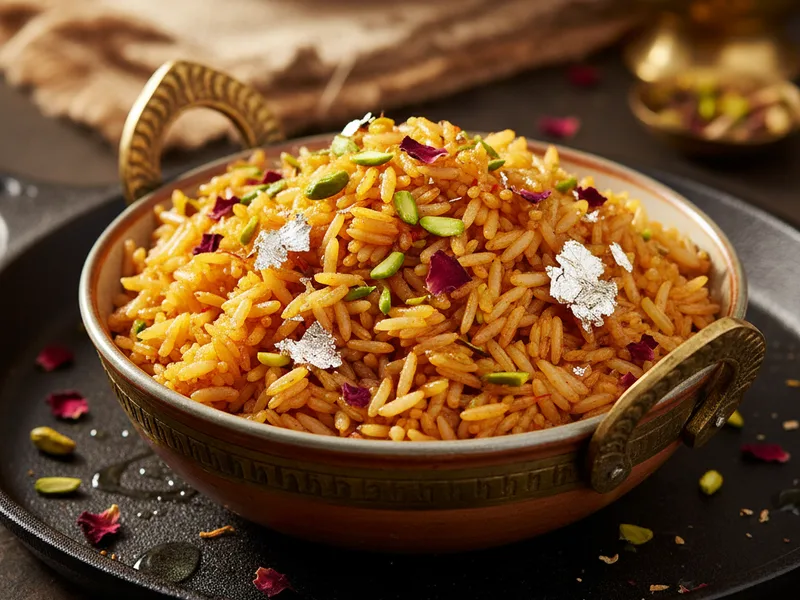
Zarda — Pakistani Wedding-Style Sweet Rice
Vibrant Punjabi wedding-style zarda made with fragrant basmati rice cooked in sugar syrup with saffron, fried in ghee and loaded with nuts, raisins and khoya for an indulgent celebration rice dessert. The showstopper at every Pakistani walima and mehndi.
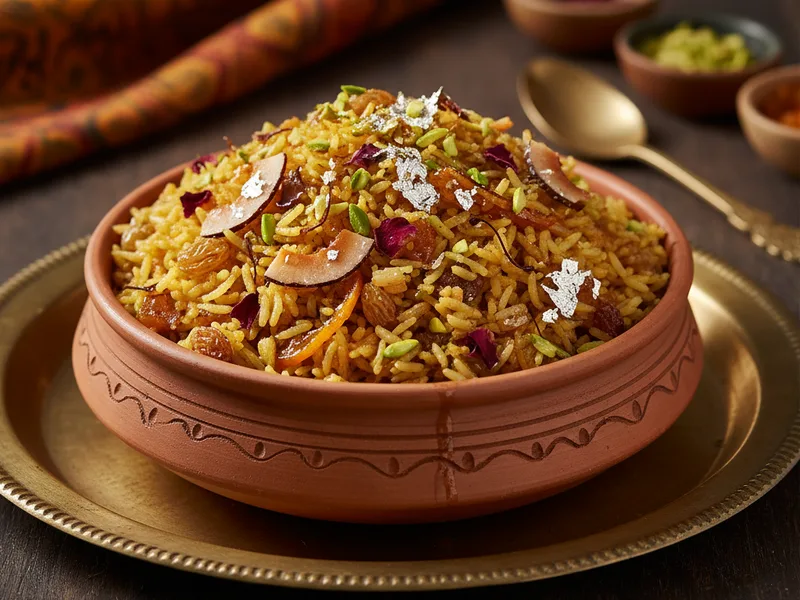
Sindhi Zarda — Fragrant Sweet Rice with Coconut
Sindhi-style zarda sets itself apart with the addition of fresh coconut and a heavier hand with rose water, creating a fragrant sweet rice dessert with a distinctly coastal character. Made for Sindhi celebrations and eid gatherings, this version is lighter on ghee but big on flavour.
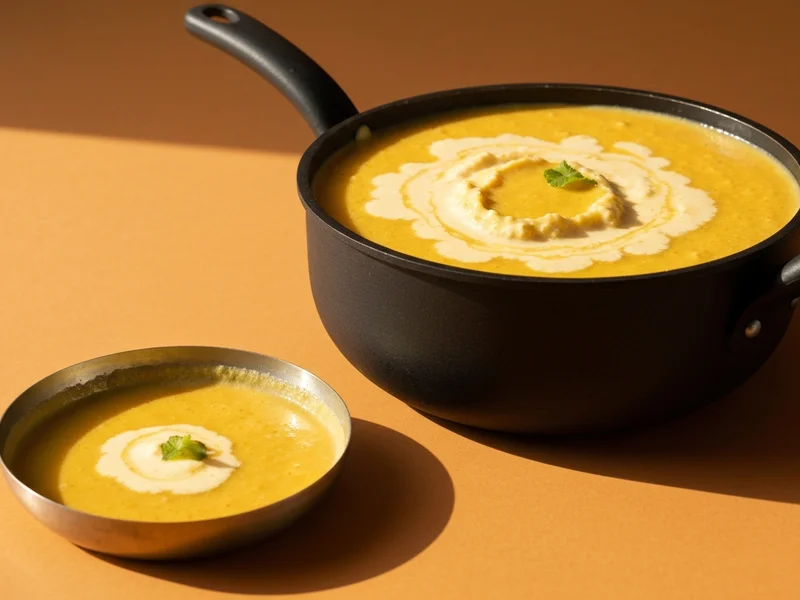
Sheer Khurma
The Eid morning vermicelli pudding — toasted sevaiyan simmered in sweetened milk with dates, pistachios, almonds, and cardamom. No Eid is complete without it.
What Cooks Are Saying
Made this for Eid and everyone asked for the recipe. Highly recommend.
This recipe is a keeper. Followed it exactly and it turned out perfect.
My husband said it's the best he's ever had. Coming from him that means everything!
Leave a Review
Tried this recipe? Share your experience — your review helps other cooks.