
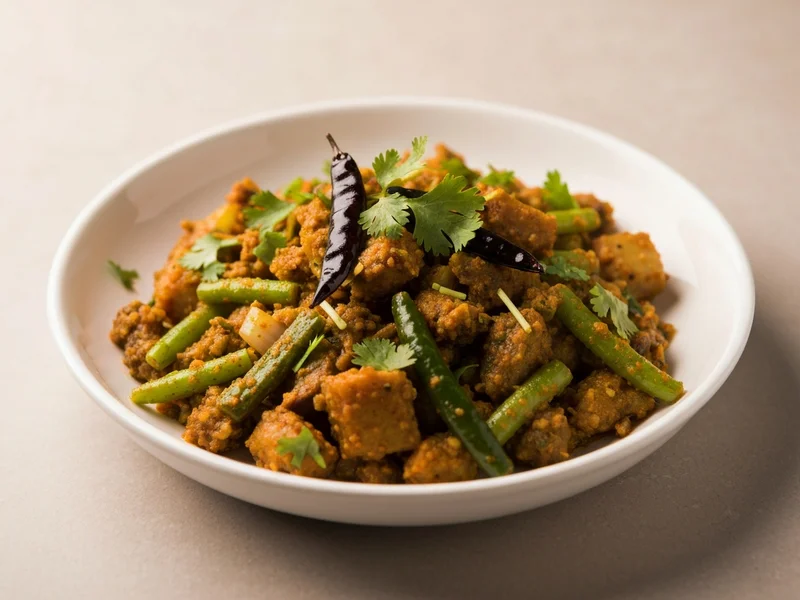
Sindh cuisine
Sindhi Sai Bhaji
Sindhi Sai Bhaji is a traditional Sindh Pakistani dish. Sindh's beloved green mash — spinach, split chickpeas, and whatever vegetables are to hand, slow-cooked together until completely unified into a thick, deeply flavourful green mass. Finished with a sizzling garlic tarka.
Sai Bhaji doesn't look dramatic. It's green. It's mashed. It is, on its surface, the most humble thing in Pakistani cooking. And yet — almost every Sindhi person, when asked about the food they miss most, says Sai Bhaji. There is something almost alchemical about it.
Like Sindhi Kadhi, Sai Bhaji has its roots in the Hindu Sindhi community that was displaced during Partition in 1947. Muslim Sindhi families who grew up eating it alongside their Hindu neighbours kept the recipe alive, and today it is cooked across Sindhi households as their own culinary birthright — a dish that outlasted borders. The technique is almost meditative: everything goes into one pot, water is added, the lid goes on, and you walk away. The vegetables do the work, collapsing into each other until the whole pot becomes one unified, brilliant green whole. The finishing tarka of cumin and garlic is the punctuation mark that wakes it all up.
Ingredients
Instructions
- LOAD THE POT: In a large, heavy-bottomed pateela (pot), add the soaked chana daal, chopped spinach, diced aloo, tomatoes, pyaz, methi patta (fenugreek leaves), half the zeera (cumin), haldi, lal mirch, and 1 tbsp oil. Add 1.5 cups of water and the salt. Give everything a single stir to distribute the spices. WHY: This dish is about unified cooking — everything goes in together so that every ingredient absorbs the flavours of everything else. There's no separate step for frying the onions or sautéing the tomatoes. Trust the process.
- SLOW COOK COVERED: Bring the pot to a boil over high heat, then reduce to medium-low. Cover tightly with a lid. Cook for 35-40 minutes, checking every 10 minutes and stirring once or twice. You're watching for the point where the daal has completely softened and the vegetables have begun to collapse into a unified mass. HINT: If the pot looks dry before the daal is soft, add another ½ cup of water. You want enough moisture to steam-cook everything through, but not so much that it becomes soupy.
- ADD FRESH CORIANDER AND CONTINUE: Once the chana daal is completely soft (it should squish easily between your fingers), add the hara dhaniya (fresh coriander). Stir it in and cook for another 5 minutes uncovered. WHY: Adding coriander in the last few minutes preserves some of its bright green colour and fresh flavour — if you add it at the start it goes grey and loses its vibrancy. At this point the pot should look like a thick, green, collapsed mass of vegetables with very little free liquid.
- MASH THOROUGHLY: Using a heavy chamcha (spoon) or a potato masher, mash the entire contents of the pot vigorously until it becomes a thick, unified, slightly rough-textured mash. This is the goal — not a smooth puree, but not chunky either. Some texture from the daal and potato is good. Sai Bhaji should look like very thick, dark green mashed spinach. Taste and adjust salt. HINT: If you want it smoother, use a hand blender for 10-15 seconds. But in Sindh, grandmothers used just a spoon and strong arms — the rough texture is the authentic version.
- MAKE THE TARKA (THE MOST IMPORTANT STEP): In a small separate tawa (flat pan) or a small karahi, heat the remaining 2 tbsp of oil over high heat until it is smoking hot. WHY: The tarka oil must be very hot — if it's just warm, the garlic and cumin will absorb into the oil slowly and taste oily rather than giving you that explosive sizzle. Add the remaining ½ tsp zeera to the hot oil — they'll pop and crackle instantly. After 10 seconds, add the sliced lehsun (garlic). Fry, stirring constantly, for 30-45 seconds until the garlic turns golden and fragrant. HINT: Watch it like a hawk — garlic goes from golden to burnt in seconds, and burnt garlic will ruin the whole tarka.
- POUR THE TARKA AND SERVE: Pour the sizzling tarka (oil, cumin, and garlic) directly over the mashed Sai Bhaji and stir it through. The sound, the smell, the sizzle — this is the moment. FUN FACT: In Sindhi households, children race to the kitchen when they hear the tarka hitting the bhaji — that sound means food is ready. Serve immediately over plain steamed basmati rice. Sai Bhaji is traditionally eaten with rice in Sindh, not roti — the mash melds with the rice in a way that roti can't replicate.
Chef's Secrets
- The three-leaf combination of palak (spinach) + methi (fenugreek) + hara dhaniya (coriander) is the classic Sai Bhaji formula. You can add sarson ka saag (mustard greens) or suwa bhaji (dill) as variations — both are used in Sindh.
- Chana daal must be properly soaked — at least 30 minutes, ideally 2 hours. Unsoaked daal takes much longer to cook and can leave a chalky, grainy texture in the final mash.
- Sai Bhaji freezes brilliantly. Make a double batch, freeze in portions, and you have a complete healthy meal ready to reheat — just add a fresh tarka when serving.
- For a richer version, use ghee instead of oil for the tarka — the difference is noticeable and worth it for guests.
- Some Sindhi cooks add a small piece of raw mango (kairi) or a squeeze of lemon at the end for additional sourness — try it if your bhaji feels flat.
Common Questions
How long does Sindhi Sai Bhaji take to make?
Total time is 1h 5m — 15m prep and 50m cooking.
How many servings does this recipe make?
This recipe makes 4 servings, and is rated easy difficulty.
Which region of Pakistan is Sindhi Sai Bhaji from?
Sindhi Sai Bhaji is from Sindh, Pakistan — one of the country's most distinctive culinary traditions.
What do you serve with Sindhi Sai Bhaji?
Served only over plain steamed basmati rice in the Sindhi tradition. A small mound of Sai Bhaji beside the rice, the tarka oil pooling at the edges. Achar (pickle) and a whole green chilli on the side for those who want more heat.
Goes Well With
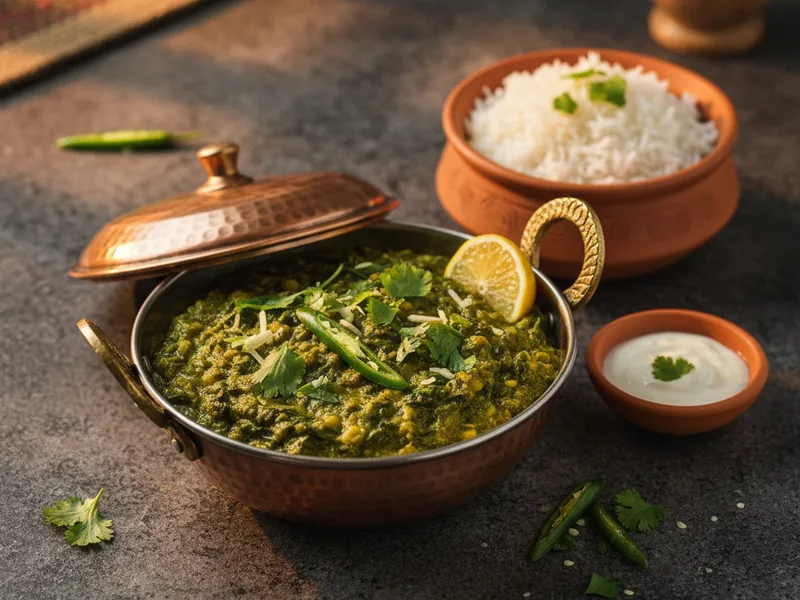
Sai Bhaji Karachi
Sai Bhaji is Sindh's legendary iron-rich mixed greens and dal dish — a nutritional powerhouse simmered until velvety, with a signature tempering of garlic and whole spices that makes it utterly irresistible.
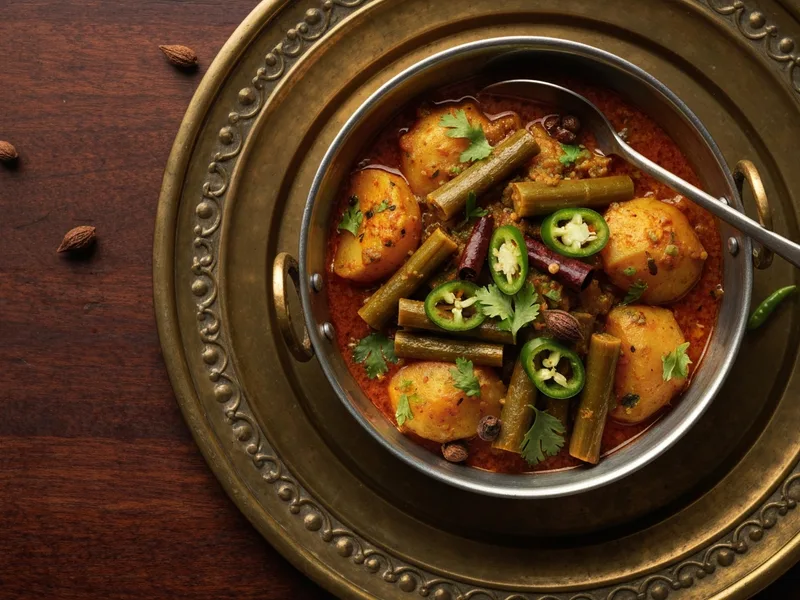
Bhee Aloo (Lotus Stem and Potato Curry)
Crunchy, hollow lotus stems (bhee) cooked with soft cubes of potato in a tangy, spiced tomato-tamarind masala — this Sindhi speciality is one of those dishes that makes you reconsider everything you thought you knew about vegetables. The lotus stem has a satisfying crunch and a mild, almost nutty flavour that soaks up the sour masala beautifully. It looks dramatic on the plate, it tastes even better.
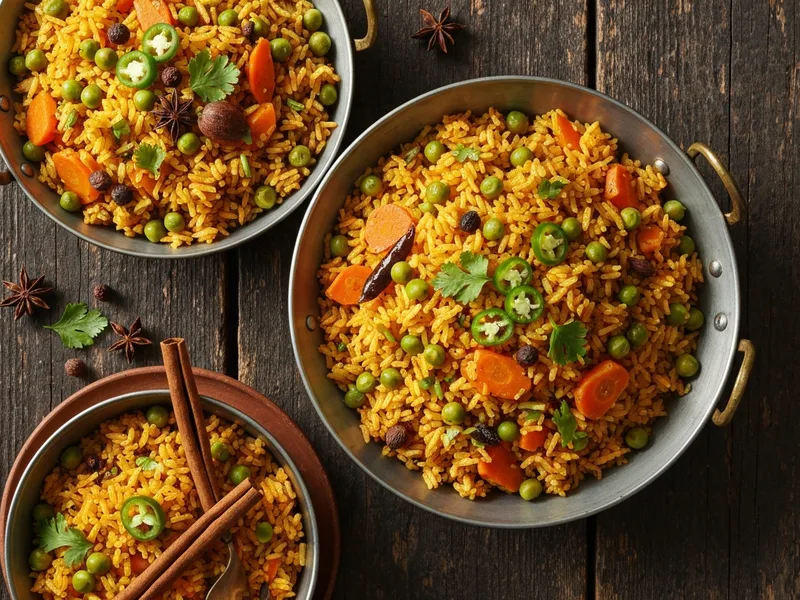
Sindhi Peas and Carrot Pulao
This Sindhi Peas and Carrot Pulao is a colourful, warming rice dish that combines sweet gajar (carrots) and matar (peas) in a lightly spiced, fragrant basmati. A vegetarian side dish that holds its own against any main course.
What Cooks Are Saying
Absolutely delicious! The flavours are spot on — tastes just like what I grew up eating.
Delicious and fairly straightforward. A few steps took longer than expected but the result was worth it.
Leave a Review
Tried this recipe? Share your experience — your review helps other cooks.