
Punjab cuisine
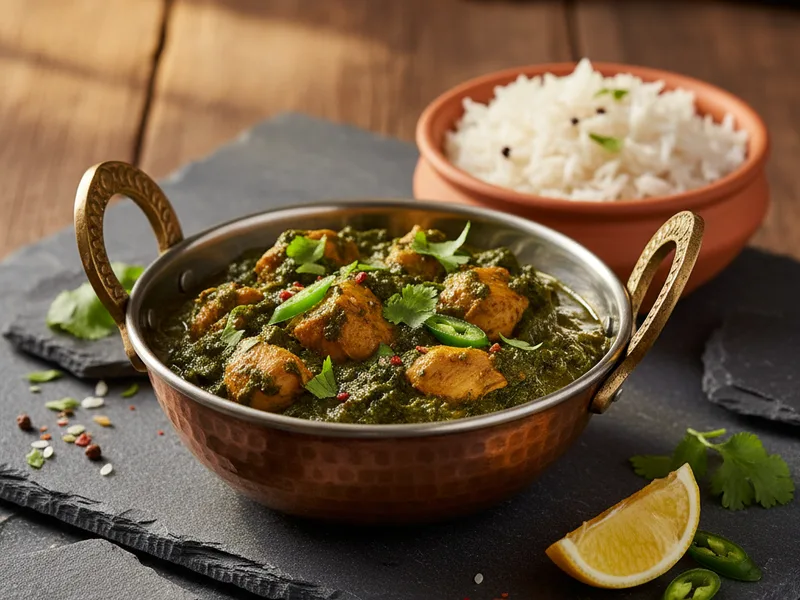
Chicken Saag
Chicken Saag is a traditional Punjab Pakistani dish. Chicken Saag combines succulent chicken pieces with a vibrant spinach curry base, creating a lighter but equally satisfying alternative to the traditional mutton version. Perfect for weeknight indulgence.
Not everyone wants to wait 90 minutes for mutton to tender up — and that's where chicken saag comes to the rescue.
The practice of cooking greens slowly in ghee until they break down completely is documented in Mughal-era cookbooks as a standard preparation method. All the gorgeous green spinach flavour, all the warm spice complexity, in a fraction of the time. Chicken saag has become incredibly popular in urban Punjabi kitchens for precisely this reason: it's weeknight-friendly without feeling like a compromise. Fun fact: chicken has been part of South Asian cooking for over 4,000 years — archaeological evidence of chicken bones in the Indus Valley civilisation (which covered much of modern Pakistan) dates back to 2000 BCE. So when you make chicken saag, you're participating in a very long culinary tradition. The key difference from mutton saag is technique: chicken is more delicate, so we add the spinach earlier and cook more gently to avoid making the chicken dry and stringy. Medium heat is your friend here.
Ingredients
Instructions
- MARINATE CHICKEN: Mix chicken with yoghurt, 1 tbsp adrak lahsun paste, haldi, and a pinch of salt. Set aside 20 minutes minimum. HINT: Even a short marinade makes a noticeable difference in tenderness.
- BLANCH SPINACH: Boil spinach in salted water for 2 minutes, drain, and immediately put in cold water. Blend to a rough paste. This preserves the bright green colour.
- COOK THE BASE: Heat ghee. Brown sliced piyaz until golden, add remaining adrak lahsun paste, cook 2 minutes. Add tamatar, laal mirch powder, dhania powder, and salt. Cook until oil separates, about 8 minutes.
- COOK CHICKEN: Add marinated chicken to masala. Cook on high heat, turning pieces, for 5 minutes to seal. Then reduce heat, cover, and cook 20-25 minutes until chicken is cooked through. HINT: Bone-in chicken releases its own juices — don't add extra water initially.
- ADD SPINACH: Add the spinach paste and mix thoroughly. Cook on medium heat for 8-10 minutes — just enough to meld flavours. Don't overcook after this point.
- FINISH: Add garam masala and stir. Drizzle malai on top if using. Serve immediately.
Chef's Secrets
- Boneless chicken thighs work better than breast — they stay juicy without drying out
- The cold water step after blanching spinach is the trick to keeping the dish green and vibrant
- If the gravy looks too thin, simmer uncovered on medium-high for 5 minutes
- Adding a piece of dried fenugreek (kasuri methi) with the garam masala adds restaurant-quality depth
Common Questions
How long does Chicken Saag take to make?
Total time is 1h 5m — 20m prep and 45m cooking.
How many servings does this recipe make?
This recipe makes 4 servings, and is rated medium difficulty.
Which region of Pakistan is Chicken Saag from?
Chicken Saag is from Punjab, Pakistan — one of the country's most distinctive culinary traditions.
What do you serve with Chicken Saag?
Serve with butter naan or roti. A simple cucumber raita and sliced onion rings round out the meal beautifully.
Goes Well With
Sarson Ka Saag
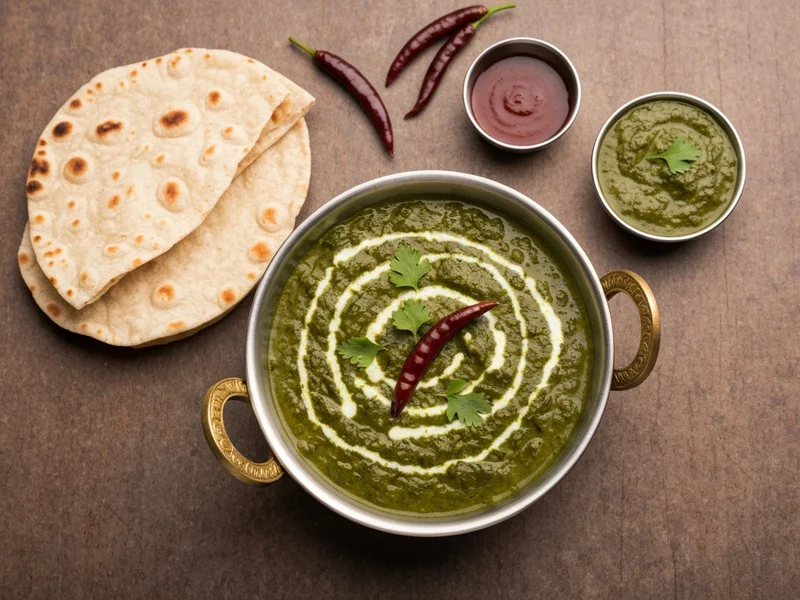
Sarson Ka Saag is Punjab's winter soul food — slow-cooked mustard greens with spinach and spices, finished with ghee-fried garlic and served with makki ki roti (cornbread). A dish so tied to Punjabi identity that it's practically a passport.
Paalak Gosht
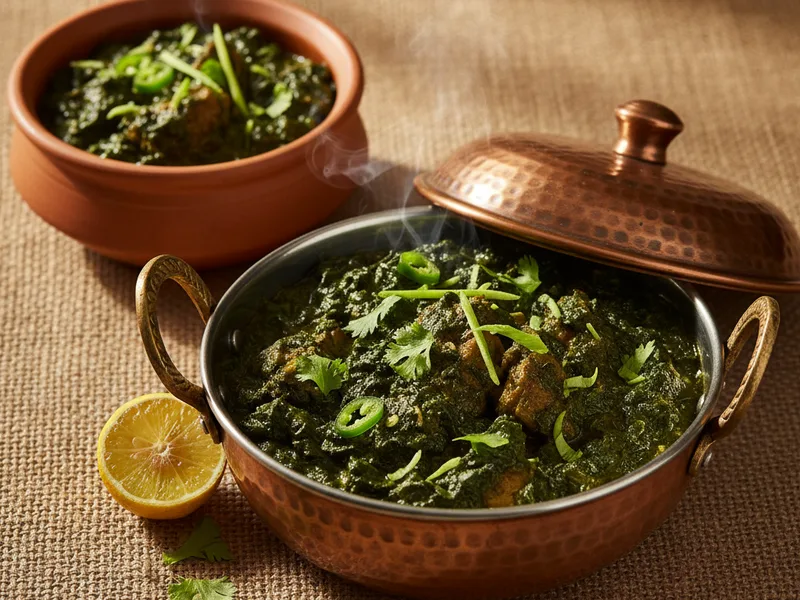
Paalak Gosht is a luxurious Punjabi curry of tender mutton slow-cooked in a vibrant spinach gravy, fragrant with whole spices and enriched with cream. Nutritious never tasted this indulgent.
Methi Gosht
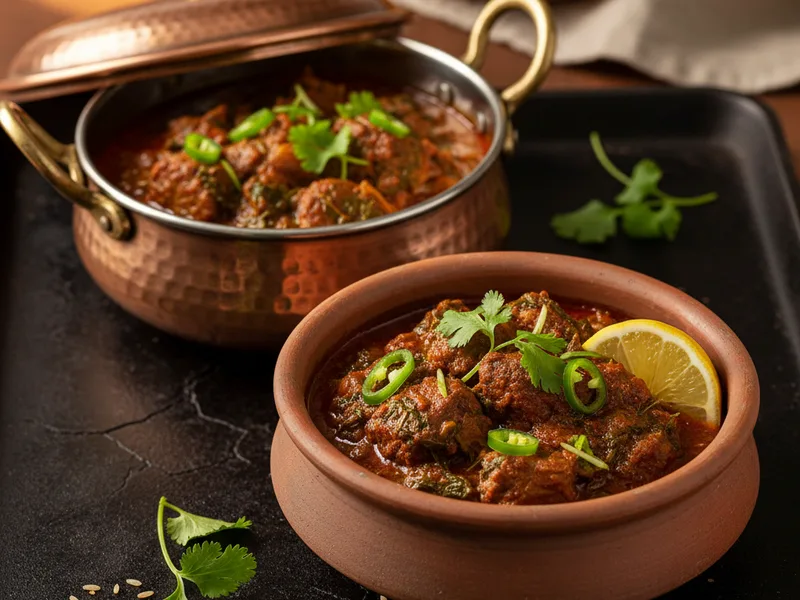
Methi Gosht is a distinctive Punjabi curry where the pleasantly bitter fenugreek leaves transform tender mutton into an aromatic, complex dish unlike any other. An acquired taste that becomes an obsession.
What Cooks Are Saying
Authentic taste, clear steps. Exactly what I was looking for.
It was okay — not quite like what I'm used to but edible. Might try adjusting the spices next time.
Leave a Review
Tried this recipe? Share your experience — your review helps other cooks.