
Punjab cuisine
Zafrani Pulao (Saffron Rice)
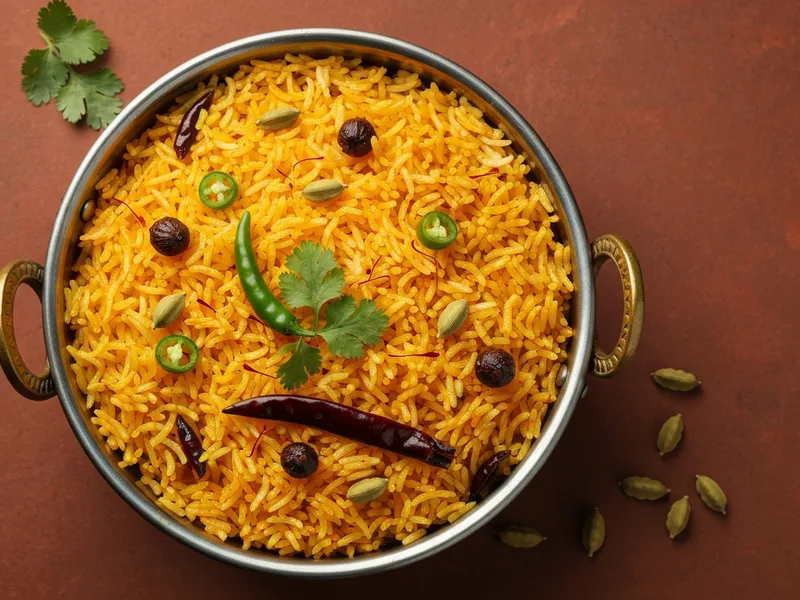
Zafrani Pulao (Saffron Rice) is a traditional Punjab Pakistani dish. Mughal festive rice — long-grain basmati perfumed with saffron-soaked milk, cooked in ghee, and crowned with dry fruits fried until golden. Mildly sweet, deeply fragrant, no meat. Served at weddings alongside korma or nihari.
Zafrani pulao is the rice dish that makes people stop mid-conversation. You walk into a wedding hall, and before you see the food, you smell it — that warm, honeyed, slightly floral saffron fragrance that means something ceremonial is about to happen.
In Pakistan, it's imported from Iran and Kashmir — both famous saffron-producing regions. A small pinch is enough to colour and perfume an entire pot of rice. Mughal cuisine refined the technique of combining saffron with milk and then using that liquid to both colour and flavour rice — and this technique hasn't changed in 400 years. What makes zafrani pulao distinct from regular pulao: (1) it MUST use ghee, not oil — the flavour of ghee and saffron together is incomparable; (2) the dry fruits are fried in ghee first until golden and aromatic, then scattered on top; (3) it's mildly sweet — just barely, like the rice has a whisper of something sweet without being a dessert. At weddings, it's served alongside rich meat curries like korma or nihari — the fragrant, clean rice balances the intense, spiced gravy.
Ingredients
Instructions
- SOAK THE ZAFRAN: Add the saffron strands to 3 tbsp of warm doodh (milk). Stir gently and let sit for at least 20 minutes. The milk should turn a rich golden-orange — this is the zafran releasing its colour and aroma. The fragrance should be floral, warm, and slightly honeyed. This saffron milk is the heart of the dish. HINT: To release more colour and flavour, rub the saffron strands gently between your fingers before dropping them into the milk.
- FRY THE DRY FRUITS: Heat 2 tbsp ghee in a small karai (wok) on medium heat. Add the kaaju (cashews) first — they take longest. Stir for 60-90 seconds until pale golden. Add the slivered badam (almonds) and stir for 45 seconds. Finally, add the kishmish (raisins) — they'll puff up dramatically in about 20-30 seconds. Remove everything immediately with a slotted chamcha (ladle) onto kitchen paper. If you leave them even 30 seconds too long, they'll go from golden to bitter. HINT: Keep the ghee — you'll use it for cooking the rice.
- BUILD THE RICE BASE: In a heavy degh (pot), heat the remaining 2 tbsp fresh ghee plus the fruit-flavoured ghee from step 2 on medium heat. Add the whole spices — elaichi (cardamom), dalchini (cinnamon), laung (cloves). Let them sizzle in the hot ghee for 30-45 seconds until fragrant — you'll smell their oils blooming into the kitchen. This is the foundation of the pulao's fragrance.
- COOK THE RICE (ABSORPTION METHOD): Add 3 cups of water to the pot. Add cheeni (sugar) and namak (salt). Bring to a boil. Drain the soaked basmati and add to the boiling water. Stir once gently. Cook uncovered on medium heat until the water has absorbed to the level of the rice surface and small steam holes appear — about 8-10 minutes. The rice grains will look slightly translucent. Reduce heat to the absolute lowest.
- SAFFRON DRIZZLE AND DUM: Drizzle the zafran milk over the surface of the partially-cooked rice in thin, zigzag lines — you want golden streaks across the white rice, not uniform colour. The contrast is beautiful. Cover the degh with foil pressed tight around the edges, then the lid. Cook on lowest heat for 15-18 minutes. The saffron will perfume the entire pot from the top down as the steam circulates. WHY foil under the lid? It creates a tighter seal than the lid alone, trapping more steam and ensuring even cooking.
- PLATE AND FINISH: Open the lid (carefully — the steam is hot). The rice should be fluffy, with beautiful golden saffron streaks throughout. Using a wide, flat chamcha, gently fold the rice once from the bottom to distribute the saffron colour. Mound onto a serving platter. Scatter the fried kishmish (raisins), kaaju (cashews), and badam (almonds) generously over the top. The combination of golden rice, plump raisins, and pale golden nuts against the fragrant steam is the definition of a celebration dish.
Chef's Secrets
- Real saffron vs fake: genuine saffron turns milk golden slowly (over 5-15 minutes) and smells floral and slightly metallic. Fake saffron (dyed safflower or corn silk) turns the liquid red immediately and smells of nothing. If your saffron turns the milk red within 1 minute, you've been sold a substitute.
- The sugar is deliberately restrained — 1 tablespoon for 2 cups of rice is a whisper, not a dessert. Increase to 1.5 tbsp if you prefer slightly sweeter. Never go above 2 tbsp or it crosses from festive to confusing.
- Ghee is non-negotiable. This is the one recipe where the substitution genuinely changes the dish's identity — the combination of ghee, saffron, and cardamom is what makes this dish Mughal rather than just 'yellow rice'.
- Zafrani pulao can be made ahead and reheated without losing quality. Sprinkle 2 tbsp of water over the surface, cover, and heat on lowest flame for 10 minutes. Add the dry fruit garnish fresh after reheating.
- For a more elaborate version, add a layer of caramelised onions (barista pyaz) underneath the dry fruit garnish — the sweetness of the onions amplifies the subtle sweetness of the rice.
Common Questions
How long does Zafrani Pulao (Saffron Rice) take to make?
Total time is 1h 10m — 30m prep and 40m cooking.
How many servings does this recipe make?
This recipe makes 5 servings, and is rated medium difficulty.
Which region of Pakistan is Zafrani Pulao (Saffron Rice) from?
Zafrani Pulao (Saffron Rice) is from Punjab, Pakistan — one of the country's most distinctive culinary traditions.
What do you serve with Zafrani Pulao (Saffron Rice)?
The classic pairing: serve alongside mutton korma (slow-cooked in a rich yoghurt and nut gravy) or nihari — the plain, fragrant rice is the ideal counterpoint to rich, intensely spiced meat curries. At weddings, it's often served with both. A small bowl of dahi (plain yoghurt) on the side for those who want something cooling.
Goes Well With
Yakhni Pulao
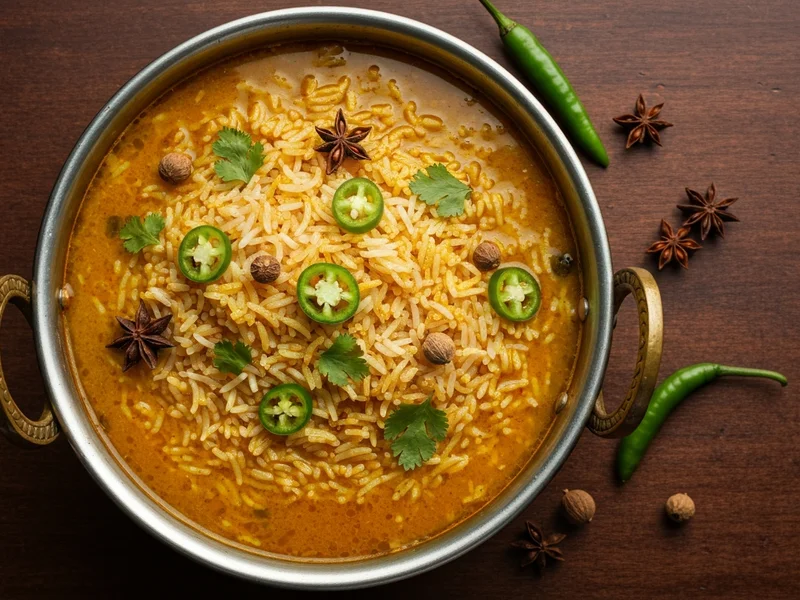
Yakhni Pulao is fragrant, one-pot rice cooked in a slow-simmered meat broth (yakhni) with whole spices. Lighter and more delicate than biryani, this is the dish that proves understated can be unforgettable.
Kabuli Pulao (Afghan-Peshawari Rice)
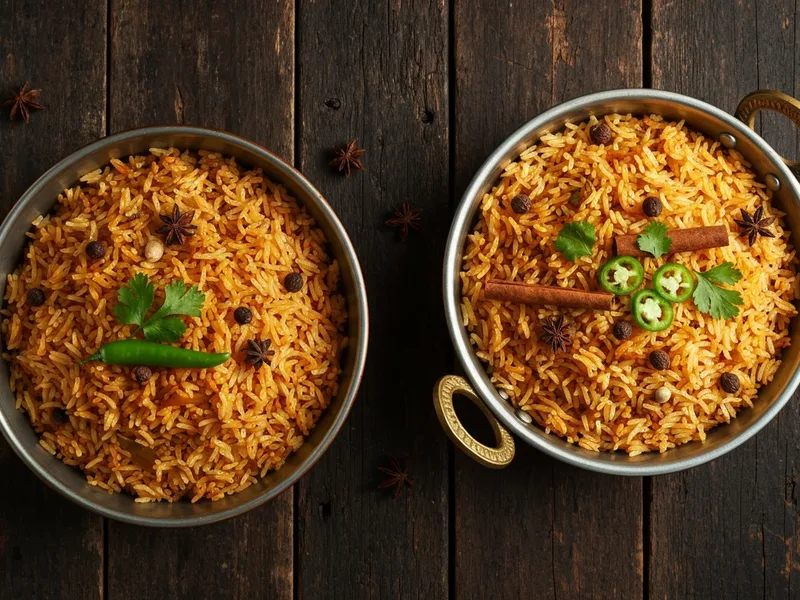
Afghanistan's national dish — long-grain basmati rice cooked in rich lamb stock, crowned with caramelised julienned carrots, plump raisins, and slivered almonds. Mildly sweet, deeply fragrant, impossibly elegant.
Chana Pulao
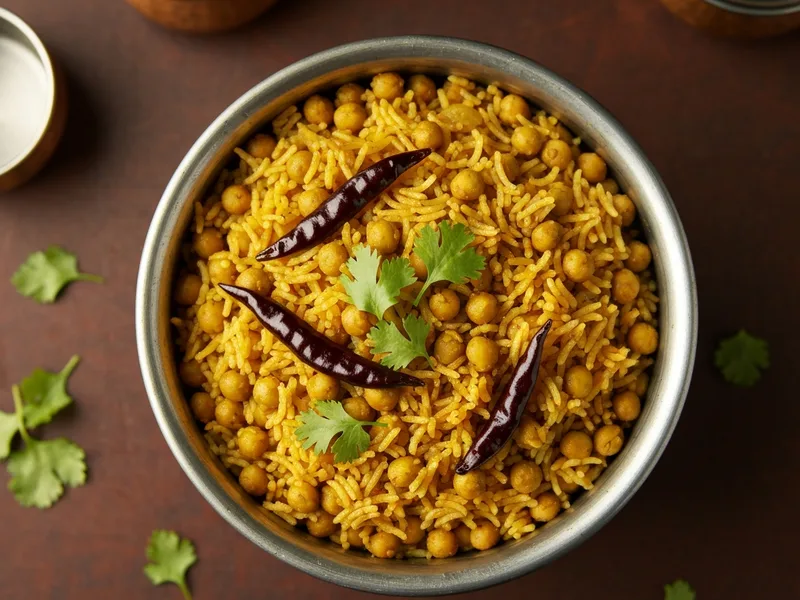
Fragrant basmati rice cooked with whole boiled chickpeas — no meat, loads of flavour. An economical, filling pulao made for large gatherings and beloved across Punjab.
What Cooks Are Saying
Absolutely delicious! The flavours are spot on — tastes just like what I grew up eating.
Really good recipe. I reduced the chilli slightly for the kids and it worked perfectly.
Leave a Review
Tried this recipe? Share your experience — your review helps other cooks.