
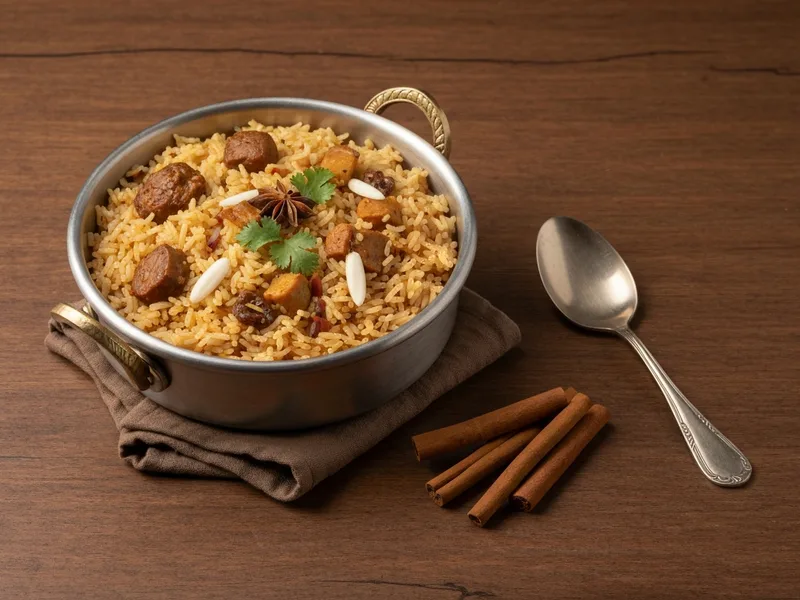
Sindh cuisine
Sindhi Rice Khichdi
Sindhi Rice Khichdi is a traditional Sindh Pakistani dish. Sindhi Rice Khichdi is the ultimate comfort food of Pakistan's Sindh province — rice and lentils cooked together with warming spices and finished with a sizzling tarka of garlic, cumin, and ghee that brings everything to life. Nourishing, healing, and deeply satisfying.
Khichdi is the dish that Pakistan turns to when life gets complicated.
It appears in ancient Ayurvedic and Sanskrit texts going back 2,500 years, and was described by Ibn Battuta in his 14th-century travel accounts as the daily food of the common people of the subcontinent. When you're recovering from illness, when the budget is tight, when you want something that asks nothing of you but a quiet evening — khichdi shows up. And Sindhi khichdi has a particular excellence: it's a little more spiced than the standard version, with a tarka that arrives at the table still sizzling and fragrant, poured over the top in a ceremony that signals something good is happening. Fun fact: Khichdi is one of the oldest documented dishes in South Asian culinary history — it appears in accounts from the 4th century BCE. The Moroccan traveller Ibn Battuta wrote about it in the 14th century during his visit to the Indian subcontinent. So when you make khichdi, you're cooking a dish that has genuinely stood the test of time. NASA has also included khichdi in potential space food studies for its nutritional completeness. It's a dish for the ages — and for space, apparently.
Ingredients
Instructions
- COOK THE BASE: Heat 3 tbsp ghee in a heavy pot. Add half the zeera and fry 30 seconds. Add chopped onion and cook until translucent. Add adrak lehsan paste, haldi, lal mirch, and chopped tomato. Cook until tomato breaks down, about 5 minutes. HINT: For Sindhi khichdi, the base has a tomato component that distinguishes it from the plainer versions from other regions. This tomato masala gives the khichdi a slightly tangy, richer base.
- ADD DAL AND RICE: Add washed dal to the pot and stir with the masala for 2 minutes. Add washed rice and stir. Add 850ml water and salt. Bring to boil. HINT: Dal and rice go in together for khichdi — unlike dishes where they're cooked separately. The starch from both thickens the cooking liquid naturally into that characteristic soft, porridge-like consistency.
- COOK UNTIL SOFT: Reduce heat to medium-low, cover partially, and cook 20-25 minutes, stirring occasionally, until rice and dal are both completely soft and the khichdi has a slightly mushy, cohesive consistency. Add more hot water if it seems too thick during cooking. HINT: Khichdi is supposed to be soft and cohesive — this is not a dish where you want separate, fluffy rice grains. It should be comforting and slightly thick, like a savoury porridge.
- MAKE THE HOT TARKA: In a separate small pan, heat 2 tbsp ghee until very hot. Add thinly sliced garlic and fry until golden, about 90 seconds. Add remaining zeera and dried whole red chillies. They'll sizzle and crackle. HINT: This tarka should be done right before serving — it must arrive at the table hot and sizzling. The fragrance of garlic frying in hot ghee is the signal that something good is coming.
- THE SIZZLING TARKA POUR: Pour the hot tarka directly over the khichdi in the serving bowl at the table. It should sizzle dramatically when it hits the surface. Serve immediately. HINT: The tarka pour at the table is not just theatrical — the sizzle continues to cook the khichdi surface slightly and the aromatic compounds in the hot ghee and garlic are at their most potent in the first 30 seconds.
- SERVE WITH THE SIZZLE: The sizzling tarka pour should happen at the table, not in the kitchen. Bring the pot of khichdi and the sizzling tarka separately to the table and pour the tarka over in front of your guests. The dramatic sizzle, the aroma of garlic and ghee, and the visual of the tarka bubbling into the golden khichdi is the theatre of Sindhi home cooking. HINT: Have your serving bowls ready so you can serve quickly after the pour — tarka loses its fragrance rapidly once it's mixed in. The first bite, taken within 2 minutes of the pour, is when the dish is absolutely at its peak.
Chef's Secrets
- The sizzling tarka poured at the table is the Sindhi signature — serve immediately after the pour
- Khichdi consistency is a matter of preference — add more water for a soupier result, less for a firmer one
- Masoor (red) lentils break down more than moong and create a creamier khichdi — both are correct
- This is excellent recovery food — gentle on the stomach and nutritionally complete
- A squeeze of nimbu and a dollop of dahi on the side are classic Sindhi accompaniments for khichdi
Common Questions
How long does Sindhi Rice Khichdi take to make?
Total time is 40m — 10m prep and 30m cooking.
How many servings does this recipe make?
This recipe makes 4 servings, and is rated easy difficulty.
Which region of Pakistan is Sindhi Rice Khichdi from?
Sindhi Rice Khichdi is from Sindh, Pakistan — one of the country's most distinctive culinary traditions.
What do you serve with Sindhi Rice Khichdi?
Serve with plain dahi, nimbu wedges, achar, and papadum. The classic Sindhi combination is khichdi with dahi and fried fish — highly recommended if you can manage it.
Goes Well With
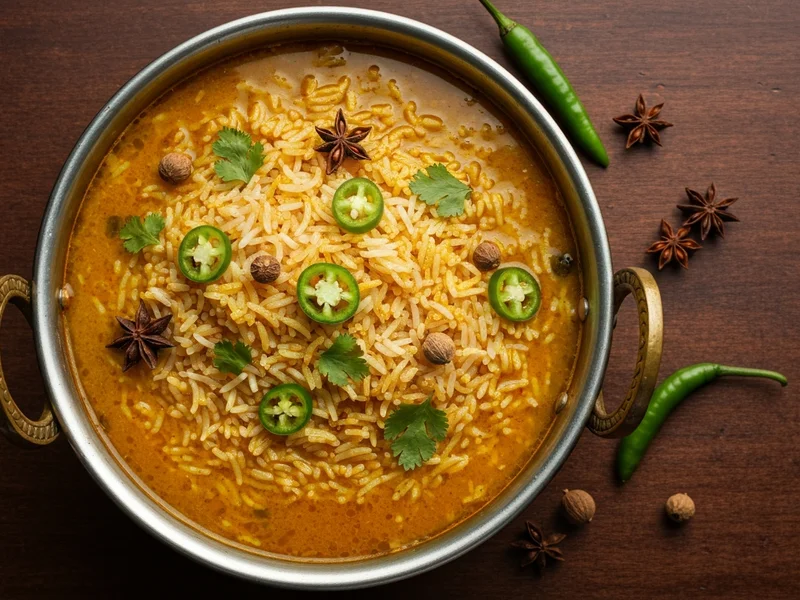
Yakhni Pulao
Yakhni Pulao is fragrant, one-pot rice cooked in a slow-simmered meat broth (yakhni) with whole spices. Lighter and more delicate than biryani, this is the dish that proves understated can be unforgettable.
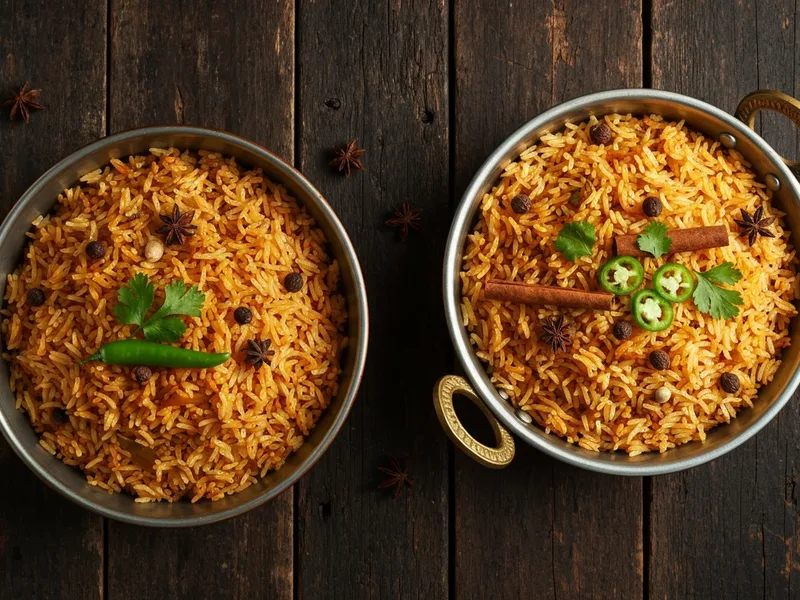
Kabuli Pulao (Afghan-Peshawari Rice)
Afghanistan's national dish — long-grain basmati rice cooked in rich lamb stock, crowned with caramelised julienned carrots, plump raisins, and slivered almonds. Mildly sweet, deeply fragrant, impossibly elegant.
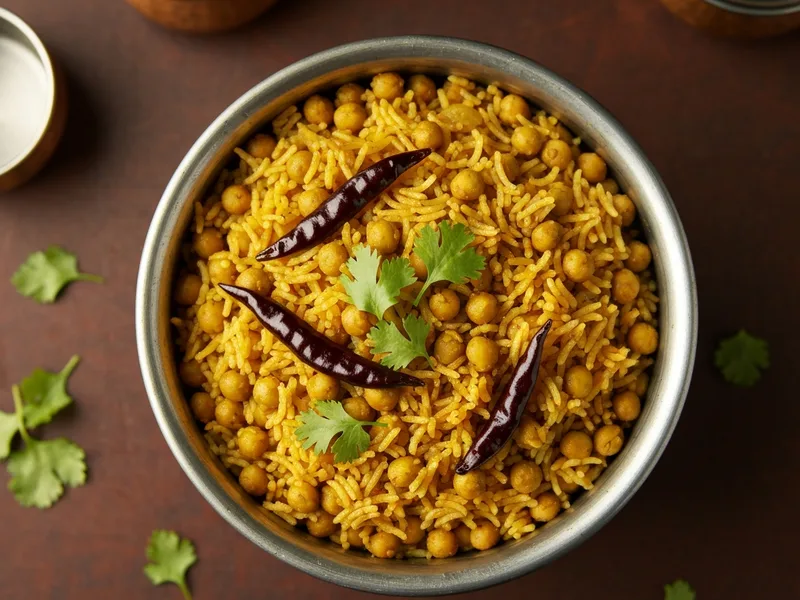
Chana Pulao
Fragrant basmati rice cooked with whole boiled chickpeas — no meat, loads of flavour. An economical, filling pulao made for large gatherings and beloved across Punjab.
What Cooks Are Saying
Absolutely delicious! The flavours are spot on — tastes just like what I grew up eating.
Really good recipe. I reduced the chilli slightly for the kids and it worked perfectly.
Leave a Review
Tried this recipe? Share your experience — your review helps other cooks.