
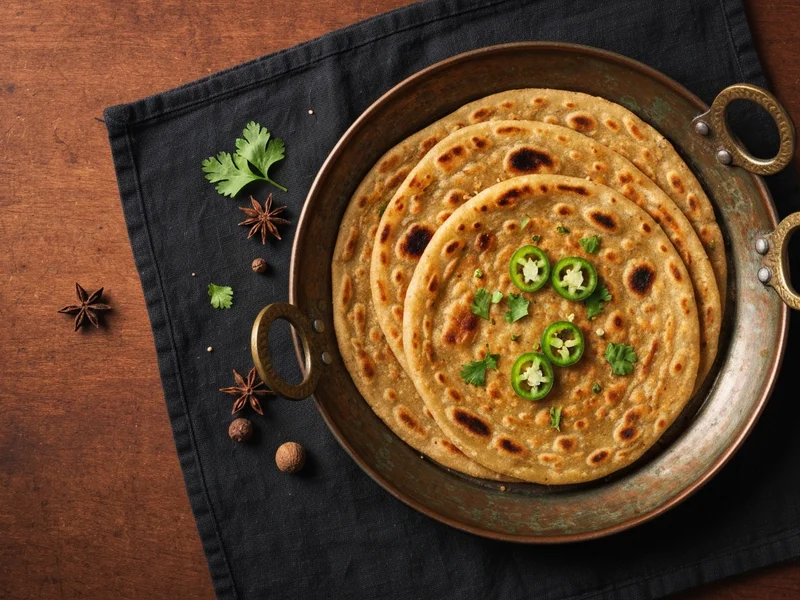
Punjab cuisine
Aloo Paratha — Spiced Potato Stuffed Flatbread
Aloo Paratha — Spiced Potato Stuffed Flatbread is a traditional Punjab Pakistani dish. Aloo Paratha is Pakistan's most beloved breakfast bread — whole wheat flatbread stuffed with a spiced potato filling, cooked on a tawa (griddle) with butter or ghee until crisp and golden on the outside, soft within. It is the meal that gets children out of bed without argument.
If you've ever stayed at a Pakistani household overnight, you've woken up to the smell of aloo paratha. It's as fundamental to Pakistani mornings as chai — and the two go together in a way that is basically mandatory.
The potato filling is more recent, arriving in South Asia only after the Portuguese brought potatoes from the Americas in the 17th century. Today, aloo paratha is the undisputed champion of the Pakistani breakfast table, eaten from Peshawar to Karachi, served at dhabas at 6am to truck drivers, and made by every ammi (mother) and dadi (grandmother) with their own specific spice variation. The technique sounds intimidating — stuffing dough without the filling bursting out — but once you've done it twice, it becomes muscle memory.
Ingredients
Instructions
- MAKE THE DOUGH: In a large bartan (bowl), combine the atta (flour), salt, and one tablespoon of oil or ghee. Rub the fat into the flour with your fingertips until it resembles very coarse breadcrumbs — this is moyan. Gradually add lukewarm water, mixing with your hand as you go. Knead the dough for 7-8 full minutes — it should be smooth, soft, and slightly tacky but not sticky. It should spring back when you poke it. Cover with a damp cloth and rest for at least 20 minutes. WHY: Resting allows gluten to relax — rested dough rolls thin without springing back and doesn't tear when you stuff it. HINT: The dough should feel softer than bread dough but stiffer than pizza dough — somewhere between Play-Doh and ear lobe texture (a classic cooking school test).
- BOIL AND MASH THE ALOO: Boil the potatoes whole and unpeeled in salted water until completely tender — a knife should slide in with zero resistance, 20-25 minutes. Drain, peel while still hot (use a cloth to hold them), and mash immediately. WHY: Mashing while hot gives a smoother, lump-free result. Cold potatoes become gluey when mashed. Mash until completely smooth with no lumps at all — any lump in the filling will poke through the dough during rolling and create a tear. Cool the mash before mixing in the other filling ingredients.
- MIX THE FILLING: Combine the cooled mashed aloo with hara dhania (coriander), hari mirch (green chillies), lal mirch, ajwain (carom seeds), zeera (cumin), nimbu (lemon) juice, and namak (salt) to taste. Mix thoroughly. Taste the filling raw — it should be well-seasoned and bold, because it will be enclosed in dough which is relatively bland. Roll into balls approximately 40g each (about the size of a walnut). You should get 6-8 balls depending on size. HINT: Keep the filling balls in the fridge while you start rolling — cold filling is easier to handle.
- ROLL AND STUFF: Divide the rested dough into the same number of balls as filling portions. On a lightly floured surface, roll a dough ball into a circle about 15cm in diameter. Place a filling ball in the centre. Bring the edges of the dough up around the filling, pinching firmly to seal — like making a dumpling. Press the sealed ball gently flat with your palm. Now roll this stuffed ball out again, slowly and gently, into a circle 20-22cm in diameter. HINT: Roll with even, gentle pressure from the centre outward. If the filling starts to break through, stop and patch with a small piece of dough. Don't panic — patchwork paratha still tastes the same.
- COOK ON THE TAWA: Heat a tawa (flat griddle) or heavy flat pan over medium-high heat until hot — a few drops of water flicked on it should evaporate within 2 seconds. Place the rolled paratha on the dry tawa. Cook for 60-90 seconds — you'll see the surface start to look drier and small bubbles will form. Flip using tongs or a spatula. Add half a tablespoon of makhan (butter) or ghee to the cooked side — it will sizzle and smoke. Spread with a chamcha (ladle) or brush. Cook the second side for 60-90 seconds until golden patches appear. Flip again, add butter to this side, and press gently with a folded cloth — this seals the layers and creates slight puffing. Total cook time: 3-4 minutes per paratha.
- THE FINAL FLIP AND FINISH: The paratha is done when both sides have golden-brown patches and the bread has cooked through — no doughy-white patches should remain. The outside should feel slightly crisp when you tap it with a spatula. Press the edges down firmly during cooking — the edges cook last and need direct contact with the tawa. Slide off the tawa onto a plate. Add a small knob of cold makhan (butter) on top — it melts into the paratha surface and is the finishing touch that makes a good paratha great. HINT: Keep finished parathas warm by stacking them in an atta box (a round tin container) lined with a cloth — they stay warm and soft for 20-30 minutes.
- SERVE IMMEDIATELY: Aloo paratha is a serve-immediately dish — unlike naan which holds reasonably well, paratha loses its crisp-outside-soft-inside texture after 10 minutes. Serve hot with a generous blob of white makhan (fresh butter), dahi (plain yoghurt), and achar (mango or mixed pickle). The combination of crispy-buttery paratha, cool yoghurt, and sour-spicy achar is one of the most complete flavour experiences in Pakistani food. FUN FACT: The traditional Lahori breakfast of dhabas is specifically aloo paratha with makhan and lassi — this combination has not changed in living memory and doesn't need to.
Chef's Secrets
- Make the dough the night before and refrigerate — resting overnight makes it significantly easier to work with and the paratha comes out softer.
- The filling must be lump-free and well-seasoned. Taste it before stuffing. It should taste slightly overseasoned on its own — the dough balances it.
- For extra-crispy paratha: cook on higher heat and use ghee instead of butter (higher smoke point). For softer paratha: cook on lower heat with butter and cover with a lid for 30 seconds.
- Don't skimp on the butter or ghee when cooking. The fat that goes onto the tawa is what gives paratha its signature golden colour and layered texture. This is not the time for diet cooking.
- Leftover cooked paratha can be wrapped in foil and reheated in a dry tawa. They keep in the fridge for 2 days. Leftover uncooked stuffed paratha balls can be frozen and cooked directly from frozen — add 2-3 extra minutes of cooking time.
Common Questions
How long does Aloo Paratha — Spiced Potato Stuffed Flatbread take to make?
Total time is 1h 10m — 40m prep and 30m cooking.
How many servings does this recipe make?
This recipe makes 4 servings, and is rated medium difficulty.
Which region of Pakistan is Aloo Paratha — Spiced Potato Stuffed Flatbread from?
Aloo Paratha — Spiced Potato Stuffed Flatbread is from Punjab, Pakistan — one of the country's most distinctive culinary traditions.
What do you serve with Aloo Paratha — Spiced Potato Stuffed Flatbread?
Serve hot with fresh white makhan (butter), full-fat dahi (yoghurt), and mango achar (pickle). A glass of fresh lassi completes the breakfast. Leftover paratha is excellent with chai for mid-morning snack.
Goes Well With
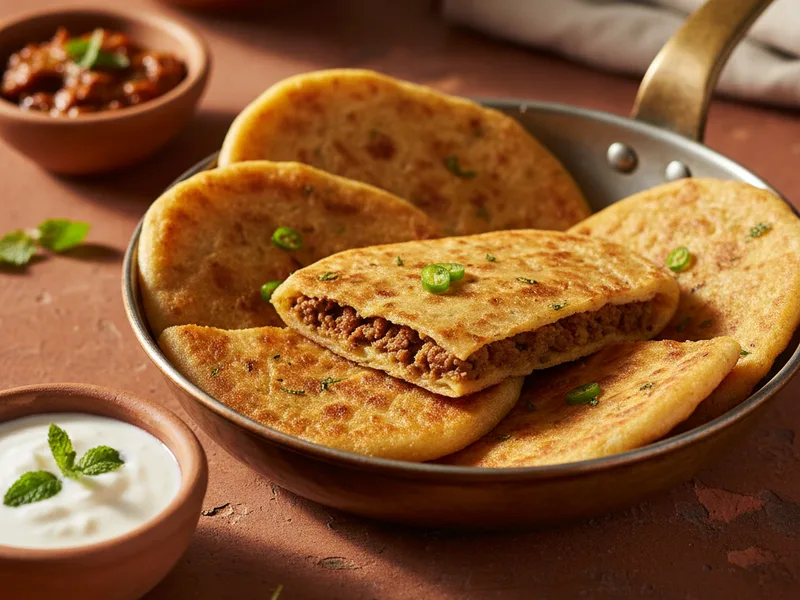
Keema Paratha Lahori
Lahori Keema Paratha is a masterclass in stuffed flatbread — whole wheat paratha packed with spiced minced meat, pan-fried in ghee until shattering-crispy on the outside, hearty and warming within.
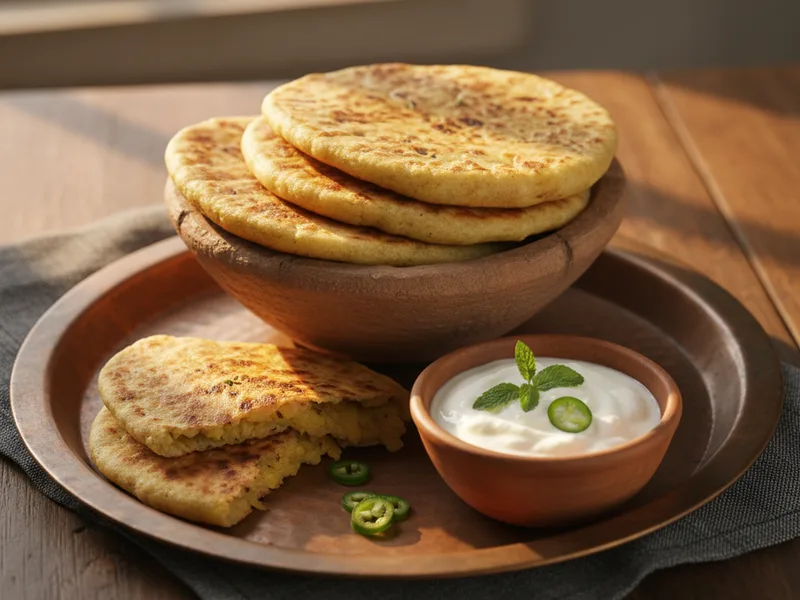
Aloo Paratha South Punjab
South Punjab Aloo Paratha is a rustic, generously spiced potato-stuffed flatbread with a more assertive spice profile than the Lahori version — reflecting the bold culinary personality of Multan and beyond.
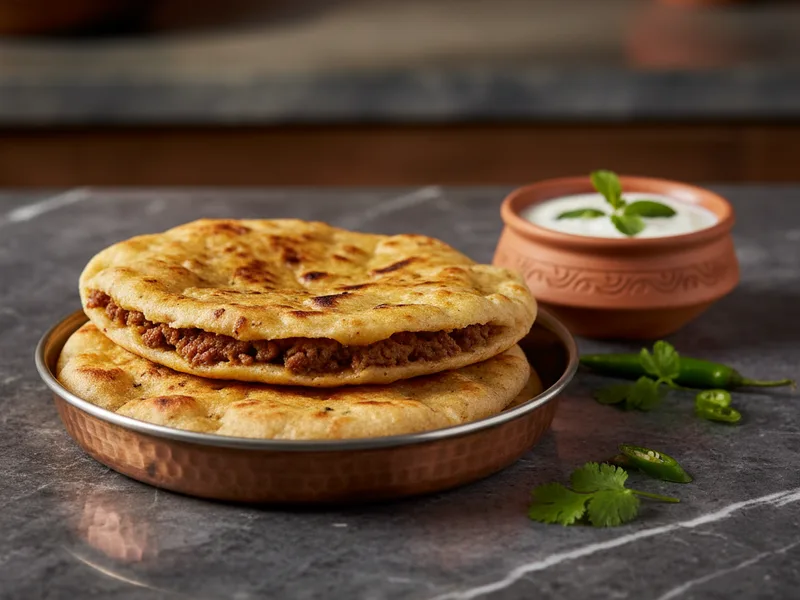
Peshawari Stuffed Chapati
Peshawari Stuffed Chapati is a thick, hearty KP-style flatbread filled with spiced potato and onion — cooked on a tawa with minimal fat for a wholesome, filling breakfast that fuels mountain people.
What Cooks Are Saying
Authentic taste, clear steps. Exactly what I was looking for.
Made this last weekend and the whole family loved it. Will definitely make again.
Leave a Review
Tried this recipe? Share your experience — your review helps other cooks.