
South Punjab cuisine
Bone Marrow Nihari
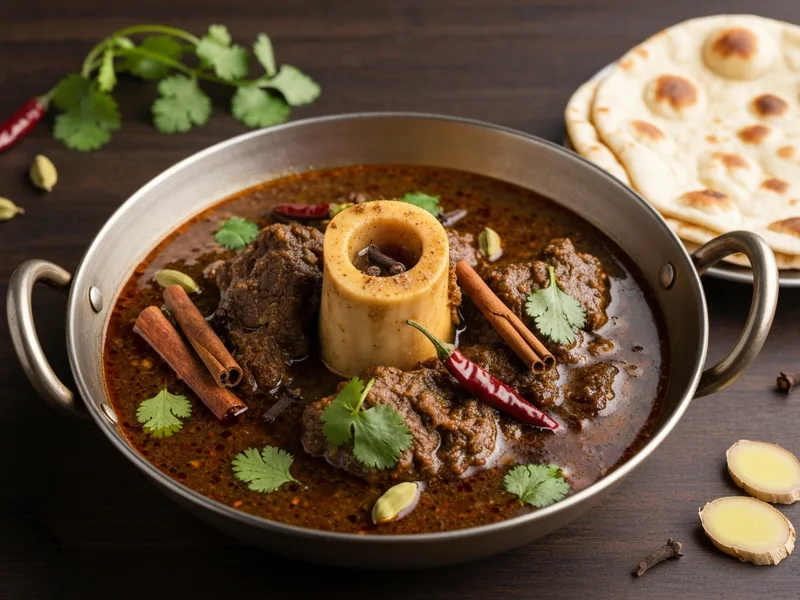
Bone Marrow Nihari is a traditional South Punjab Pakistani dish. South Punjab's legendary bone marrow nihari — intensely rich, deeply spiced, and built around nalli (marrow bones) that melt into the gravy. This is nihari at its most indulgent and most authentic.
South Punjab doesn't do anything halfway.
In nihari, the marrow bones are the most prized serving — the marrow melts out into the broth, adding a silky richness that makes Mughal-era nihari famous. From Multan's soharjah (hospitality culture) to the sheer intensity of its food, everything is dialled up to maximum. Bone marrow nihari is the perfect expression of this philosophy — it starts with nalli (marrow bones), loads them into a pot with aromatics, and lets time work its magic until the marrow dissolves into the gravy, making it impossibly silky and rich. Fun fact: nalli gosht (marrow bone meat) is called 'poor man's butter' in many cultures because marrow is as rich and creamy as the finest dairy. Cooking with nalli transforms an ordinary nihari into something closer to liquid gold. This recipe requires confidence with a heavy pot and a willingness to let things take their time. The hard rating is purely a time commitment — the technique is actually forgiving. Your patience will be rewarded with a nihari that people will request by name.
Ingredients
Instructions
- PREPARE AND BLANCH THE BONES: Place nalli pieces in a large pot, cover with cold water, add 1 tsp salt, and bring to a hard boil. Boil for 5 minutes, then drain completely and rinse bones under cold water. This blanching step removes impurities and blood from the bones — skipping it results in a muddy, grey gravy instead of a clean amber-brown one. HINT: You'll see quite a lot of grey foam during blanching — that's completely normal. The cleaner your bones after blanching, the better your final nihari will look.
- DEEP FRY THE ONIONS: In a heavy deg, heat ghee on medium-high. Add pyaaz and fry for 18-20 minutes, stirring frequently, until they're a very deep mahogany. With marrow nihari, you want darker onions than usual — this creates depth to stand up to the richness of the marrow. HINT: If you have a few extra minutes, scatter the fried onions onto a plate lined with kitchen paper to drain, then grind half of them to a rough paste. Adding this onion paste back into the pot creates an extra-thick, coating gravy.
- BUILD MASALA AND ADD BONES: To the fried onions, add adrak-lehsan paste, crushed badi elaichi, nihari masala, kali mirch, and a splash of water. Bhuno for 5 minutes. Add blanched nalli and gosht. Turn heat to high and bhuno the bones with masala for 10 minutes — work in batches if your pot is crowded. The goal is to get some colour on the bone surfaces and seal the marrow inside.
- LONG SLOW COOK — 4 TO 5 HOURS: Add 2 litres of hot water, bring to a boil, skim foam, then reduce to the lowest possible heat. Cover tightly. Cook for 4-5 hours minimum. After 2 hours, stir gently to avoid displacing the marrow from the bones. Check every hour. HINT: The longer this cooks, the more marrow dissolves into the gravy. If you have 6 hours, use them. Traditional marrow nihari was cooked overnight on dying embers.
- EXTRACT AND STIR MARROW: After 4+ hours, the marrow should be loose in the bones. Use a small spoon or skewer to push the marrow out of each bone directly into the gravy. Stir it in thoroughly. This is the moment your nihari transforms — you'll see the gravy immediately become richer and more glossy. HINT: Not all marrow will come out easily. Tilt the pot and use the cooking liquid to help flush it out.
- THICKEN AND FINISH: Mix aata with water into a smooth slurry. Add to a cup of hot nihari gravy, whisk smooth, pour back into pot. Simmer 25-30 minutes until gravy is thick enough to coat a spoon generously. Add kewra water. Taste and adjust salt. Prepare tarka: heat 1 tbsp ghee until smoking, add lal mirch, pour over nihari surface.
- GARNISH LAVISHLY AND SERVE: This nihari deserves a grand presentation. Plate in a large, shallow serving bowl. Cover the surface with julienned ginger strips, a mountain of fresh hara dhania, slit hari mirch, and lemon wedges around the edges. Serve immediately — bone marrow nihari waits for no one.
Chef's Secrets
- Ask your butcher to crack the bones lengthwise rather than in rounds if you want marrow to dissolve more completely into the gravy.
- The secret to South Punjab style is patience — 6 hours beats 4 hours every time. If you can, start the evening before and finish in the morning.
- If gravy is too rich and fatty, add a tablespoon of lemon juice to cut through it rather than adding water.
- Leftover marrow nihari reheats beautifully — the collagen from bones sets overnight creating an almost jelly-like texture that melts when reheated.
Common Questions
How long does Bone Marrow Nihari take to make?
Total time is 6h 30m — 30m prep and 6h cooking.
How many servings does this recipe make?
This recipe makes 8 servings, and is rated hard difficulty.
Which region of Pakistan is Bone Marrow Nihari from?
Bone Marrow Nihari is from South Punjab, Pakistan — one of the country's most distinctive culinary traditions.
What do you serve with Bone Marrow Nihari?
Serve with thick tandoor-baked roti or khamiri naan. South Punjab tradition is to have a small bowl of raw sliced onion with lemon juice on the side — the sharp freshness cuts through the marrow richness perfectly. Pair with sweet chai for a complete experience.
Goes Well With
Classic Lahori Nihari
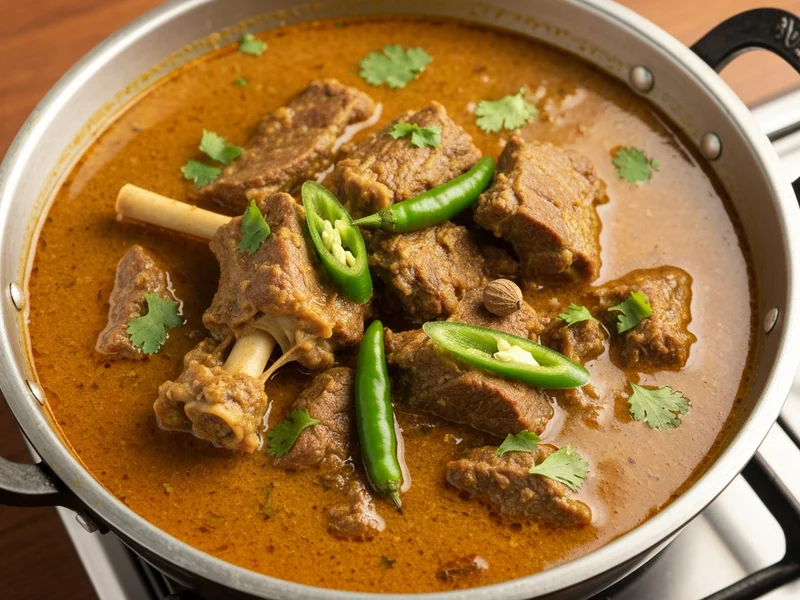
The ultimate slow-cooked breakfast stew — beef shank and bone marrow simmered overnight in a dozen spices. Old Lahore's most legendary dish.
Beef Nihari Karachi Style
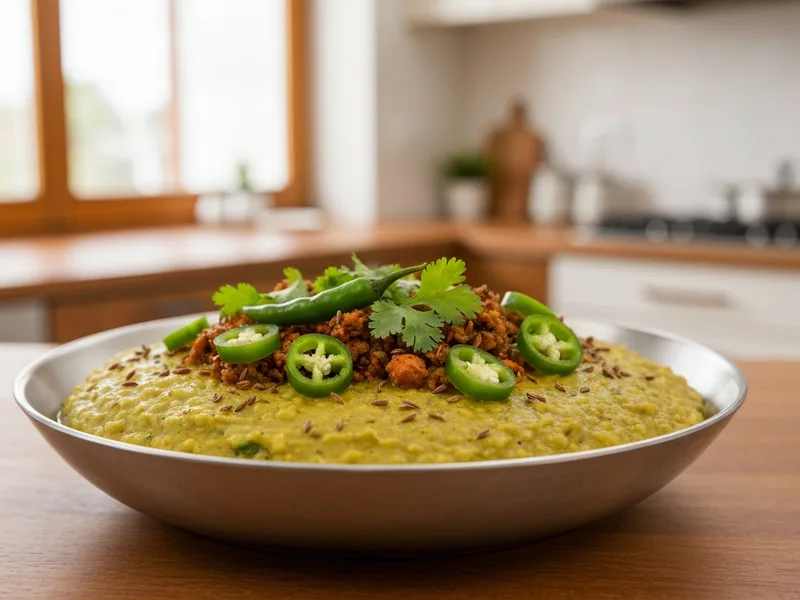
Karachi-style beef nihari slow-cooked with aromatic spices and finished with fresh garnishes. This iconic breakfast dish is a Karachi staple, rich with marrow and bold flavour. The ultimate Sunday morning flex.
Mutton Nihari Slow Cooked
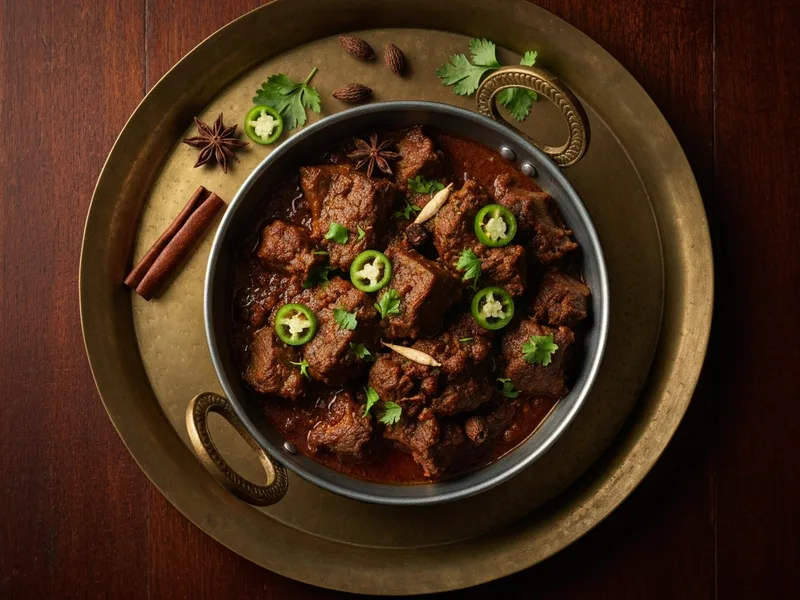
Lahori-style slow-cooked mutton nihari with a deeply spiced, velvety gravy — the kind that makes your whole house smell like a wedding. Rich, tender, and absolutely worth the wait.
What Cooks Are Saying
Nice recipe. I substituted one ingredient and it still came out great.
Absolutely delicious! The flavours are spot on — tastes just like what I grew up eating.
Leave a Review
Tried this recipe? Share your experience — your review helps other cooks.