
Punjab cuisine
Lahori Mutton Karahi — Restaurant-Style Wok Curry
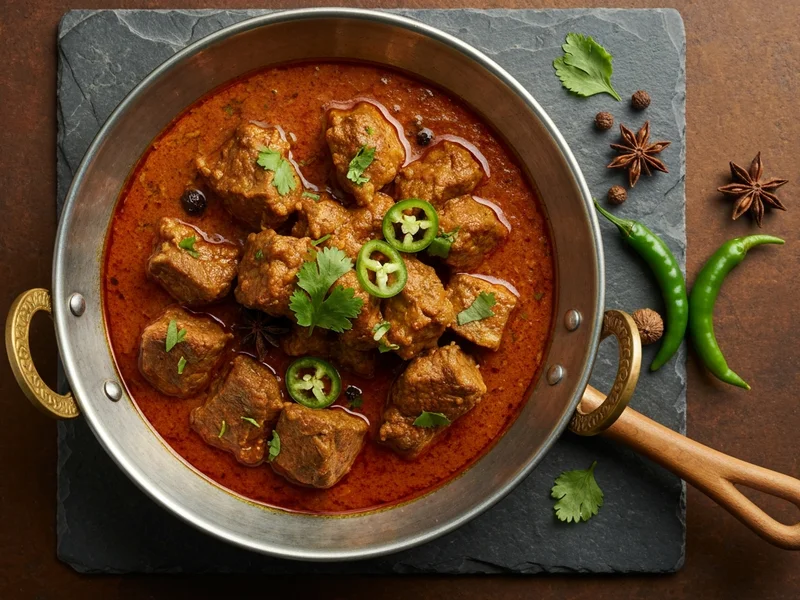
Lahori Mutton Karahi — Restaurant-Style Wok Curry is a traditional Punjab Pakistani dish. Lahori mutton karahi is the king of Pakistani restaurant cooking — bone-in mutton cooked fast and furiously in a heavy steel karahi (wok) with tomatoes, ginger, green chillies, and a final flourish of fresh coriander and cream. Bold, fiery, and deeply satisfying.
Walk into any BBQ restaurant on Lahore's MM Alam Road at 9pm and you will find giant karahis (woks) blazing over high flames, filling the street with a cloud of spiced steam and the hiss of onion hitting hot oil. Mutton karahi is Pakistan's restaurant-cooking at its most thrilling — a dish that goes from raw meat to the table in 40 minutes, tastes of nothing but itself, and requires almost no spice powder because the tomatoes, ginger, and chillies do all the work.
In Lahore, it was adopted and transformed into a restaurant staple with the addition of cream and ginger. This recipe produces an authentic, restaurant-quality karahi at home.
Ingredients
Instructions
- HEAT THE KARAHI: Place a large, heavy karahi (wok) or wide heavy-bottomed pot on high heat. Add the tel (oil) and let it heat until shimmering — you can test by dropping a tiny piece of ginger in; it should sizzle aggressively immediately. HINT: High heat is the whole philosophy of karahi cooking — it creates the bhunna (roasted, dry-fried) flavour that defines this dish. A low flame just stews the meat. FUN FACT: Restaurant karahi cooks often cook over gas flames with BTU ratings 10 times higher than a home stove — you won't quite replicate that, but cranking your burner to maximum helps.
- BROWN THE MEAT: Add the mutton pieces to the hot oil. Do not stir for 2 minutes — let the meat develop a proper sear on one side. HINT: Crowding the karahi drops the temperature and steams the meat instead of searing it. If your karahi is small, brown the meat in two batches. Once seared on one side, stir and cook for another 5 minutes on high heat, turning occasionally. The meat should be golden-brown on the outside, smelling of caramelised protein — not grey and steaming. Add crushed lehsan (garlic) and half the sliced adrak (ginger) and cook for 2 more minutes, stirring constantly.
- ADD TOMATOES AND CHILLIES: Add the quartered tamatar (tomatoes), slit hari mirch (green chillies), lal mirch powder (red chilli powder), kali mirch (black pepper), and namak (salt). Stir everything together. The tomatoes will release a lot of liquid — keep the heat high. HINT: Don't reduce the heat at this stage — you want the tomatoes to cook down in high heat, not stew gently. The karahi should be sizzling loudly and steaming. Cook for 15-20 minutes on high heat, stirring every 3-4 minutes, until the tomatoes completely break down into a thick, red masala.
- BHUNO (ROAST) THE MASALA: This is the most important step. Once the tomatoes have broken down, continue cooking on high heat, stirring more frequently, until the masala thickens and the oil separates to the sides of the karahi — you'll see a pool of red-orange oil collecting around the edges. This process is called bhunna (roasting) and takes 8-10 minutes. HINT: Do not be alarmed — the oil separating is a sign of success, not failure. It means the water has evaporated and the masala is properly roasted. At this point, add the dahi (yoghurt) one tablespoon at a time, stirring vigorously after each addition so it incorporates rather than curdling.
- TENDERISE THE MUTTON: Once the masala is properly bhuno'd and oil-separated, add ½ cup of hot water, stir, reduce heat to medium-low, and cover the karahi with a lid. Cook for 20-25 minutes until the mutton is tender — press a piece with a spoon; it should yield easily with no resistance. HINT: The time depends on the age of the goat — younger meat tenderises in 20 minutes; older bakra might need 35. Check and add a splash more water if it looks dry. The water should have evaporated by the end — you want a thick, clinging masala, not a watery gravy.
- FINAL BHUNA AND FINISH: Once the mutton is tender, increase heat back to high and bhuno (roast) the karahi again for 3-5 minutes, stirring constantly. The masala should cling to the meat and you should hear aggressive sizzling. Turn off the heat. Stir in malai (cream) and scatter julienned adrak (ginger strips) over the top. Top generously with chopped hara dhania (fresh coriander). HINT: The ginger and coriander go on at the very end, off the heat, so they stay fresh and fragrant rather than cooking out. The karahi should be dark red, glistening with oil, smelling powerfully of roasted tomatoes, ginger, and charred chilli.
- SERVE IN THE KARAHI: A proper Lahori karahi is served in the karahi itself, placed directly on the table on a heat-proof stand. Lay a cloth on the table first — the oil may spit. If you don't have a karahi, serve in a deep bowl but transfer immediately before the steam condenses and makes it watery. Serve with tandoori naan straight from the tawa (griddle) — the bread is how you scoop up every drop of that masala.
Chef's Secrets
- The secret to restaurant-quality karahi is heat and patience with the bhunna stage — the oil must separate from the masala before you add water. Rushing this produces a stewed, flat-tasting curry.
- Bone-in mutton is non-negotiable for flavour. The marrow and collagen leach into the gravy during cooking. Boneless meat produces a thin, one-dimensional result.
- For a smokier, more authentic dhaaba flavour: at the very end, heat a small piece of coal directly on the flame until glowing, place it in a small bowl in the centre of the karahi, pour 1 tsp ghee over it, and immediately cover the karahi with a lid for 2 minutes. The coal smoke infuses the karahi with that open-fire flavour.
- If the tomatoes are not breaking down fast enough, add a tiny pinch of sugar — it helps them soften and caramelise faster.
- Rest the karahi for 5 minutes after cooking before serving — the meat fibres relax and the masala thickens perfectly.
Common Questions
How long does Lahori Mutton Karahi — Restaurant-Style Wok Curry take to make?
Total time is 1h 10m — 15m prep and 55m cooking.
How many servings does this recipe make?
This recipe makes 4 servings, and is rated medium difficulty.
Which region of Pakistan is Lahori Mutton Karahi — Restaurant-Style Wok Curry from?
Lahori Mutton Karahi — Restaurant-Style Wok Curry is from Punjab, Pakistan — one of the country's most distinctive culinary traditions.
What do you serve with Lahori Mutton Karahi — Restaurant-Style Wok Curry?
Serve in the karahi at the table, with tandoori naan or roghni naan for scooping. Accompaniments: sliced raw onion rings, lemon wedges, mint raita, and whole green chillies on the side. A cold glass of meethi lassi is the perfect companion to cut through the heat.
Goes Well With
Mutton Karahi Karachi Style
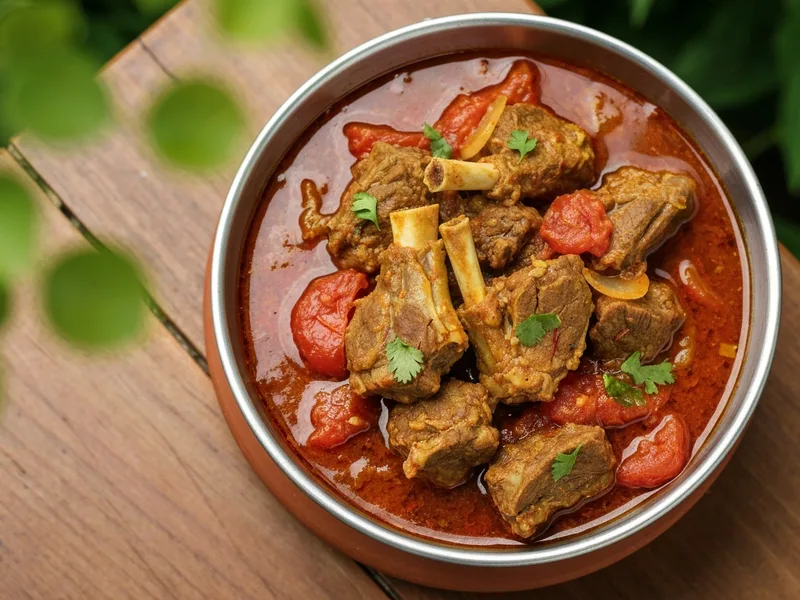
Mutton Karahi Karachi Style is the festive showstopper of Sindh — tender mutton slow-cooked in a robust spiced tomato masala with the trademark Karachi flair: high heat, bold flavours, and a generous hand with fresh ginger.
Balochi Mutton Karahi
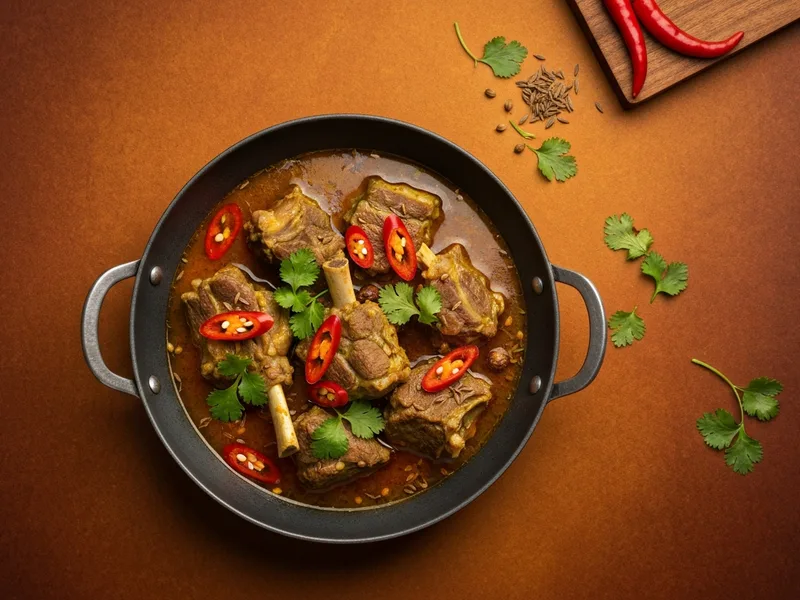
Balochi Mutton Karahi is a celebration of restraint — young mutton cooked with minimal spices so the quality of the meat shines through. This ancient mountain cooking style produces a karahi unlike anything else in Pakistan: pure, clean, and profoundly satisfying.
Dum Mutton Karahi
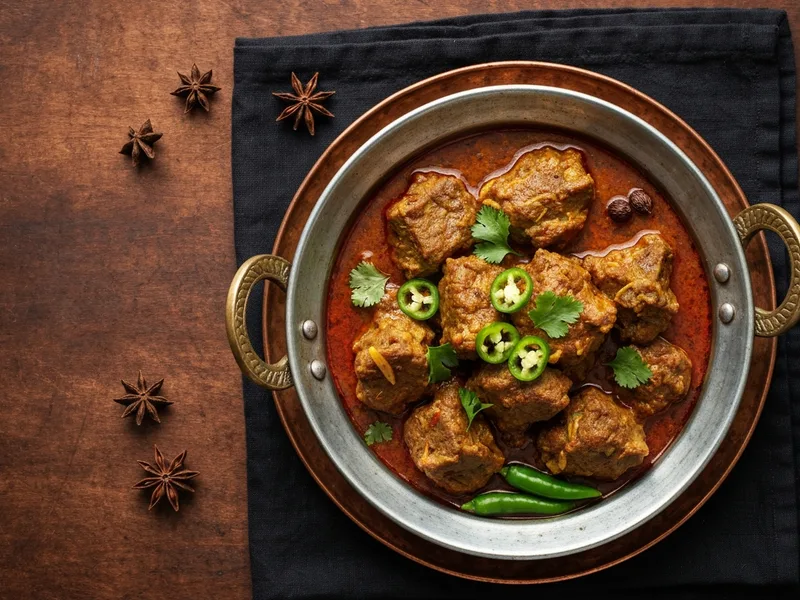
Dum Mutton Karahi combines two great Pakistani cooking traditions — the karahi's fierce open-fire bhuno technique with the dum (slow-steam) method — to produce fall-off-the-bone tender mutton in a masala so rich it barely needs an accompaniment.
What Cooks Are Saying
This is now my go-to recipe. Made it three times already.
Really good recipe. I reduced the chilli slightly for the kids and it worked perfectly.
Leave a Review
Tried this recipe? Share your experience — your review helps other cooks.