
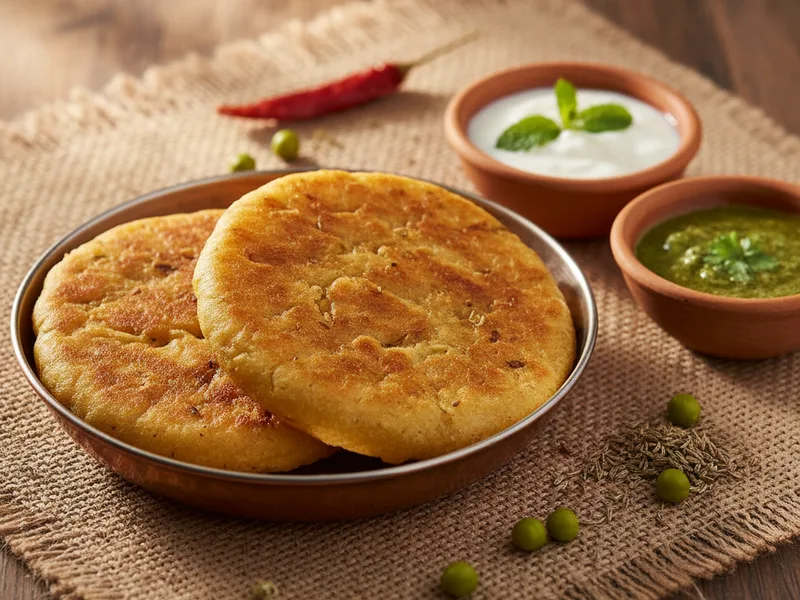
Sindh cuisine
Sindhi Koki Crispy
Sindhi Koki Crispy is a traditional Sindh Pakistani dish. Sindhi Koki is a thick, rustic whole wheat flatbread generously seasoned with chopped onion, fresh coriander, and cumin — slow-cooked until crispy outside and soft within. Sindh's answer to the paratha.
Every culture has its perfect flatbread, and for Sindhis, it's the koki.
Unlike the thin Punjabi paratha, koki is deliberately thick to maintain moisture during the often long, hot Sindhi mornings when bread needed to sustain farmworkers through hours of labour. Thicker and crispier than a paratha, less oily, more rustic — koki is whole wheat flatbread studded with onion and herbs, cooked slowly until the outside develops a beautiful crust while the inside stays tender. This is what Sindhi grandmothers have been making for generations, and it is deeply, soul-satisfyingly delicious. Fun fact: koki is unique to Sindh and has no real equivalent in Pakistani culinary tradition — it's one of those dishes that instantly identifies a Sindhi household. The technique is different from paratha: rather than rolling with a belan (rolling pin), traditional koki is patted out by hand to create its characteristic rough, uneven surface that holds more crispy bits. If you see someone patting out bread in a Sindhi kitchen, they're making koki. Don't rush it — koki is slow-cooked magic.
Ingredients
Instructions
- MAKE KOKI DOUGH: In a large bowl, mix atta, chopped piyaz, hara dhania, hari mirch, zeera, ajwain, laal mirch powder, and salt. Add oil and rub in. Add water gradually to form a medium-firm dough — slightly firmer than chapati dough. HINT: The onion will release some moisture — factor this in when adding water.
- REST: Cover and rest the dough for 15 minutes. The onion will soften slightly.
- SHAPE THE KOKI: Divide into large balls (larger than paratha — koki is thick). Place a ball on a greased surface and pat it out by hand into a thick round — about 5-6 inches and 6-7mm thick. Traditional koki is hand-patted, not rolled. HINT: Pat from the centre outward, rotating as you go.
- SLOW COOK: Heat tawa on medium-low heat. Place koki on tawa. Cook on very low heat for 4-5 minutes until the bottom looks set and is just beginning to colour. Flip carefully.
- ADD GHEE AND COOK THROUGH: Add a small amount of ghee around edges. Cook the second side 4-5 minutes. The koki should be deep golden and developing crispy spots. Koki needs patience — low and slow is the only way.
- FINISH: Once both sides are golden-brown and cooked through (press the centre — it should feel firm), remove from tawa. The edges will be the crispiest and most coveted parts.
Chef's Secrets
- Low heat is mandatory — high heat burns the outside before the inside cooks through
- Hand-patting is traditional and gives koki its characteristic rustic texture
- Koki is best eaten immediately — it softens as it cools
- For extra crunch, cook koki directly on a hot griddle without any fat first, then add ghee
Common Questions
How long does Sindhi Koki Crispy take to make?
Total time is 45m — 15m prep and 30m cooking.
How many servings does this recipe make?
This recipe makes 4 servings, and is rated easy difficulty.
Which region of Pakistan is Sindhi Koki Crispy from?
Sindhi Koki Crispy is from Sindh, Pakistan — one of the country's most distinctive culinary traditions.
What do you serve with Sindhi Koki Crispy?
Serve with dahi (yoghurt), sindhi kadhi, or lassi. In Sindh, koki with dahi is a complete, traditional breakfast.
Goes Well With
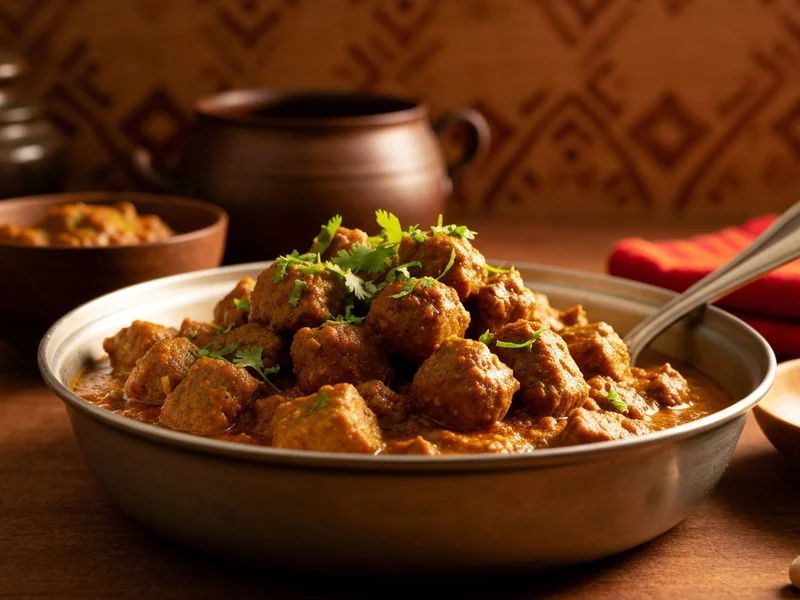
Sindhi Koki
Sindh's thick, crispy, flavour-packed breakfast flatbread — whole wheat dough loaded with onion, green chilli, fresh coriander, and carom seeds, pressed thick, scored in a crosshatch pattern, and cooked on a tawa with generous ghee until crackling and golden.
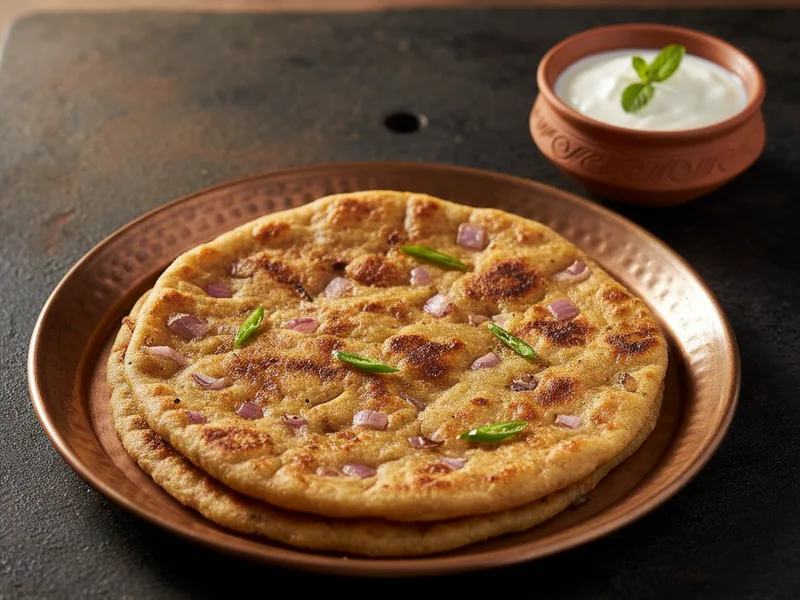
Koki with Onion and Chilli
This variation of Sindhi Koki leans into bold piyaz (onion) and mirch (chilli) flavours, creating a spicier, more pungent version loved for its strong character — ideal for those who want their breakfast to wake them up.
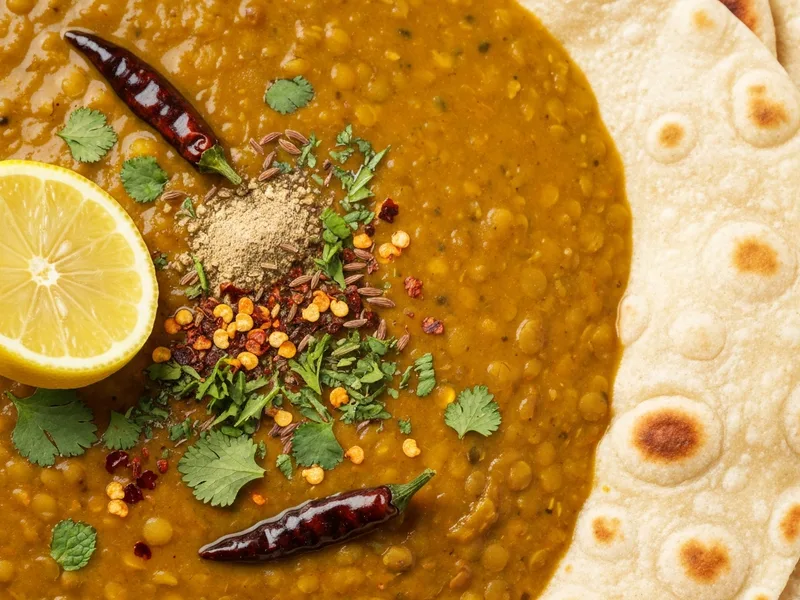
Dal Pakwan
Creamy chana dal poured over shatteringly crisp, sesame-flecked fried bread — Dal Pakwan is the Sindhi community's most beloved breakfast and one of the great unsung classics of Pakistani cuisine. It sounds simple, but the contrast of textures and the bold tadka make it something you'll dream about. Sunday morning will never be the same.
What Cooks Are Saying
Very tasty — I'll tweak the salt next time but overall really happy with how it turned out.
Made this for Eid and everyone asked for the recipe. Highly recommend.
My husband said it's the best he's ever had. Coming from him that means everything!
Leave a Review
Tried this recipe? Share your experience — your review helps other cooks.