
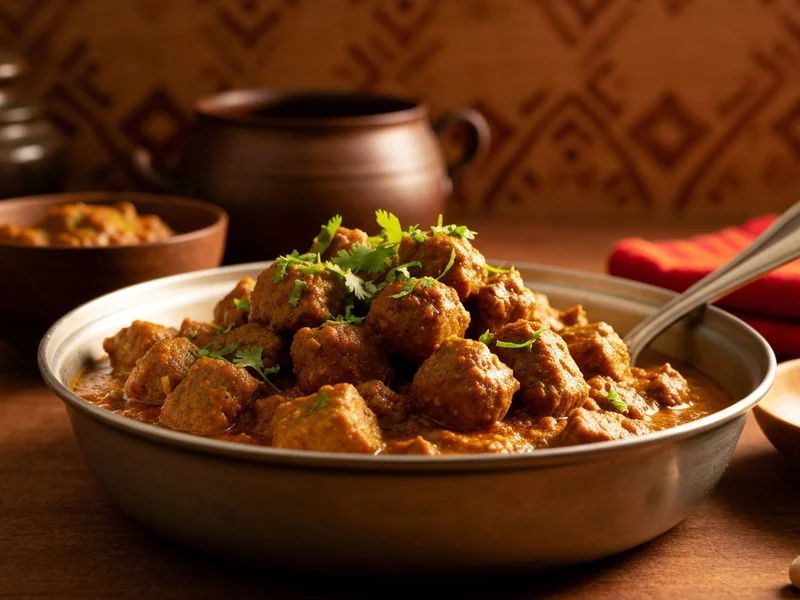
Sindh cuisine
Sindhi Koki
Sindhi Koki is a traditional Sindh Pakistani dish. Sindh's thick, crispy, flavour-packed breakfast flatbread — whole wheat dough loaded with onion, green chilli, fresh coriander, and carom seeds, pressed thick, scored in a crosshatch pattern, and cooked on a tawa with generous ghee until crackling and golden.
If you've eaten paratha, forget everything you know — Koki is its own creature. Where paratha is layered and folded, Koki is brash and unified: the flavourings go straight INTO the dough, mixed in with your hands until every bite is studded with pyaz (onion), hari mirch (green chilli), and ajwain (carom seeds). It's pressed out thick — twice as thick as paratha — and cooked with a firm hand on a hot tawa (flat griddle), pressing hard with the chamcha (spatula) so the outside chars and crisps while the inside stays soft and fragrant.
Every Sindhi child has a memory of waking up to the smell of Koki crackling on the tawa before school, eaten with cold dahi (yoghurt) and hot chai. During Cheti Chand — the Sindhi New Year and the birthday of Jhulelal, the patron saint of Sindhis — Koki is made in enormous batches and distributed to neighbours and passersby. It is, in the most literal sense, a community bread. The crosshatch scoring on the surface is not decorative — it helps the thick bread cook through evenly without burning the outside before the inside is done.
Ingredients
Instructions
- MAKE THE DOUGH: In a large kunda (mixing bowl) or any wide bartan (vessel), combine the atta, finely chopped pyaz, hari mirch, hara dhaniya, ajwain, salt, lal mirch, and 1 tbsp of ghee. Use your hands to mix everything together, working the ghee into the flour — you're looking for a sandy, crumbly texture where the fat is evenly distributed through the flour. WHY: Rubbing fat into the flour before adding water creates flakiness in the final bread. This technique (called 'moyen' in Urdu) is used in many Pakistani breads and pastries. Now add water in small splashes, mixing between each addition, until the dough just comes together.
- KNEAD AND REST: Knead the dough on a clean surface for 3-4 minutes until it is firm but not stiff. Koki dough should be significantly stiffer than paratha dough — stiff dough = thick, sturdy bread. HINT: The onion will release moisture as you knead, so don't add all the water at once or your dough may become too soft. If it gets sticky, add a little dry flour. Once kneaded, cover with a damp cloth and rest for 10 minutes. WHY: Resting allows the gluten to relax, making the dough easier to shape without it springing back.
- DIVIDE AND SHAPE: Divide the dough into 3-4 equal balls — each about the size of a large lemon. Take one ball and place it on an unfloured surface (a little stickiness helps). Using a rolling pin, roll it into a circle about 6-7 inches in diameter and about 5-6mm thick (roughly ¼ inch). This is significantly thicker than a roti or paratha — resist the urge to roll it thinner. HINT: If the dough tears when rolling, it's because the onion pieces are too large — the edges of onion chunks cut through the dough. This is why finely chopped onion matters.
- SCORE THE SURFACE: Using a sharp knife, score the top of the koki in a crosshatch pattern — diagonal lines about 1 inch apart, then the opposite diagonal, creating a diamond pattern. Score about halfway through the thickness of the dough. WHY: This is not decorative. The scoring allows heat to penetrate the thick bread more evenly — without it, the outside chars while the centre stays raw. The crosshatch pattern is how you know a Koki from anything else — it's the signature.
- COOK THE FIRST SIDE: Heat a tawa (flat cast-iron or heavy pan) over medium-high heat until very hot. Add 1 tbsp of ghee and let it heat. Place the koki scored-side down on the tawa. Immediately press it flat with the back of your chamcha (spatula) — press firmly all over the surface. You want maximum contact with the hot tawa. Cook for 2-3 minutes. You should hear it sizzling steadily. The bottom should turn golden-brown with some darker patches — not burnt, but genuinely charred in spots. That char is flavour.
- FLIP AND FINISH: Add another ½ tbsp of ghee, then flip the koki. Press down again firmly with the chamcha over the entire surface. WHY: Pressing forces the bread against the hot tawa and ensures the inside cooks through before the outside over-browns. Cook for another 2-3 minutes. Flip one more time, drizzle a little more ghee along the edges, and cook for 1 more minute until both sides are deep golden-brown and the bread feels firm when pressed (not squidgy in the centre). Lift and break a corner open — the inside should be fully cooked and fragrant. FUN FACT: The first Koki is always the sacrifice — it tells you if your tawa is the right temperature. If the first one burns too fast or cooks too slow, adjust the heat before making the rest.
- SERVE HOT: Koki is best eaten straight off the tawa — the crackle of the crust and the soft, fragrant interior are most vivid when hot. It toughens slightly as it cools, though it stays delicious. Serve with cold dahi (plain yoghurt), lassi (sweet or salty), and strong chai. The contrast of the hot, spiced, crispy Koki against the cool, plain yoghurt is the combination that every Sindhi breakfast memory is built on.
Chef's Secrets
- Finely chop everything — pyaz, hari mirch, hara dhaniya — to small, even pieces. Chunky inclusions tear the dough and make it hard to roll evenly.
- The tawa must be properly hot before the Koki goes on — a medium or cool tawa will make the bread absorb the ghee without crisping. Test by flicking a drop of water onto the surface: it should evaporate immediately.
- Koki should be thick. If you've rolled it thin like a roti, you've made a flavoured roti — not a Koki. The thickness is what gives you that contrast between crispy exterior and soft interior.
- Leftover Koki is excellent — reheat on a dry tawa for 1-2 minutes per side and it comes back to life. It is traditionally packed in tiffin boxes for travel and stays good for a full day.
- For a richer version, add 1 tbsp of fresh cream or labneh into the dough — it makes the texture more tender and the flavour noticeably more indulgent.
Common Questions
How long does Sindhi Koki take to make?
Total time is 35m — 15m prep and 20m cooking.
How many servings does this recipe make?
This recipe makes 3 servings, and is rated easy difficulty.
Which region of Pakistan is Sindhi Koki from?
Sindhi Koki is from Sindh, Pakistan — one of the country's most distinctive culinary traditions.
What do you serve with Sindhi Koki?
Serve hot with cold dahi (plain yoghurt) and sweet lassi or strong chai. In Sindhi homes it is eaten for breakfast, but it makes a perfectly good snack or light meal at any time of day. A small pot of achar (pickle) alongside adds a sharp contrast.
Goes Well With
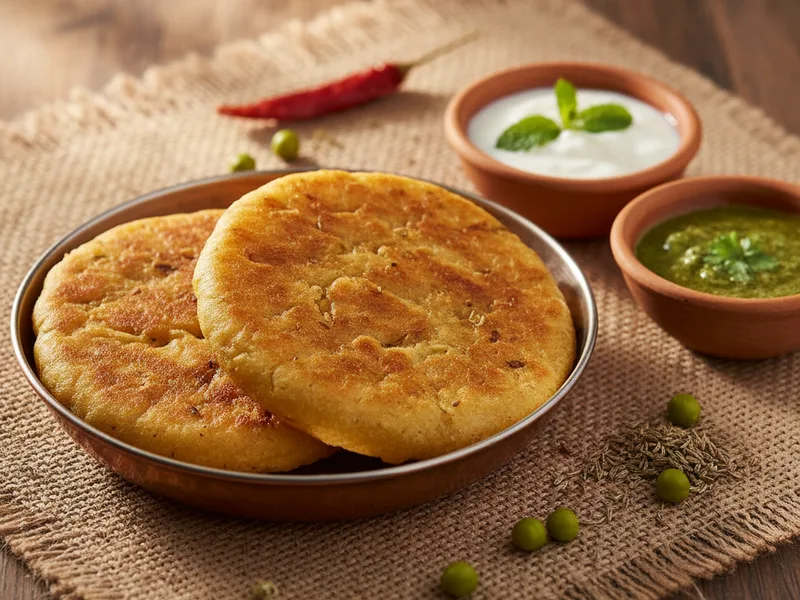
Sindhi Koki Crispy
Sindhi Koki is a thick, rustic whole wheat flatbread generously seasoned with chopped onion, fresh coriander, and cumin — slow-cooked until crispy outside and soft within. Sindh's answer to the paratha.
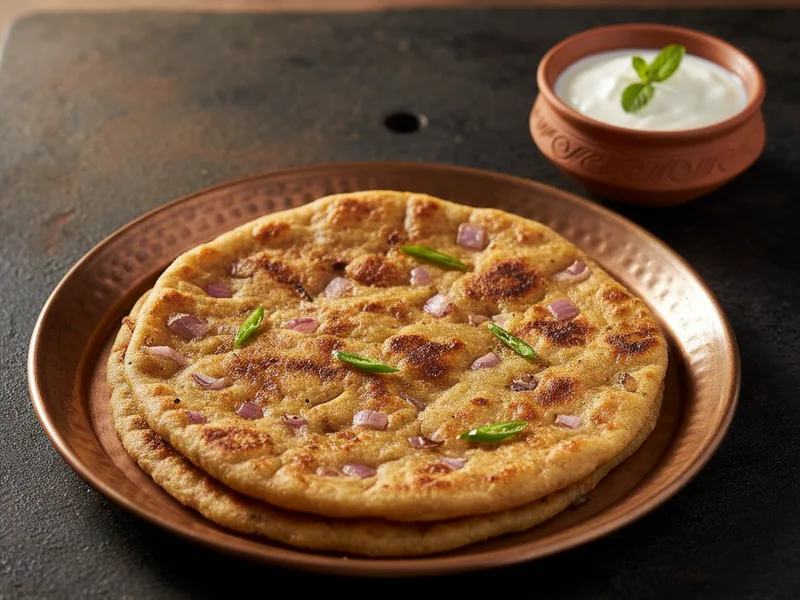
Koki with Onion and Chilli
This variation of Sindhi Koki leans into bold piyaz (onion) and mirch (chilli) flavours, creating a spicier, more pungent version loved for its strong character — ideal for those who want their breakfast to wake them up.
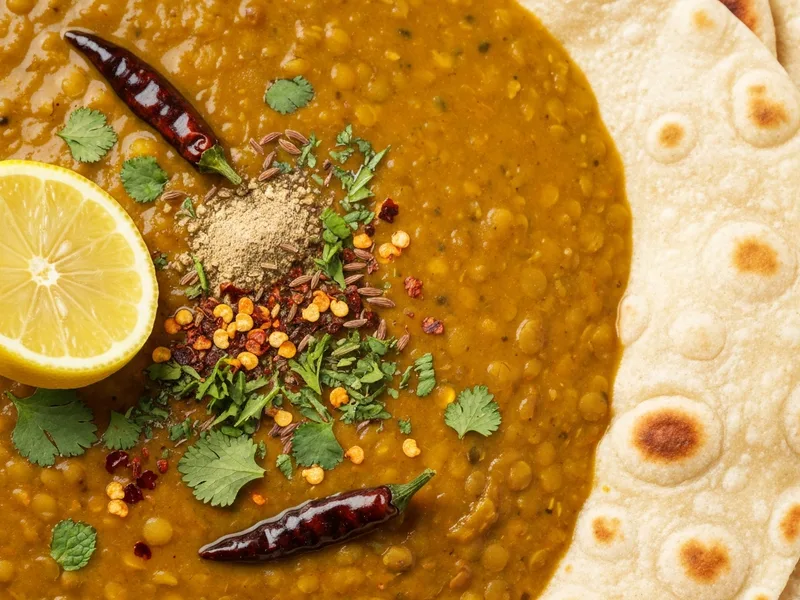
Dal Pakwan
Creamy chana dal poured over shatteringly crisp, sesame-flecked fried bread — Dal Pakwan is the Sindhi community's most beloved breakfast and one of the great unsung classics of Pakistani cuisine. It sounds simple, but the contrast of textures and the bold tadka make it something you'll dream about. Sunday morning will never be the same.
What Cooks Are Saying
Very tasty — I'll tweak the salt next time but overall really happy with how it turned out.
Made this for Eid and everyone asked for the recipe. Highly recommend.
My husband said it's the best he's ever had. Coming from him that means everything!
Leave a Review
Tried this recipe? Share your experience — your review helps other cooks.