
Sindh cuisine
Karachi Khausa — The Memon Coconut Noodle Bowl
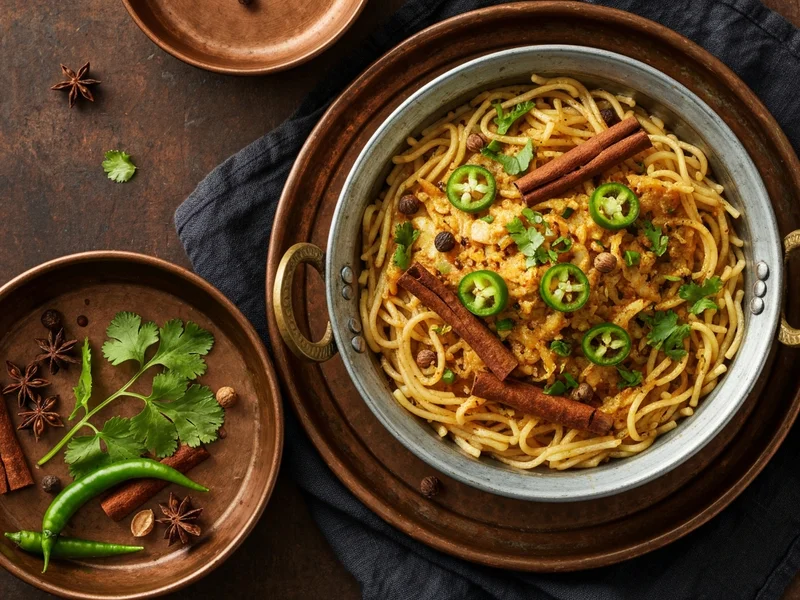
Karachi Khausa — The Memon Coconut Noodle Bowl is a traditional Sindh Pakistani dish. A Burmese coconut noodle soup adapted by Pakistani Memons who fled Burma at Partition — a fragrant coconut chicken curry poured over noodles and finished at the table with a customisable array of toppings.
Khausa is unlike any other dish in Pakistani cuisine. No tomatoes, no biryani spices, no heavy masala — instead: coconut milk, gram flour thickener, ginger, garlic, turmeric, and a chicken curry that smells of somewhere between Karachi and Rangoon.
When Burma became independent and then turbulent in the 1960s, Pakistani Memon families fled to Karachi — bringing their adapted Burmese cooking traditions with them. Khausa is their version of Khao Suey, the famous Burmese noodle bowl. The Memon adaptation made it halal, swapped out some Southeast Asian ingredients for what was available in Karachi, and kept the fundamental genius of the dish: the communal table topping ritual. Each person builds their own bowl differently, adding or leaving out what they like from a shared spread of toppings — crispy noodles, boiled egg, fried onions, coriander, chaat masala, lemon. It's a party in a bowl, and it's utterly unique in Pakistani food culture. Khausa is now a fixture of Karachi home cooking and an invisible cultural monument to the Memon journey.
Ingredients
Instructions
- ROAST AND DISSOLVE THE BESAN: Heat a dry pan on medium heat. Add the besan (gram flour) and stir constantly for 3-4 minutes until it smells nutty and turns a shade darker. Spread it on a plate to cool for 5 minutes. Then transfer to a small bowl and add 5 tablespoons of cold water, stirring vigorously until completely smooth — no lumps at all. Set aside. WHY: Besan is the Pakistani adaptation that gives khausa its body. Raw besan added directly to coconut milk creates a raw flour taste and an unappealing gluey texture. Roasting, cooling, and dissolving it first solves all three problems.
- FRY THE ONIONS FOR THE CURRY BASE: Heat oil in a large pateela (deep pot) on medium-high heat. Add 2 finely sliced onions. Fry, stirring regularly, for 12-15 minutes until deep golden-brown (barista). They should be dark amber, not pale yellow — underdone barista pyaz gives the curry a bland, sharp taste. Remove half the fried onions and set aside for the topping. WHY: The deeply fried onions caramelise and become sweet, adding a complex depth that raw or lightly cooked onions cannot provide. The separate portion for topping is kept intact for crunch.
- BUILD THE CURRY BASE: To the remaining fried onions still in the pateela, add ginger-garlic paste. Stir on medium heat for 2 minutes. Add turmeric and red chilli powder — they'll bloom immediately in the hot oil. Add chicken pieces and stir to coat in the spiced oil. Cook on high heat for 6-8 minutes, stirring regularly, until the chicken is sealed on all sides and the ginger-garlic raw smell is completely gone. HINT: Smell is your guide here — raw garlic has a sharp pungency. Cooked garlic smells sweet and mellow. Wait for the sweet mellow smell before moving to the next step.
- ADD COCONUT MILK: Open your coconut milk cans. The thick cream that has risen to the top — scoop that out first and add it to the pot. Stir into the chicken for 2 minutes — the coconut cream will start to fry slightly and smell intensely coconutty. Then add the remaining thinner coconut milk from both cans. The whole mixture will turn a beautiful turmeric-yellow. Bring to a simmer. FUN FACT: Adding coconut cream before the thinner milk is a technique from Southeast Asian cooking — the cream 'fries' in the hot oil and develops toasty coconut flavour, while the thinner milk provides the liquid base. This two-stage addition builds more complexity than just dumping everything in at once.
- THICKEN WITH BESAN PASTE: Add the dissolved besan paste to the simmering coconut curry in a slow stream, stirring constantly as you pour. If you stop stirring while adding besan paste, it will form lumps. Once all the besan is incorporated, bring to a full simmer on medium heat and cook for 10 minutes, stirring regularly. You'll see the curry visibly thickening — it should coat the back of a chamcha (spoon) after 10 minutes. Add salt. HINT: If the curry becomes too thick, add 100ml of hot water. If too thin after 10 minutes, let it simmer uncovered for another 5 minutes — the steam escape will concentrate it.
- COOK THE CHICKEN THROUGH: Reduce heat to medium-low, cover the pateela, and simmer for 15-20 minutes until the chicken is completely cooked through. Stir every 5 minutes. The chicken should be tender and the coconut curry should be a thick, golden, fragrant sauce. Taste and adjust salt — coconut milk is sweet, so you may need more salt than you expect. The colour should be golden-yellow with visible flecks of spice and the aroma should be deeply coconutty with warm ginger-garlic undertones.
- COOK THE NOODLES: Bring a large pot of salted water to a full boil. Cook spaghetti or noodles according to package instructions minus 1 minute (cook slightly less than stated — they'll continue cooking in the hot curry). Drain, drizzle with a teaspoon of oil, and toss to prevent sticking. Keep warm. HINT: Reserve a cup of pasta cooking water — if noodles clump before serving, a splash of starchy cooking water loosens them instantly.
- PREPARE THE TOPPING SPREAD AND ASSEMBLE: This is the ritual of khausa. Set out small bowls on the table, each containing: the reserved crispy fried onions, sliced hard-boiled eggs, crispy sev or fried noodles, fresh coriander (roughly chopped), fresh mint leaves, sliced green chillies, lemon wedges, and chaat masala. To serve: place a generous portion of noodles in each bowl. Ladle hot coconut chicken curry over the noodles. Then invite each person to build their own bowl from the topping spread. WHY: This communal topping table is what makes khausa khausa — it's not a plated dish, it's an experience. The crunchy sev against the silky curry, the cold egg against the hot soup, the sharp lemon against the sweet coconut — every topping changes the character of the bowl. This is the Memon way.
Chef's Secrets
- Roast the besan before dissolving it in water — this is the single most important step for avoiding a raw flour taste in the curry.
- Use full-fat coconut milk only. Low-fat or 'light' coconut milk produces a watery curry that the besan cannot adequately thicken. Check the can — it should say 17-19% fat.
- The topping table is the dish. Set out every topping you have — the variety is what makes khausa special. If you're serving just curry over noodles with no toppings, you've made a different dish.
- Make the coconut chicken curry a day ahead — it deepens significantly overnight as the besan fully absorbs and the spices integrate. Reheat gently with a splash of water or coconut milk.
- Khausa is traditionally made with chicken thighs, not breast. Breast meat becomes dry and fibrous in coconut milk curry. Thigh stays moist and absorbs flavour better.
- The crispy sev topping is not optional — the textural contrast between soft noodles, liquid curry, and crunchy sev is what makes each bite interesting. Available at any Pakistani snack shop.
Common Questions
How long does Karachi Khausa — The Memon Coconut Noodle Bowl take to make?
Total time is 1h 5m — 25m prep and 40m cooking.
How many servings does this recipe make?
This recipe makes 6 servings, and is rated easy difficulty.
Which region of Pakistan is Karachi Khausa — The Memon Coconut Noodle Bowl from?
Karachi Khausa — The Memon Coconut Noodle Bowl is from Sindh, Pakistan — one of the country's most distinctive culinary traditions.
What do you serve with Karachi Khausa — The Memon Coconut Noodle Bowl?
Serve as a communal meal with the topping spread at the centre of the table. Each person assembles their own bowl. Toppings: crispy sev, fried onions, sliced boiled eggs, fresh coriander, fresh mint, green chillies, lemon wedges, chaat masala. Optional: a drizzle of extra coconut milk over the top for richer bowls. Khausa is a full meal on its own — no bread needed. A simple green salad on the side is the only accompaniment required.
Goes Well With
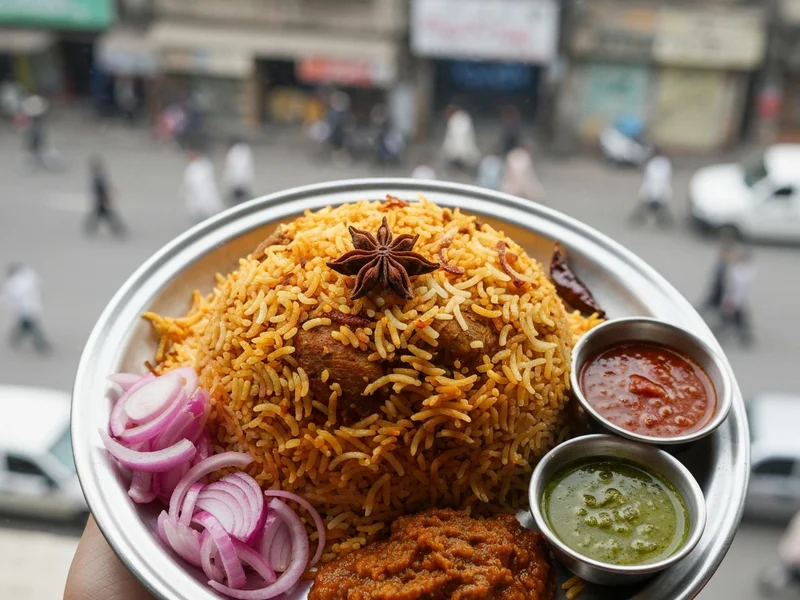
Authentic Karachi Biryani
The iconic Karachi-style biryani — fiery, tangy, loaded with potatoes and prunes. Born in the streets of Karachi, perfected by generations of Muhajir cooks.
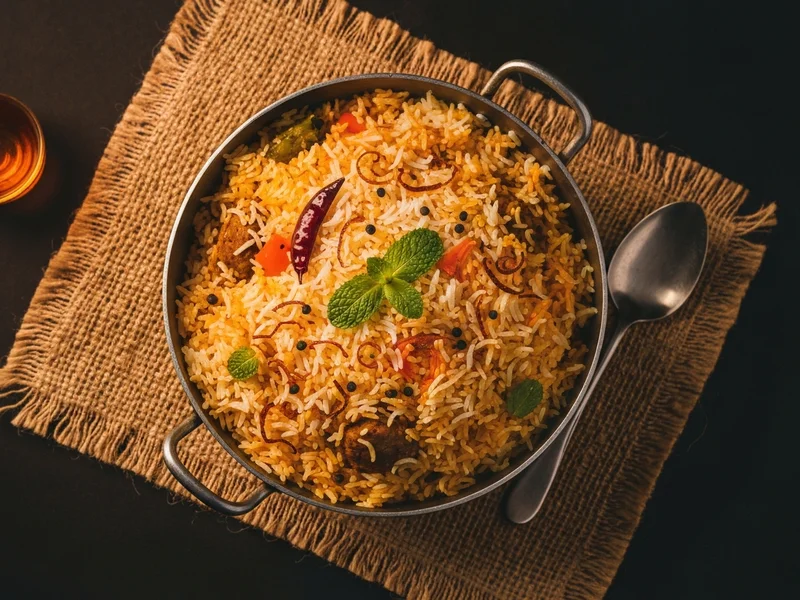
Hyderabadi Biryani
The kacchi biryani of Hyderabad, Sindh — raw marinated meat layered with parboiled rice, sealed, and slow-cooked until every grain absorbs the masala. No pre-cooking the meat.
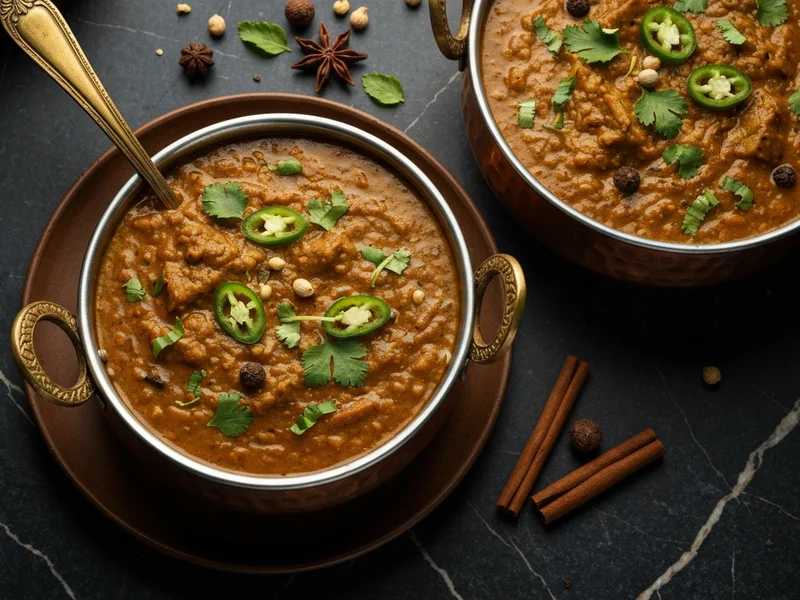
Karachi Parsi Dhansak
Karachi's Parsi dish of slow-cooked lamb with 3-4 lentils, pumpkin, fenugreek, and brinjal in a sweet-sour-spicy broth. Traditionally served with caramelised Parsi brown rice and kachumber salad. Cultural note: Dhansak is Parsi mourning food — served on the fourth day after a death. It is not made at weddings or celebrations.
What Cooks Are Saying
Authentic taste, clear steps. Exactly what I was looking for.
Made this last weekend and the whole family loved it. Will definitely make again.
I was nervous to try this but the instructions made it so easy. Turned out amazing.
Leave a Review
Tried this recipe? Share your experience — your review helps other cooks.