
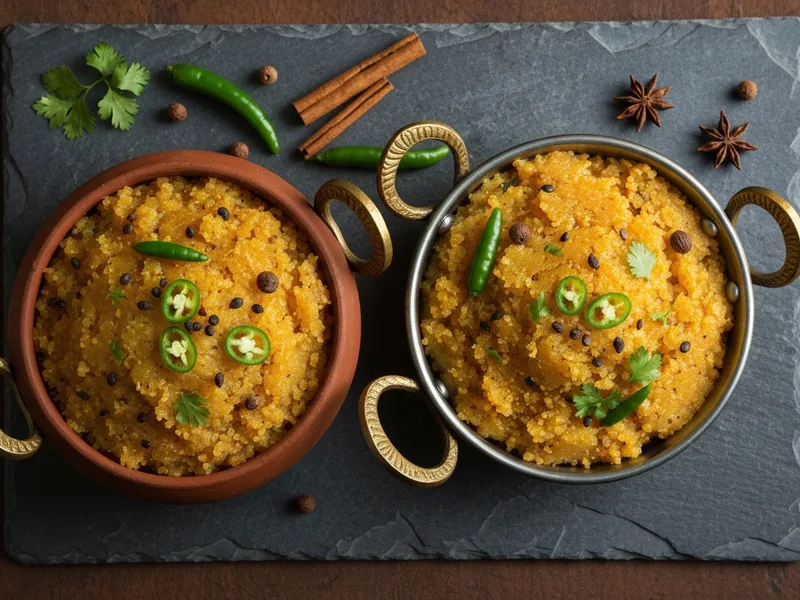
Sindh cuisine
Karachi Halwa (Cornflour Halwa / Bombay Halwa)
Karachi Halwa (Cornflour Halwa / Bombay Halwa) is a traditional Sindh Pakistani dish. A jewel-bright, translucent, gloriously chewy halwa made from cornflour, sugar, and an extravagant amount of ghee — cooked in one pot with relentless stirring until it transforms into a bouncy, glistening confection the colour of liquid amber or emerald. Set in a greased tray, cut into diamonds, and decorated with pistachios, it looks like something from a confectionery museum. It is also utterly, devastatingly delicious.
Karachi Halwa — also called Bombay Halwa, Corn Halwa, or Habshi Halwa in some regions — is a sweet with a complicated history.
The use of cornflour (a 19th-century industrial product) rather than traditional semolina marks it as a relatively modern innovation, despite its now-iconic status in Karachi's sweet shops. It's believed to have originated in the Bombay-Karachi trading community, brought over by Sindhi-Hindu merchants who maintained deep commercial ties between the two port cities before Partition. After 1947, the recipe settled firmly into Karachi's confectionery culture and became one of the city's signature sweets. You'll find it in every halwai shop (sweet shop) in Karachi, cut into bright orange or green diamond shapes and packed into decorative boxes. The technique requires patience and a strong stirring arm — but the reward is a sweet unlike anything else in the Pakistani dessert canon.
Ingredients
Instructions
- PREPARE YOUR TRAY AND STATION: Before you start cooking, grease a shallow metal or glass tray (about 8x8 inches or 9x9 inches) generously with ghee or oil. Set it aside — you'll need it ready the moment the halwa is done, because you'll need to work quickly. Also have your pistachios and almonds chopped and nearby. Have a strong wooden spoon or a heat-resistant silicone spatula ready for stirring. HINT: Once you start cooking this halwa, you cannot stop stirring for extended periods — so get everything ready beforehand. Think of a surgeon laying out instruments before an operation — same principle, less blood.
- DISSOLVE THE CORNFLOUR: In a large, heavy-bottomed karahi (wok) or a wide, deep pateela (saucepan) — heavy-bottomed is essential to prevent burning — pour 3 cups of cold water. Add 1 cup of cornflour to the cold water. Whisk vigorously with a wire whisk or a fork until the cornflour is completely dissolved with zero lumps. The mixture will look milky-white. Add food colour and elaichi powder and whisk again. WHY: Always dissolve cornflour in cold water — adding it to hot water will cause it to immediately lump and you'll be left with a lumpy disaster. Cold water first, always.
- ADD SUGAR AND START COOKING: Add 2 cups of cheeni (sugar) to the karahi with the cornflour mixture and stir to combine. Place the karahi over medium heat. Begin stirring with your wooden spoon. As the mixture heats up, you'll notice it changing: first it becomes warm and slightly thicker; then around 5–7 minutes, it will start to thicken noticeably and look like a pale coloured gel. Keep stirring continuously in a wide, figure-eight pattern, making sure to scrape the bottom and edges of the karahi. WHY: If you stop stirring for too long at this stage, the bottom will scorch and you'll get brown lumps in your halwa. The stirring distributes heat and prevents sticking. FUN FACT: The Urdu name for this constant stirring technique is 'chamcha pherna' — rotating the ladle. It's so central to halwa-making that it's become a colloquial expression meaning 'to flatter someone', because it requires endless, tireless effort.
- ADD GHEE IN STAGES: When the mixture is thick and gel-like (around 8–10 minutes of cooking), begin adding the ghee. Don't add it all at once. Add it in 3–4 additions, about 3 tablespoons at a time, stirring vigorously after each addition until each batch of ghee is fully incorporated before adding the next. The halwa may look greasy and separated when you first add ghee — keep stirring and it will come together. WHY: Adding ghee gradually gives the mixture time to emulsify and absorb it, resulting in a smooth, glossy halwa. Dumping all the ghee in at once risks a greasy, separated texture. HINT: You'll know the ghee is absorbed when the mixture looks uniform and glossy rather than oily and separated.
- THE CRITICAL PHASE: Continue cooking and stirring on medium heat. This is the long part — it will take 20–30 minutes total from when you started. Watch for these stages: Stage 1 — pale, thick gel (10 minutes). Stage 2 — the mixture starts to pull away from the edges and gather towards the centre as you stir (15–20 minutes). Stage 3 — the halwa becomes shiny, translucent, and forms a cohesive mass that follows the spoon around the pan and does not stick to the sides (20–25 minutes). This is when you're almost done. HINT: Test the halwa by dropping a small piece into cold water. It should hold its shape and feel firm and slightly bouncy — like a gummy sweet — not dissolve or feel mushy. If it dissolves, cook a few minutes more.
- FINAL FLAVOURS AND TRANSFER: When the halwa is at Stage 3 (shiny, cohesive, pulling away from the sides), add kewra essence or rose water if using, and stir through quickly. Remove from heat. Working quickly, pour and scrape the hot halwa into your pre-greased tray. Use the back of a wet spoon or a wet spatula to spread it into an even layer — it should be about 1–1.5 cm thick. Work fast — halwa sets quickly as it cools. Immediately scatter chopped pistachios and almonds over the top and press them down lightly so they stick into the surface.
- COOL AND CUT: Leave the halwa to cool completely at room temperature — do NOT refrigerate it while it's hot or warm. This takes about 1–2 hours. As it cools, it will firm up and become properly set, bouncy, and sliceable. Once completely cooled and set, use a sharp knife to cut it into diamond shapes: make parallel diagonal cuts in one direction, then parallel diagonal cuts in the other direction to create a diamond (lozenge) pattern. The halwa should be firm enough to hold its shape but yield and feel bouncy when you press it. FUN FACT: The traditional orange colour of Karachi Halwa is said to represent the warmth and prosperity of the city — though green is equally traditional and represents the Pakistan flag. Use whichever feels right.
- STORE: Karachi Halwa keeps at room temperature in an airtight container for up to 5 days — do not refrigerate, as the cold makes it hard and grainy. Arrange pieces in a single layer or separate layers with parchment paper. It makes a spectacular gift — pack in a decorative box lined with foil and it looks utterly professional.
Chef's Secrets
- Use a heavy-bottomed karahi or pan. A thin pan will cause hot spots and burn the halwa on the bottom while the rest is still cooking.
- Don't reduce the ghee — it's what gives Karachi Halwa its signature richness and prevents the final product from being rubbery. This is not the time for healthy cooking.
- The colour of cornflour varies by brand. Some are very white, some are slightly yellow. The food colour needs to work with whatever base colour you have — for orange halwa, use orange colour. For green, add green.
- If your halwa isn't setting after cooling, it was undercooked. Return it to the pan, reheat, and cook for another 5–10 minutes.
- For extra flavour, try adding a few strands of saffron dissolved in 1 tbsp of warm water — stir it in with the food colour for a golden, saffron-scented variation.
Common Questions
How long does Karachi Halwa (Cornflour Halwa / Bombay Halwa) take to make?
Total time is 1h — 10m prep and 50m cooking.
How many servings does this recipe make?
This recipe makes 16 servings, and is rated hard difficulty.
Which region of Pakistan is Karachi Halwa (Cornflour Halwa / Bombay Halwa) from?
Karachi Halwa (Cornflour Halwa / Bombay Halwa) is from Sindh, Pakistan — one of the country's most distinctive culinary traditions.
What do you serve with Karachi Halwa (Cornflour Halwa / Bombay Halwa)?
Serve as a festive sweet at Eid, weddings, or as a gift. Also lovely as an after-dinner sweet with chai. Traditionally cut into diamond shapes and arranged on a platter lined with silver foil.
Goes Well With
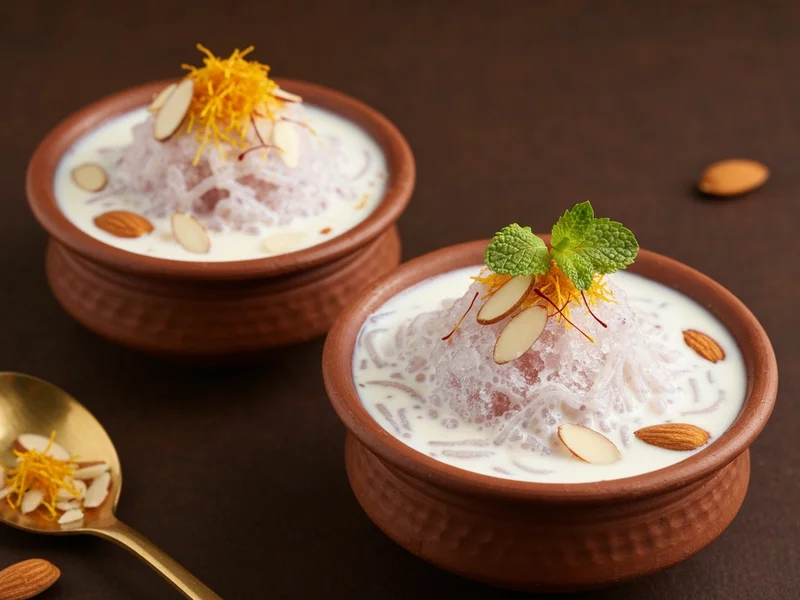
Karachi Falooda
Karachi Falooda is Pakistan's most theatrical dessert drink — layered with rose syrup, chewy falooda vermicelli, plump basil seeds, cold rabri, and topped with a scoop of ice cream. Every sip is a different texture. Every glass is a full event.
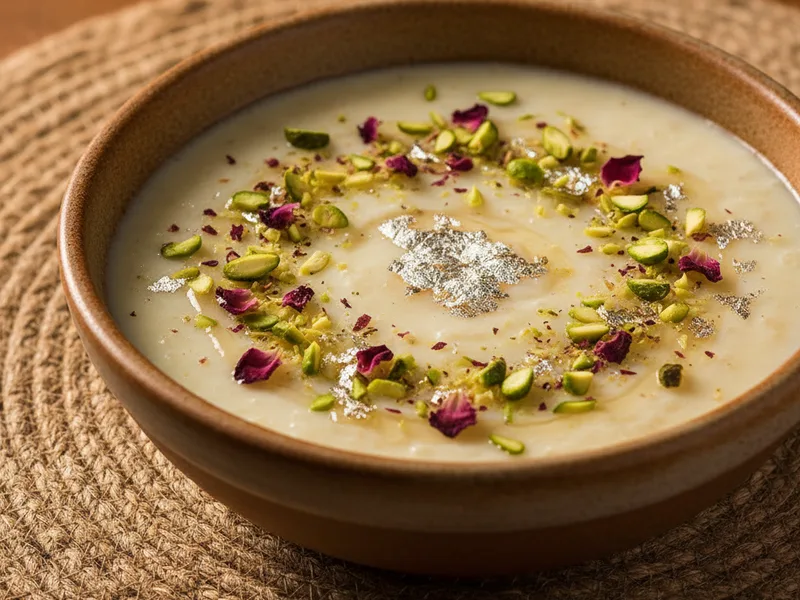
Chawal Ki Kheer — Sindhi Slow-Cooked Rice Pudding
Traditional Sindhi-style chawal ki kheer made by slow-cooking basmati rice in whole milk until the grains dissolve and the pudding turns thick and creamy. Scented with cardamom and rose water, this is the patient cook's reward — simple ingredients, extraordinary results.
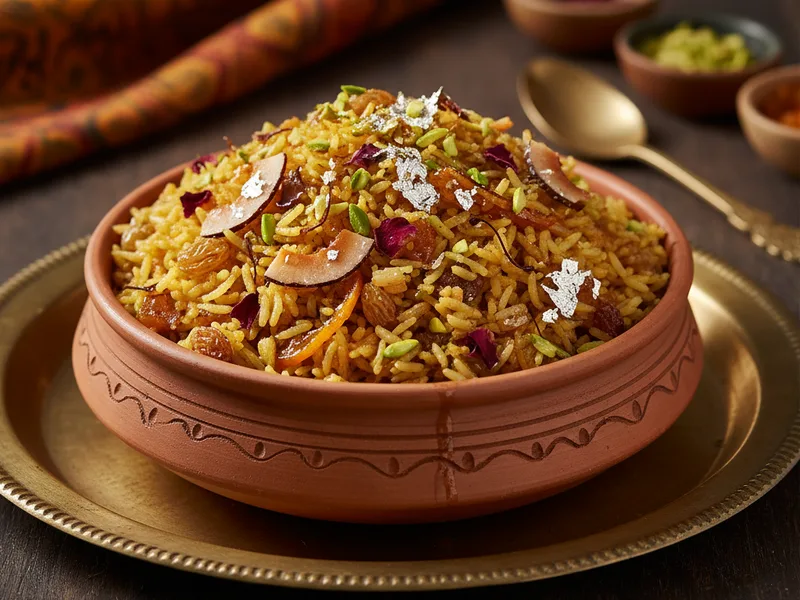
Sindhi Zarda — Fragrant Sweet Rice with Coconut
Sindhi-style zarda sets itself apart with the addition of fresh coconut and a heavier hand with rose water, creating a fragrant sweet rice dessert with a distinctly coastal character. Made for Sindhi celebrations and eid gatherings, this version is lighter on ghee but big on flavour.
What Cooks Are Saying
Better than the restaurant version. The tips in the recipe really make a difference.
Authentic taste, clear steps. Exactly what I was looking for.
Turned out well. I used boneless meat which changed the cook time slightly but flavour was great.
Leave a Review
Tried this recipe? Share your experience — your review helps other cooks.