
KP cuisine
KP Hareesa Gosht
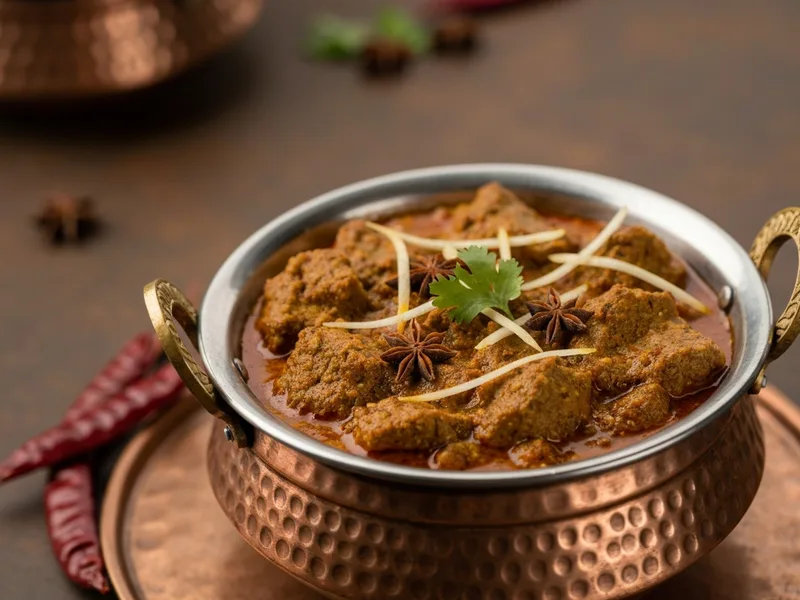
KP Hareesa Gosht is a traditional KP Pakistani dish. The ancient grain-and-meat porridge of KP — hareesa is simpler than haleem, celebrating wheat and lamb in their most elemental form. Warm, sustaining, and profoundly comforting.
Hareesa is haleem's older, simpler ancestor.
It is mentioned in 13th-century Arab cookbooks and is still eaten from Morocco to Afghanistan under closely related names. Before masala boxes and spice blends, before modern food culture — there was hareesa. Wheat, meat, salt, and time. That's it. This dish is believed to have travelled with Central Asian peoples thousands of years ago and took root in KP, Afghanistan, and the broader Pashtun heartland. What distinguishes it from haleem is the relative absence of lentils and the very minimal spice profile — you taste grain, meat, and the rendered fat of the animal, nothing more. Fun fact: hareesa is considered a healing food in Pashtun tradition — new mothers and the ill are fed hareesa because of its high-energy, easily digestible grain-protein combination. Making authentic KP hareesa teaches you patience in its purest form. There are no shortcuts, no clever tricks — just sustained heat, steady stirring, and trust. The result is a bowl of something that has nourished humans for millennia, and that weight of history is palpable in every spoonful.
Ingredients
Instructions
- SOAK WHEAT OVERNIGHT: This is the most important step in making hareesa. Cover wheat kernels in at least three times their volume of cold water and soak for 12 hours minimum. The kernels should be swollen and slightly soft when you press them. Drain before cooking. HINT: You can test if wheat is sufficiently soaked by biting a kernel — it should give easily without being crunchy at the centre.
- COOK WHEAT FIRST: In a large, heavy-bottomed pot, add soaked wheat with 2 litres of fresh cold water. Bring to a boil over high heat, then reduce to a gentle simmer. Cook for 2-3 hours, adding water as needed to keep wheat submerged. The wheat should eventually begin to break down and the water will become cloudy and thick. HINT: Use a wooden spoon to start stirring periodically after the first hour — the wheat will gradually stick to the bottom if left completely unattended.
- COOK MUTTON IN SEPARATE POT: In another pot, heat 2 tbsp ghee, add sliced pyaaz and cook until golden. Add mutton pieces, salt, kali mirch, and zeera. Add 1 litre water and cook on medium heat for 2 hours until mutton is falling off the bone. Remove bones and shred meat very finely — hareesa uses completely shredded meat, almost like pulled pork texture.
- COMBINE AND POUND: Add shredded mutton and all the meat cooking liquid to the wheat pot. Stir vigorously to combine. Now begins the long pounding: using the back of a heavy spoon or a wooden pestle, continuously work the mixture in circular motions for 30-45 minutes. The goal is to break down the wheat kernels completely into a smooth, thick porridge. HINT: Traditional hareesa makers pound for hours — if your arms tire, it's okay to use a stick blender in short pulses, but don't blend completely smooth. Hareesa has texture.
- LONG SLOW FINISH: After combining and initial pounding, cook on the lowest possible heat for another 2 hours, stirring every 10-15 minutes. The hareesa will gradually become a uniform, thick porridge with no distinct grain or meat visible — it all melds together. HINT: If the hareesa is sticking at the bottom, reduce heat and add a splash of hot water. Scrape the bottom with a flat-edged spoon.
- TASTE AND FINAL SEASONING: Taste hareesa and add more salt and kali mirch as needed. It should taste of wheat, lamb, salt, and pepper — nothing hidden, nothing complex. The simplicity is the point.
- THE ESSENTIAL TARKA: Heat 3 tbsp ghee in a small pan until it's smoking hot. Add lal mirch and immediately pour over the hareesa surface. The ghee will sizzle and bubble dramatically — this is a dramatic finish to a humble dish. Serve topped with julienned ginger. Eat with naan or just as a porridge in bowls.
Chef's Secrets
- Hareesa is supposed to look brown and plain — don't let the simple appearance fool you, the flavour is profound.
- Authentic KP hareesa uses dumba (fat-tailed sheep) fat instead of ghee — if you can source it from a butcher, use it. The flavour is extraordinary.
- The more you pound and stir, the better the texture. Treat it as a workout.
- Hareesa keeps well refrigerated for 3-4 days. Reheat with a splash of water as it thickens when cold.
- Don't be tempted to add more spices — the entire point of hareesa is its minimalism. Resist.
Common Questions
How long does KP Hareesa Gosht take to make?
Total time is 8h 30m — 30m prep and 8h cooking.
How many servings does this recipe make?
This recipe makes 8 servings, and is rated hard difficulty.
Which region of Pakistan is KP Hareesa Gosht from?
KP Hareesa Gosht is from KP, Pakistan — one of the country's most distinctive culinary traditions.
What do you serve with KP Hareesa Gosht?
Serve in large bowls topped with a generous ghee tarka, julienned ginger, and a few slit green chillies. Naan is essential. Some KP families add a side of sliced raw onion sprinkled with salt — the sharpness pairs beautifully with the mellow grain porridge.
Goes Well With
Hareesa — KP Slow-Cooked Wheat and Mutton Porridge
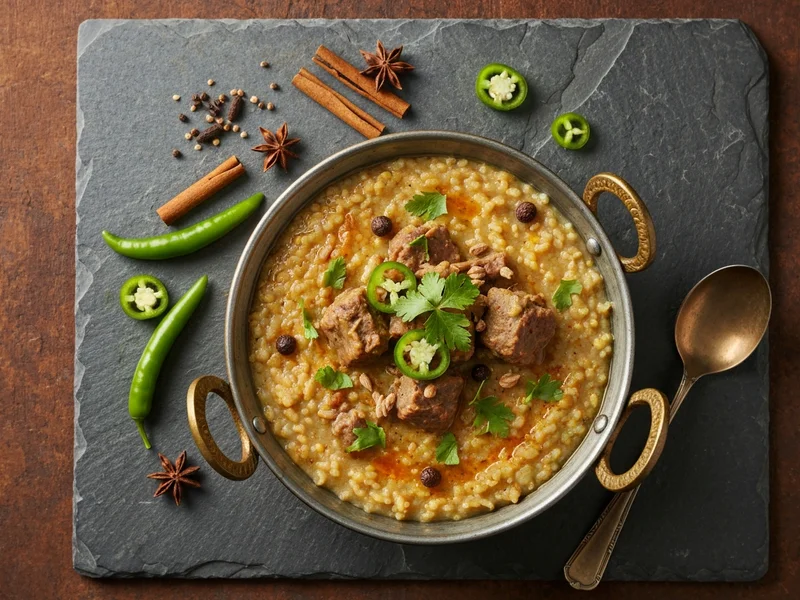
Hareesa is haleem's ancient ancestor — whole wheat berries and mutton slow-cooked together for 4-6 hours until they completely dissolve into a thick, silky, porridge-like dish that is simultaneously humble and extraordinary. Finished with a sizzling ghee tarka poured dramatically over the top, this is the dish that sustained armies, fed pilgrims, and defines winter mornings in KP.
Pashtun Hareesa — Wheat and Mutton Porridge
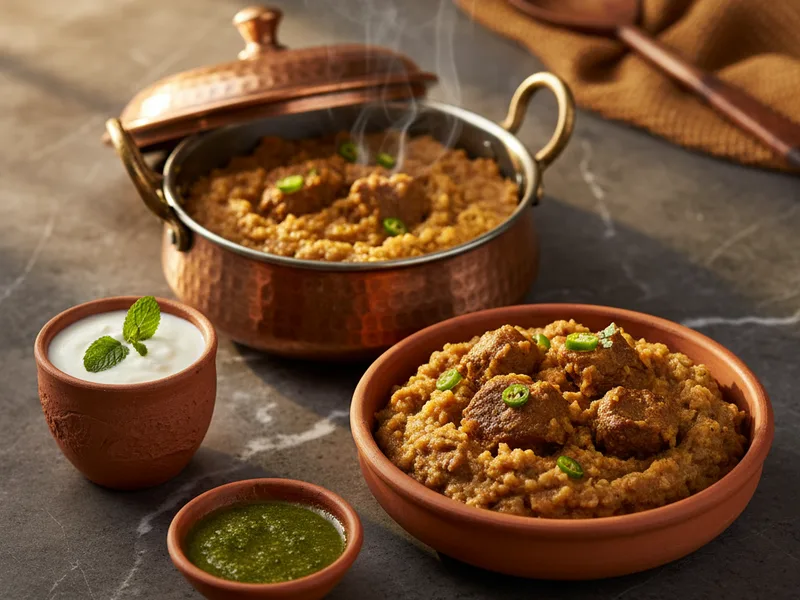
KP's ancient wheat-and-mutton slow-cooked porridge — an overnight dish that requires patience but delivers extraordinary depth. Hareesa has been a Pashtun winter breakfast and celebration food for over a thousand years.
Afghani Hareesa — Cross-Border Style
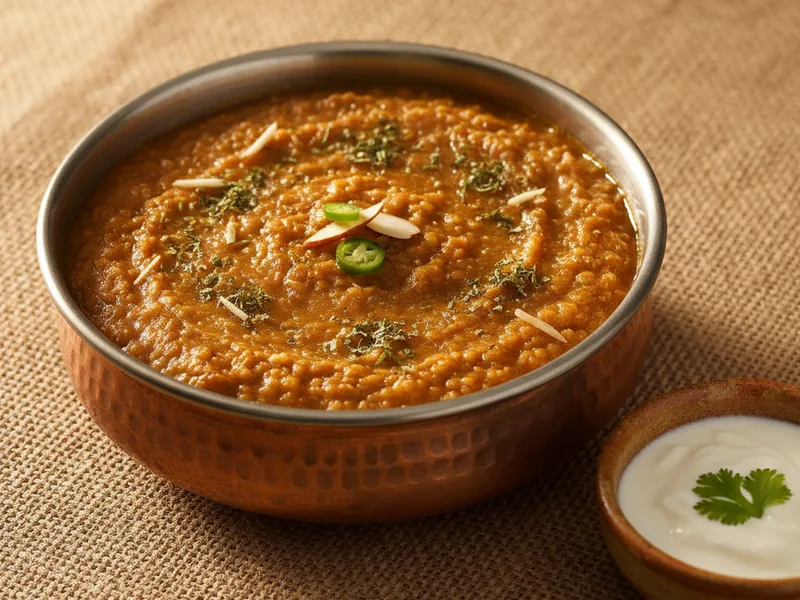
The Afghan-influenced hareesa popular in Peshawar's Qissa Khwani Bazaar — richer with more ghee, finished with a cinnamon-scented tarka, and reflecting the cross-border culinary exchange that defines this frontier city.
What Cooks Are Saying
Better than the restaurant version. The tips in the recipe really make a difference.
Authentic taste, clear steps. Exactly what I was looking for.
Good recipe, clear instructions. The end result was delicious.
Leave a Review
Tried this recipe? Share your experience — your review helps other cooks.