
Punjab cuisine
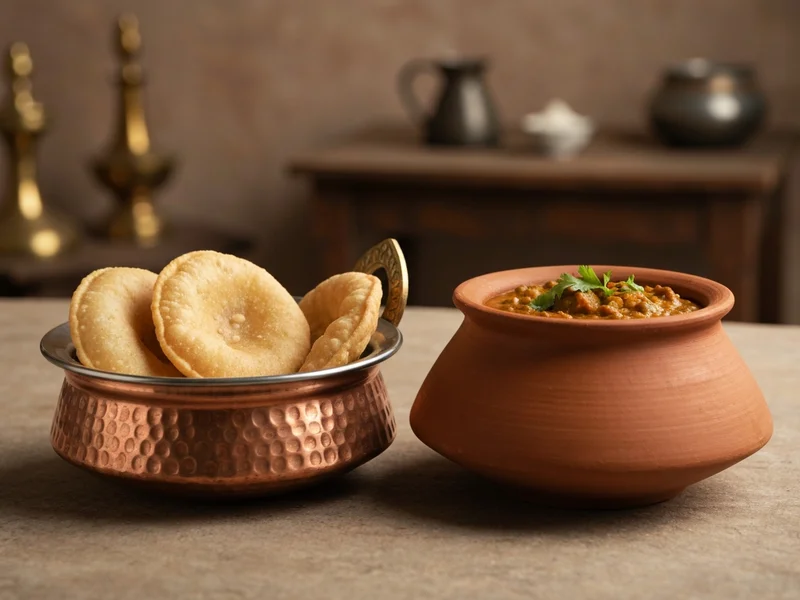
Lahori Halwa Puri with Channay
Lahori Halwa Puri with Channay is a traditional Punjab Pakistani dish. Lahori Halwa Puri is the iconic Pakistani Sunday breakfast — a full spread of suji (semolina) halwa, deep-fried puri bread, and spiced channay (chickpeas), served together as a feast. It is the meal that families plan weekends around, the one that means everything is okay with the world.
There are two types of people in Pakistan: those who eat halwa puri on Sunday, and those who are wrong.
The word 'halwa' comes from the Arabic 'hulw' meaning 'sweet', and suji halwa (semolina pudding) has been made in South Asia since the Mughal era. Today, Lahore's old city neighbourhoods have specific halwa puri waalas who operate from before sunrise and sell out by 9am — queuing is mandatory and worth it. At home, the full spread takes about an hour across three simultaneous preparations, but we'll break it down so you can manage each component without panicking. Put on some music. This is a weekend project and it should feel like one.
Ingredients
Instructions
- PREP THE CHICKPEAS (NIGHT BEFORE): Rinse dried channay (chickpeas) and soak in cold water overnight — they double in size. Drain, add to a pateela (saucepan) with fresh water and a pinch of namak (salt), bring to boil and simmer for 45-60 minutes until completely tender — they should crush easily between two fingers. If using tinned chickpeas, drain and rinse — skip straight to Step 3 for the masala. HINT: Undercooked chickpeas are grainy and unpleasant and no amount of masala fixes them. When in doubt, cook them longer.
- MAKE THE PURI DOUGH: Combine maida (flour), 2 tablespoons of oil, a pinch of namak (salt), and enough lukewarm water (about 100-120ml) to make a firm but smooth dough. Knead for 5-6 minutes until the dough is elastic and not sticky. WHY: The oil in the dough (called moyan in Urdu) coats the gluten strands and makes the puri crispy and layered rather than doughy. Firm dough puffs better than soft dough when frying. Cover with a damp cloth and rest for 20 minutes. FUN FACT: The technique of working fat into flour before adding water is the same principle as making pie crust or pastry — fat = flaky, airy, light.
- MAKE THE CHANNAY MASALA: Heat 3 tablespoons of oil in a karahi (wok) over medium-high heat. Add finely chopped pyaz (onion) and fry for 10 minutes until deep golden. Add adrak lehsan paste and fry 2 minutes. Add chopped tamatar (tomatoes) and cook down for 6-7 minutes until they completely break down. Add Shan Chana Masala, lal mirch, and amchur (mango powder). Stir and cook the masala for 2 minutes — it should smell intense and fragrant. Add the cooked chickpeas and enough water to make a thick gravy. Simmer on low for 15 minutes. HINT: Channay should be saucy but not watery — like a thick, clingy curry. Mash a few chickpeas with a chamcha (ladle) to thicken naturally.
- TOAST THE SUJI FOR HALWA: Heat ghee in a degh or heavy-bottomed pan over medium-low heat. Add the suji (semolina) and stir constantly with a chamcha (ladle). Keep stirring — do not stop or it will burn at the bottom. After 8-10 minutes, the suji will turn golden-tan and emit a deeply nutty, almost popcorn-like smell. This is the most important step in halwa. WHY: Raw semolina tastes chalky and starchy. Properly roasted semolina tastes nutty, rich, and completely different. You cannot under-roast and compensate later. HINT: The suji is ready when it turns uniformly golden and smells like toasted nuts — not when it just starts to colour.
- ADD THE SYRUP TO HALWA: In a separate pateela, bring together 1 cup water, half a cup of milk, the sugar, and crushed elaichi (cardamom) to a boil, stirring until sugar dissolves. Very carefully add this hot liquid to the toasted suji — it will spit and bubble violently. Stand back and stir quickly. The suji will absorb the liquid almost instantly and puff up. Keep stirring over medium heat for 3-4 minutes until the halwa becomes thick, glossy, and pulls away from the sides of the pan. Stir in saffron milk. HINT: The halwa is done when it's thick enough to hold a peak and the ghee starts to appear on the surface edges.
- FRY THE PURI: Heat 500ml of tel (oil) in a deep karahi or degh to about 180°C — test by dropping a tiny ball of dough in; it should sizzle immediately and float to the surface. Divide the rested dough into golf ball-sized portions. Roll each ball into a circle about 12-15cm wide and 3mm thick — not too thin or they tear, not too thick or they stay doughy inside. Slide one at a time into the hot oil. Immediately use the back of a chamcha (ladle) to gently press down on the puri in the oil — this traps steam inside and makes it puff. It puffs dramatically within 30-45 seconds. Flip and fry the other side for 20-30 seconds until golden. Drain on a paper towel. FUN FACT: The puff happens because water in the dough turns to steam instantly in hot oil. The gluten network traps the steam, creating that hollow, balloon-like interior.
- ASSEMBLE AND SERVE: Work quickly — puri deflates within 2-3 minutes of frying and halwa firms up as it cools. Fry puri in batches while someone else portions the halwa and channay. Serve on a large thaal (round tray) or individual plates: one generous pile of suji halwa (bright orange-golden, glistening), the channay masala on the side, and puri piled hot from the oil. The contrast of sweet halwa, spiced channay, and puffy fried puri eaten together is what halwa puri is — you eat a bit of each together in every mouthful. Do not eat them separately.
Chef's Secrets
- Halwa puri is a team sport — you need two people for the final frying stage: one rolling puri, one frying. Solo attempts mean the fried puri cools and deflates while you're still rolling the next batch.
- The suji halwa can be made 20-30 minutes ahead and kept covered on very low heat, stirring occasionally. It holds well. The channay can be made the night before — it tastes better reheated.
- Oil temperature for frying puri is critical: too cool and puri absorbs oil and stays flat; too hot and it browns before puffing. 175-180°C is the sweet spot. An oil thermometer helps.
- Add a tablespoon of ghee and a pinch of kesar (saffron) to the channay masala at the end — it elevates the dish to halwa puri wala level.
- Leftover halwa can be shaped into balls and rolled in coconut or chopped pista (pistachios) as a dessert. Never waste halwa.
Common Questions
How long does Lahori Halwa Puri with Channay take to make?
Total time is 2h — 1h prep and 1h cooking.
How many servings does this recipe make?
This recipe makes 4 servings, and is rated medium difficulty.
Which region of Pakistan is Lahori Halwa Puri with Channay from?
Lahori Halwa Puri with Channay is from Punjab, Pakistan — one of the country's most distinctive culinary traditions.
What do you serve with Lahori Halwa Puri with Channay?
Serve the full spread together — halwa, puri, and channay eaten simultaneously. Traditional accompaniments: achar (pickle) and lassi. This is a complete meal and no side dishes are needed or appropriate.
Goes Well With
Karachi Halwa Puri
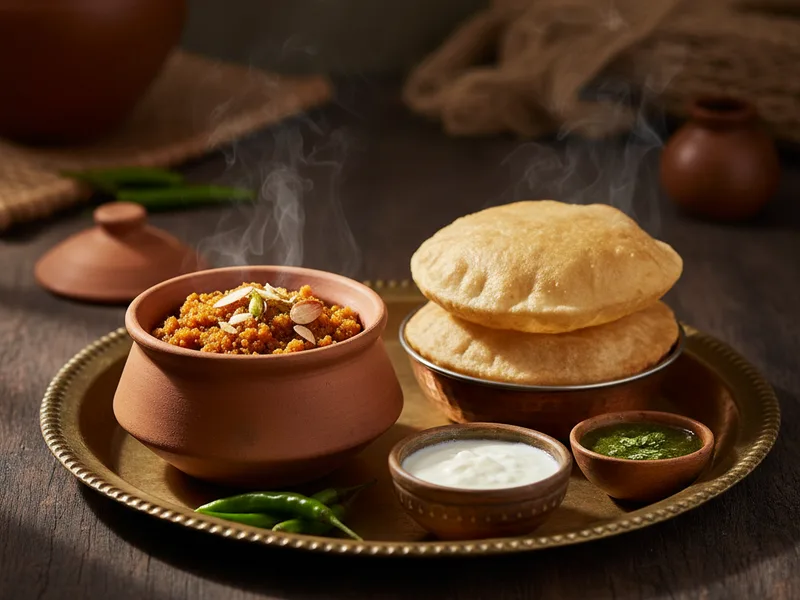
Karachi Halwa Puri is the city's most celebrated breakfast — golden, pillowy-soft puri bread paired with intensely sweet sooji halwa and spiced chana, a Sunday morning tradition that Karachiites fiercely defend.
Sindhi Halwa Puri
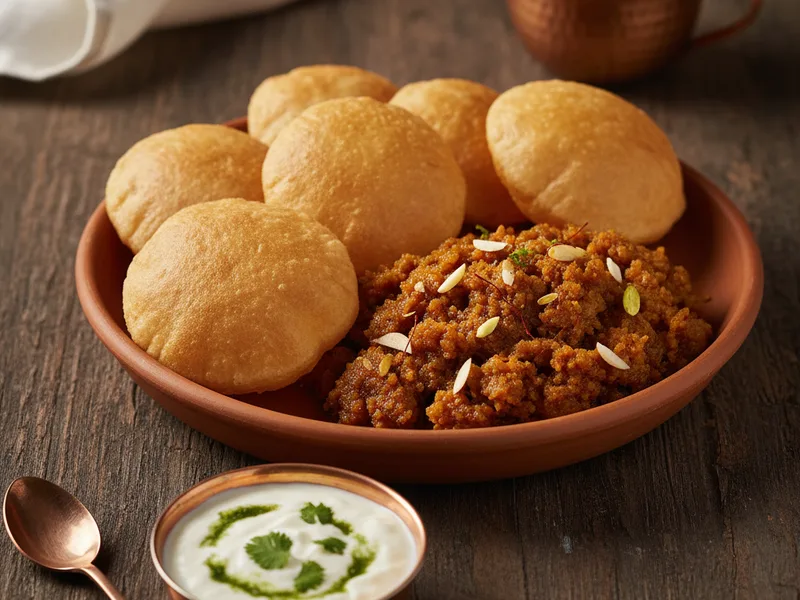
Sindhi Halwa Puri features a distinctive atta (whole wheat) puri and a richer, looser halwa made with more ghee and milk — the rural Sindhi take on this iconic breakfast that's warmer and more rustic than the city versions.
Peshawari Halwa Puri
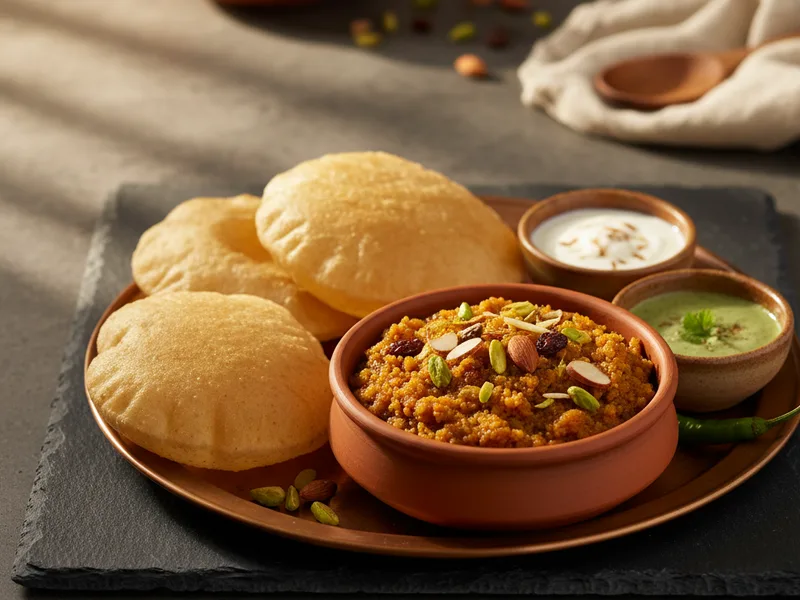
Peshawari Halwa Puri features a thicker, crispier puri and a distinctly spiced, darker halwa enriched with nuts — reflecting KP's love of robust flavours and generous hospitality.
What Cooks Are Saying
I've tried many recipes for this dish but this one is the best by far.
Good recipe, clear instructions. The end result was delicious.
Leave a Review
Tried this recipe? Share your experience — your review helps other cooks.