
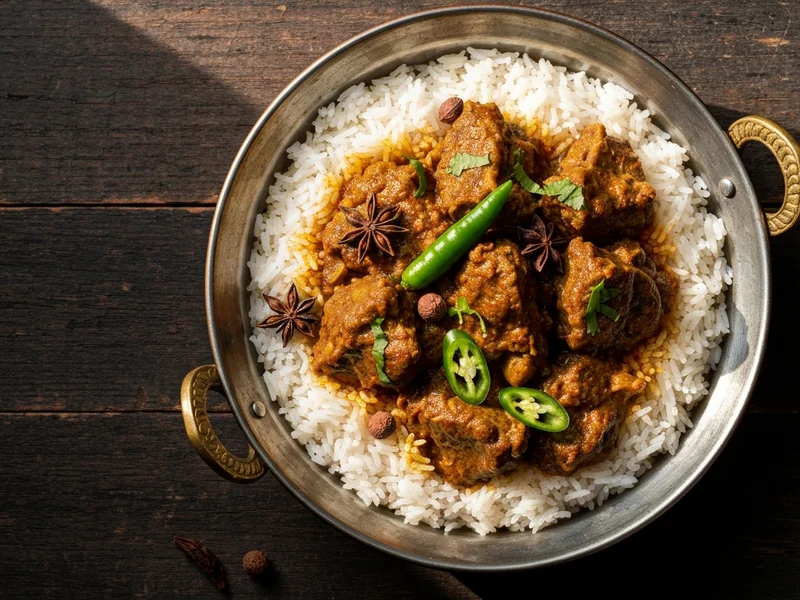
Azad Kashmir cuisine
Kashmiri Gushtaba
Kashmiri Gushtaba is a traditional Azad Kashmir Pakistani dish. The grand finale of the Kashmiri Wazwan — hand-pounded mutton meatballs (with fat pounded in) in a pale cream yoghurt-fennel gravy. No onion. No tomato. No red chilli. The ivory colour is the mark of authenticity — orange or red means it has been modified.
Gushtaba is served last. Always last. In the Kashmiri Wazwan — the ceremonial 36-dish feast — dozens of dishes arrive before it. Seekh kebabs, tabak maaz, rogan josh, yakhni, methi maaz. You eat and eat and eat. And then, when the table is almost empty and everyone is leaning back patting their stomachs, the Gushtaba arrives. One large, perfect white meatball floating in a white gravy. The message is clear: the feast is over. When you finish the Gushtaba, the Wazwan is complete.
Being a Waza is an inherited identity, not just a job. Waza families travel with their own deghs (pots) and equipment to major weddings. The knowledge of cooking Gushtaba — specifically the hand-pounding technique and the proportion of fat to lean meat — is passed directly from father to son. It is not written down. This recipe reconstructs that technique based on traditional Kashmiri culinary accounts. The hand-pounding is not optional — a food processor makes Seekh kebab texture. Hand-pounding makes Gushtaba.
Ingredients
Instructions
- HAND-POUND THE MUTTON — THIS IS THE ENTIRE TECHNIQUE: Cut the mutton (with its fat) into rough chunks. Place a portion on a clean stone, wooden board, or heavy chopping board. Using a heavy stone, the back of a cleaver, or a heavy wooden mallet, pound the meat vigorously. Hit it, fold it onto itself, turn it, hit it again. This is a rhythm — pound-fold-turn-pound-fold-turn. Continue for 15-20 minutes, working in batches. WHY: This is the difference between Gushtaba and any other meatball in the world. Pounding ruptures the meat fibres and fat cells in a way that a food processor cannot replicate. The result is a paste that holds together through protein bonding alone, without any binder. The texture becomes smooth, almost silky — like a very fine pâté. A food processor chops; pounding emulsifies. HINT: Your arms will ache. This is normal. Switch arms halfway through. The finished pounded meat should look like a smooth, pale paste with no visible chunks. If you press a ball of it and it holds its shape without cracking, you're done.
- SEASON THE POUNDED MEAT: To the pounded mutton paste, add half a teaspoon of salt, a pinch of ground cardamom, and a pinch of sonth (dry ginger powder). Mix by folding and pressing — not stirring — to incorporate the spices evenly. The minimal seasoning inside the meatball is intentional. WHY: The complexity of flavour comes from the gravy. The meatball itself is meant to be a clean, pure expression of pounded meat. Heavy spicing inside the ball would muddy the gravy when it cooks. HINT: Wet your hands with cold water before forming the meatballs — this prevents the meat from sticking and helps create a smoother surface. Form the pounded meat into large balls — each about the size of a large golf ball, roughly 70-80g. You should get 6-8 balls. Press firmly while forming — they need to be dense and cohesive with no air pockets.
- POACH THE MEATBALLS: In a wide, deep pateela (pot) or degh, bring 2 cups of water to a gentle boil. Add the black cardamom pods, cinnamon stick, cloves, and half a teaspoon of salt to the water. Lower the meatballs in carefully — one by one — using a chamcha (spoon). Reduce heat to medium-low and poach (not boil) the meatballs for 20 minutes, turning them very gently once halfway through. WHY: Poaching at a gentle simmer keeps the meatballs intact and gives them a delicate texture. Boiling violently will make them fall apart — especially in these first stages when they haven't firmed up completely. HINT: Do not stir aggressively. Use the back of a spoon to gently coax them if they stick, or simply shake the pot gently. After 20 minutes, the meatballs should be firm and cooked through — cut one open to check: it should be uniformly white/pale inside with no pink.
- REMOVE MEATBALLS AND BUILD THE GRAVY: Carefully remove the meatballs with a slotted spoon and set aside. Do not discard the poaching liquid — this is your gravy base. It has absorbed the flavour of the whole spices and the gelatin from the meat. In a separate heavy-bottomed karahi or the same pateela (remove the whole spices with a slotted spoon first), heat 3 tbsp ghee over medium heat. Add the fennel powder (saunf) and stir for 30 seconds — you should smell an immediate, beautiful aniseed fragrance rise from the pan. Add the sonth (dry ginger powder) and cardamom powder and stir for another 30 seconds. WHY: Briefly toasting the spice powders in the ghee is called 'bhunning' — it opens up the volatile aromatic compounds and makes the flavours bloom much more intensely than if you added them directly to the gravy liquid.
- ADD THE YOGHURT — THE MOST CRITICAL STEP: The yoghurt must be at room temperature. Take it out of the fridge 30 minutes before this step. Whisk it smooth in a bartan before adding. Now, add the yoghurt to the ghee-and-spice mixture ONE TABLESPOON AT A TIME, stirring constantly and vigorously with a chamcha between each addition. Do not pour it all in at once. HINT: This is the most technically delicate step in the recipe. Adding cold yoghurt quickly to a hot fat causes the proteins to seize and curdle — you get white lumps floating in yellow oil. By adding room-temperature yoghurt one spoon at a time and stirring constantly, you create a stable emulsion. If you see it starting to curdle despite this, immediately add a splash of cold water and stir frantically — this sometimes rescues it. WHY: The final texture of the gravy should be smooth, slightly creamy, and pale white — not lumpy, not grainy.
- SIMMER THE GRAVY: Once all the yoghurt is incorporated and the gravy is smooth and pale, pour in the reserved poaching liquid (the meatball cooking water with the whole spice flavour). Stir to combine. Bring to a very gentle simmer — tiny bubbles at the edges only, not a full boil. Add remaining salt. Taste — the gravy should be gentle and subtly spiced: fennel forward, with warmth from dry ginger and cardamom underneath. Add the meatballs back into the gravy. HINT: The meatballs are fragile. Do not stir with force — swirl the pot gently or use the back of a spoon to move them. Simmer together for 15 minutes on the lowest possible heat — this final simmer melds the meatball flavour into the gravy and the gravy flavour into the meatballs. WHY: Low, gentle heat prevents the yoghurt from breaking (curdling) during this final stage.
- CHECK CONSISTENCY AND FINAL SEASONING: The finished Gushtaba gravy should be the consistency of a thin cream soup — pourable, not thick like a curry. If it's too thick, add a splash of hot water and stir gently. Taste for salt — adjust with care. The colour should be white or very pale ivory. There should be no redness — no tomato, no red chilli. The meatballs should be whole and firm. FUN FACT: In a traditional Wazwan setting, Gushtaba is served in a traami — a large copper or stainless steel plate that four people share. The meatballs are submerged in the white gravy. Everyone reaches in. It is an intimate, communal act. The end of the Wazwan is not just the end of a meal — it is a signal: the bond between host and guest is complete.
- SERVE WITH CEREMONY: Serve Gushtaba in a deep bowl or from a wide bartan, with one or two meatballs per person surrounded by the white gravy. The companion is plain steamed white rice — no spices in the rice, just clean steamed chawal. Pour the gravy generously over the rice. Eat the meatball and rice together, one bite at a time. HINT: Gushtaba is a quiet, contemplative dish — it is meant to be savoured after a long meal, not rushed. Do not add pickles or chutneys alongside — they will overwhelm the delicate gravy. The dish's power is in its restraint. FUN FACT: Food historians trace the Wazwan to the court of Sultan Zain ul Abideen (14th-15th century), who brought Persian and Central Asian cooks to Kashmir. The Gushtaba meatball technique has parallels in Persian kofta traditions that are over 500 years old.
Chef's Secrets
- The hand-pounding cannot be skipped or abbreviated. If your arms genuinely cannot manage 15-20 minutes, pound for as long as you can, then run through a meat grinder twice (fine plate) as a compromise — the texture will be different but still good. A food processor is the last resort.
- Yoghurt temperature is the make-or-break factor. Room temperature yoghurt added slowly to hot ghee = smooth gravy. Cold yoghurt added quickly = curdled disaster. Set a reminder to pull the yoghurt from the fridge 30 minutes before you start the gravy.
- The meatballs are delicate — handle them like eggs. Use a large spoon to lower them into water and a slotted spoon to lift them. Never use tongs or anything that squeezes.
- This dish reheats beautifully over very low heat with a splash of water added. High heat will curdle the yoghurt gravy on reheating — always reheat gently.
- If you have access to a mortar and pestle for the final spice grinding (fennel, cardamom), use it. Stone-ground spices release oils differently from blade-ground spices and the flavour is noticeably fresher.
- CRITICAL TECHNIQUE: The meatball must contain mutton tail fat or kidney fat pounded into it — not just lean mince. Add fat mid-pounding, slowly, until the paste turns pale and almost spongy. Without fat, the meatballs will be dense and tough rather than the silky tennis-ball texture of authentic Gushtaba.
- Authenticity check: the gravy should be pale cream/ivory — the colour of saffron-tinted yoghurt. No red chilli powder, no fried onion paste, no tomato in the traditional Wazwan Gushtaba. Rista (the companion dish) has a red gravy — Gushtaba has a white one. They are different.
- Gushtaba is always the last dish served in Wazwan — it signals the meal is complete. Never serve it early in the meal. The placement is cultural protocol, not a suggestion.
Common Questions
How long does Kashmiri Gushtaba take to make?
Total time is 1h 45m — 45m prep and 1h cooking.
How many servings does this recipe make?
This recipe makes 4 servings, and is rated hard difficulty.
Which region of Pakistan is Kashmiri Gushtaba from?
Kashmiri Gushtaba is from Azad Kashmir, Pakistan — one of the country's most distinctive culinary traditions.
What do you serve with Kashmiri Gushtaba?
Serve with plain steamed white rice — no spices, no aromatics in the rice. The simplicity of the rice is the correct counterpoint to the complex gravy. No chutney, no pickle, no salad alongside. Gushtaba finishes the meal; it does not compete with other flavours.
Goes Well With
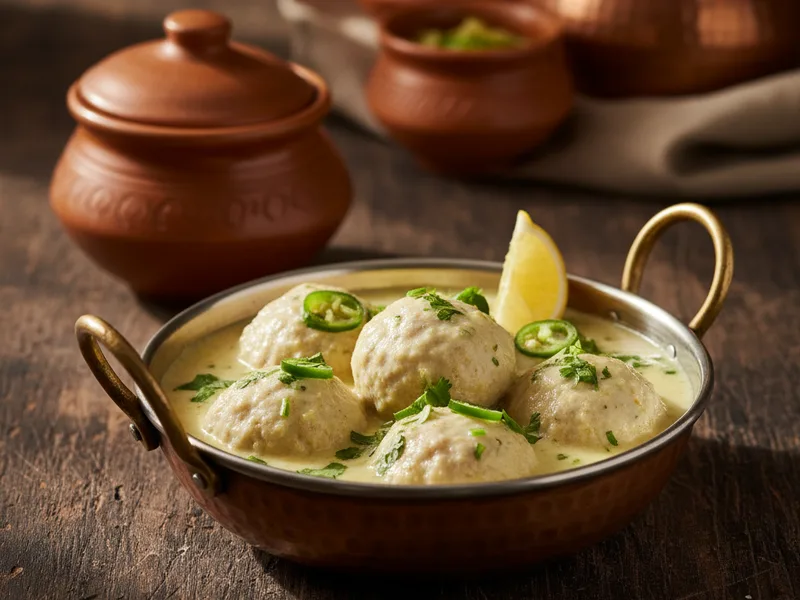
Kashmiri Gushtaba — Yogurt Lamb Meatballs
The crown jewel of Kashmiri wazwan — giant hand-pounded lamb meatballs simmered in a silky, lightly spiced yogurt gravy. Gushtaba is traditionally the final savory dish of a wedding feast, signaling the meal is complete.
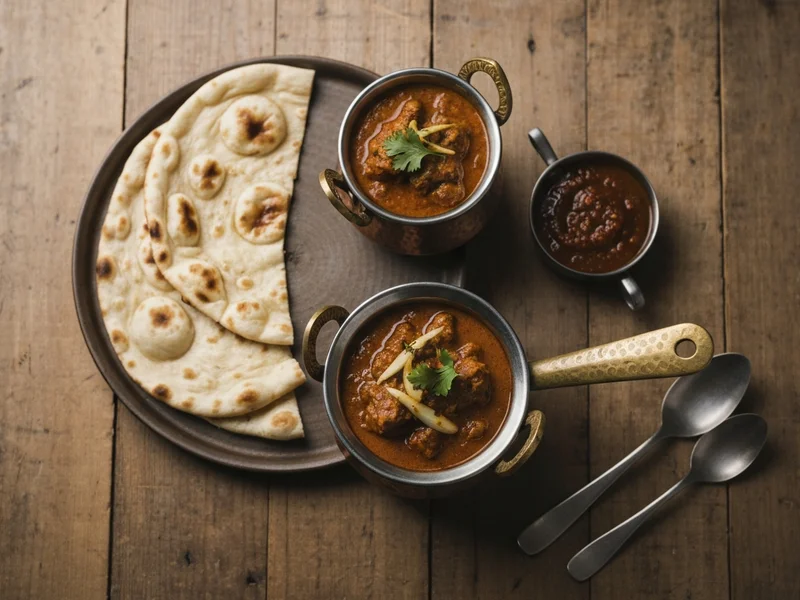
Kashmiri Rogan Josh
The crown jewel of Kashmiri cooking — a slow-braised lamb curry in a gorgeous mahogany-red gravy that gets its colour from Kashmiri chillies and alkanet root, not from heat. Aromatic, rich, and unlike any curry you've made before.
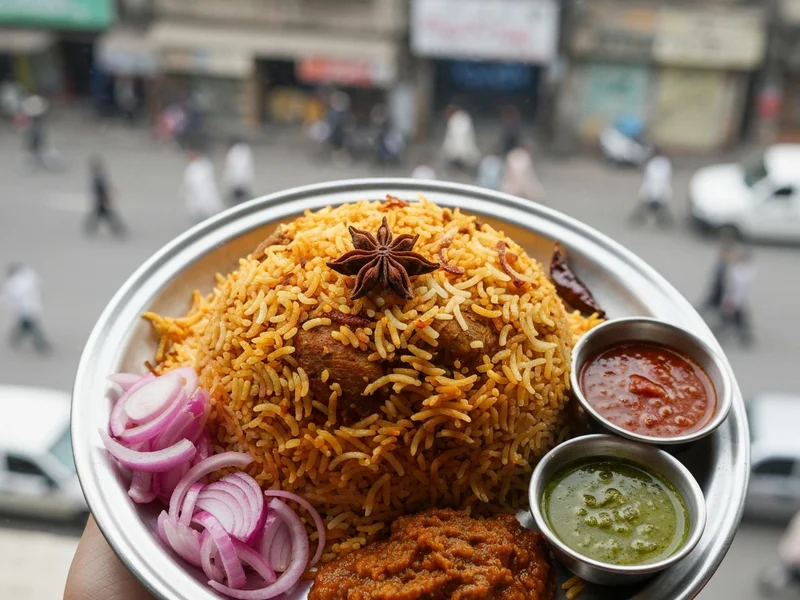
Authentic Karachi Biryani
The iconic Karachi-style biryani — fiery, tangy, loaded with potatoes and prunes. Born in the streets of Karachi, perfected by generations of Muhajir cooks.
What Cooks Are Saying
Made this last weekend and the whole family loved it. Will definitely make again.
Incredible depth of flavour. The spice balance is just right — not too hot, not too mild.
Leave a Review
Tried this recipe? Share your experience — your review helps other cooks.