
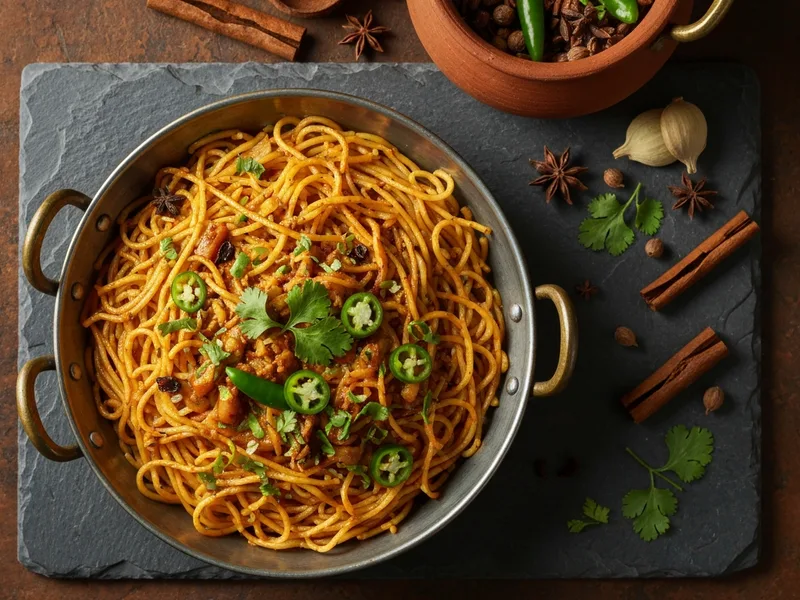
Sindh cuisine
Pakistani Chowmein (Desi Chinese Hakka Noodles)
Pakistani Chowmein (Desi Chinese Hakka Noodles) is a traditional Sindh Pakistani dish. Spicier, oilier, and more aggressively seasoned than any Chinese noodle dish — Pakistani chowmein is its own glorious thing, born in Karachi's wok-fired kitchens and perfected on high heat.
Let's be clear about something: Pakistani chowmein has almost nothing in common with Chinese chow mein except the noodles and the wok. And we say that as a compliment.
In Pakistan, that meant more chilli, more black pepper, ginger-garlic paste as a non-negotiable base, and chilli garlic sauce cooked directly into the dish rather than served on the side. The result is a noodle dish that is smoky, peppery, fiery, and completely addictive. The secret is heat — real, aggressive, wok-on-full-blast heat. If your kitchen isn't slightly smoky, you are not cooking hot enough. At home, your best friend is a cast-iron skillet or the widest pan you own cranked to maximum. Let's build this properly.
Ingredients
Instructions
- BOIL THE NOODLES: Bring a large pot of water to a full rolling boil. Salt it generously — it should taste like mild sea water. Cook the noodles for 1 minute LESS than the package instructions say. They should still have a slight resistance when you bite — this is intentional, as they will finish cooking in the wok. Drain immediately and run cold water over them to stop cooking. Toss with 1 tsp oil to prevent sticking. Spread them out on a plate to cool. HINT: The most common chowmein mistake is overboiling the noodles. Soft noodles turn to mush in the wok. You want them slightly underdone now so they are perfectly done at the end.
- PREP EVERYTHING FIRST: Before you touch the wok, have everything ready. Mix the sauces together in a small bowl: dark soy, oyster sauce, chilli garlic sauce, white vinegar. Set the noodles, vegetables, and chicken all within arm's reach of the stove. Once you start cooking, things move fast — you cannot pause to chop a carrot. FUN FACT: The Chinese cooking concept of 'mise en place' — everything in its place before cooking starts — is even more critical in Pakistani Chinese cooking because the high heat means the window between perfect and burnt is about 30 seconds.
- COOK THE CHICKEN: Heat 1.5 tbsp oil in your largest wok or frying pan on MAXIMUM heat. Let the oil smoke slightly before you add anything. Add the sliced chicken strips and spread them out in one layer. Do not touch for 60 seconds — let one side sear and get some colour. Then stir-fry briskly for another 2 minutes until cooked through and lightly golden. Remove the chicken from the pan and set aside. HINT: Removing the chicken at this stage means it will not overcook later when everything comes together. Overcooked chicken in chowmein is stringy and sad.
- FRY THE AROMATICS: Add the remaining 1.5 tbsp oil to the same hot wok. Add the ginger-garlic paste and green chillies immediately. They will sizzle violently — this is correct. Stir-fry for 30-40 seconds, keeping them moving, until the paste turns from pale yellow to golden and smells nutty and fragrant rather than raw. This step is what gives Pakistani chowmein its desi soul. Do not rush it, but do not let it burn — burnt ginger-garlic paste tastes bitter and ruins everything.
- ADD VEGETABLES: Throw in the carrot first (it takes longest to cook), stir-fry for 60 seconds. Add the cabbage and capsicum, toss everything on maximum heat for another 90 seconds. The vegetables should be cooked but still have crunch — they will look slightly wilted but should not be limp. You are looking for some charred edges on the cabbage, which means your heat is high enough. The wok should be smoking at this point. HINT: If your kitchen ventilation cannot handle smoke, open windows before you start. The smoke is part of the process — it gives the dish what Chinese cooks call 'wok hei' (breath of the wok), that slightly smoky, intensely savoury quality.
- ADD NOODLES AND SAUCE: Add the cooked, cooled noodles to the wok. Immediately pour the sauce mixture over the top. Using tongs or two spatulas, toss everything together aggressively, making sure the sauce coats every strand and the vegetables are evenly distributed. Break up any clumps of noodles. Cook on high heat, tossing continuously, for 2 full minutes. Add the black pepper and Ajinomoto (MSG) during this stage. The noodles should darken as they absorb the soy and pick up some colour from the wok surface.
- FINISH AND PLATE: Return the cooked chicken to the wok, toss for a final 30 seconds just to heat it through and integrate. Taste for seasoning — more soy for saltiness, more vinegar for tang, more black pepper for bite. Transfer to a large plate or bowl immediately. Pakistani chowmein is served in a heap, not a tidy mound. Serve with the three-condiment set: soy sauce, chillies in vinegar, and chilli paste. Manchurian alongside makes this a full meal — they are inseparable in the Pakistani Chinese canon.
Chef's Secrets
- Day-old noodles are better than freshly boiled — the slight dryness means they fry rather than steam in the wok. Boil noodles the night before, toss with oil, and refrigerate uncovered.
- Do not crowd the pan. This recipe serves 4 — if your wok is small, cook in two batches. Crowding drops the temperature and you get steamed, soggy noodles instead of stir-fried.
- Black pepper is a feature, not a background note. Pakistani chowmein should taste noticeably peppery. If you cannot taste it clearly, add more.
- The sauce goes on the noodles, not the pan — pour it directly over the noodles after they are in the wok. This ensures even coating before the liquid evaporates.
- Add a tablespoon of sesame oil at the very end, off the heat, for a fragrant finish. This is optional but adds a lovely aromatic note that Pakistani restaurant chowmein often has.
Common Questions
How long does Pakistani Chowmein (Desi Chinese Hakka Noodles) take to make?
Total time is 30m — 15m prep and 15m cooking.
How many servings does this recipe make?
This recipe makes 4 servings, and is rated medium difficulty.
Which region of Pakistan is Pakistani Chowmein (Desi Chinese Hakka Noodles) from?
Pakistani Chowmein (Desi Chinese Hakka Noodles) is from Sindh, Pakistan — one of the country's most distinctive culinary traditions.
What do you serve with Pakistani Chowmein (Desi Chinese Hakka Noodles)?
Serve immediately — noodles do not wait. Pair with Chicken Manchurian for the classic Pakistani Chinese combo. The three-condiment table set is mandatory: soy sauce, chillies in white vinegar, and red chilli paste. A bowl of Chicken Corn Soup before this turns the meal into a full restaurant experience.
Goes Well With
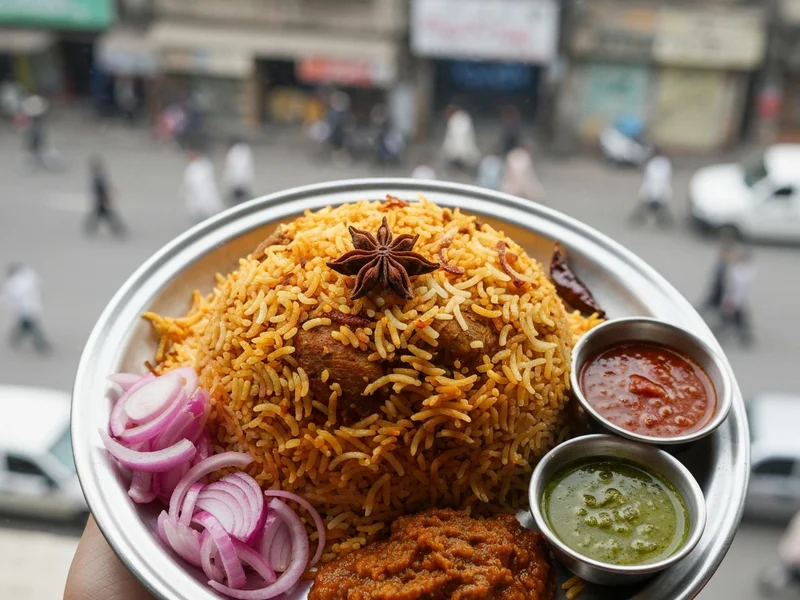
Authentic Karachi Biryani
The iconic Karachi-style biryani — fiery, tangy, loaded with potatoes and prunes. Born in the streets of Karachi, perfected by generations of Muhajir cooks.
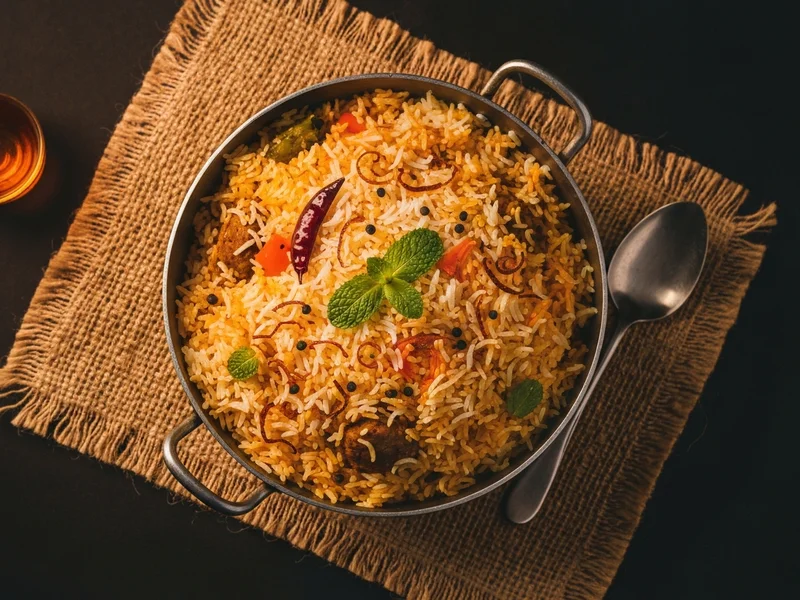
Hyderabadi Biryani
The kacchi biryani of Hyderabad, Sindh — raw marinated meat layered with parboiled rice, sealed, and slow-cooked until every grain absorbs the masala. No pre-cooking the meat.
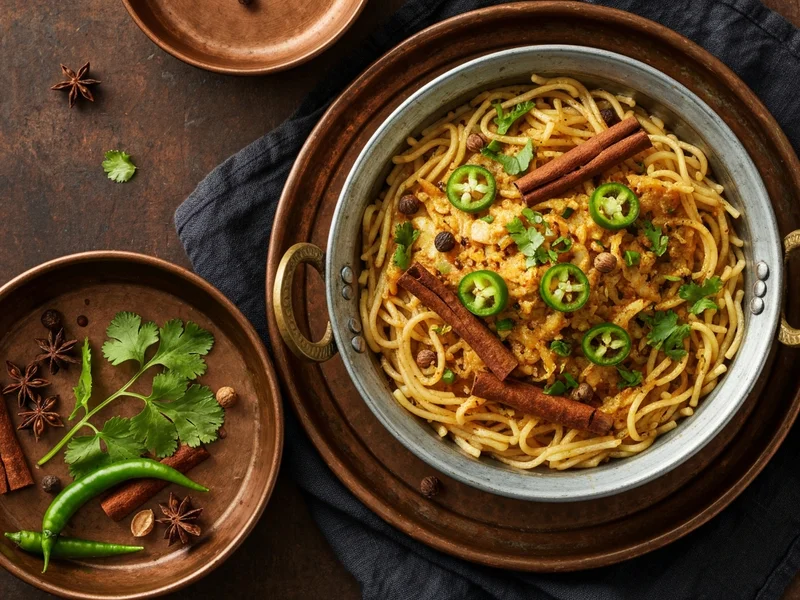
Karachi Khausa — The Memon Coconut Noodle Bowl
A Burmese coconut noodle soup adapted by Pakistani Memons who fled Burma at Partition — a fragrant coconut chicken curry poured over noodles and finished at the table with a customisable array of toppings.
What Cooks Are Saying
Really good recipe. I reduced the chilli slightly for the kids and it worked perfectly.
Incredible depth of flavour. The spice balance is just right — not too hot, not too mild.
Leave a Review
Tried this recipe? Share your experience — your review helps other cooks.