
Punjab cuisine
Lahori Chicken Karahi
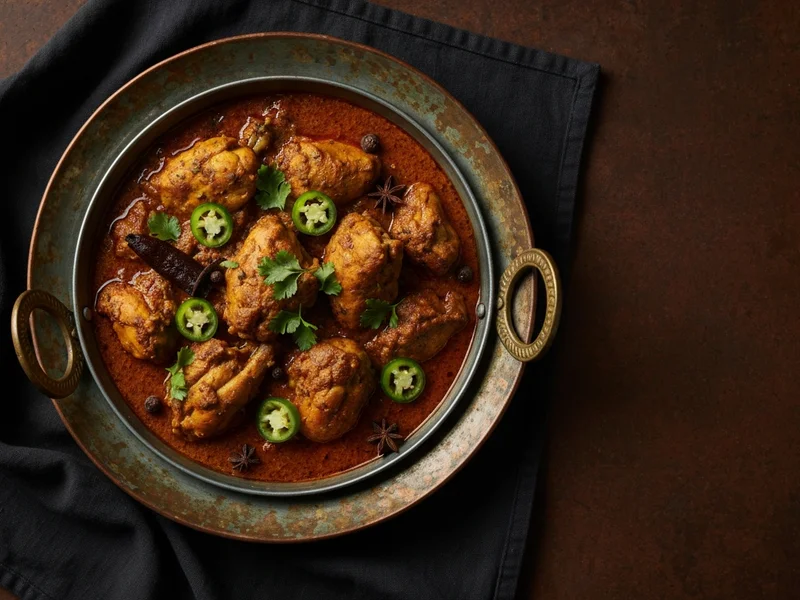
Lahori Chicken Karahi is a traditional Punjab Pakistani dish. The quintessential Lahori karahi — chicken pounded with tomatoes, ginger, and green chillies in a wok over roaring heat. No onions, no yoghurt, no shortcuts.
Every dhaba (roadside restaurant) on Lahore's Gawalmandi Food Street has a karahi burner going at full blast, flames licking up the sides of blackened woks. The Lahori karahi is defined by what it leaves OUT: no pyaz (onions), no dahi (yoghurt), no cream, no baloney. It's a brutally honest dish — just gosht (meat), tamatar (tomatoes), and heat.
The karahi's shape concentrates heat at the bottom and allows rapid evaporation, which is why the tomato masala reduces so quickly. The technique matters more than the ingredient list here. The tamatar must cook down completely until the tel (oil) separates, and the adrak (ginger) goes in RAW at the end so it stays sharp and biting. This is the dish that Lahoris argue about at 2 AM outside Butt Karahi on Lawrence Road or Fazal-e-Haq on Lakshmi Chowk. Now you can argue about yours too.
Ingredients
Instructions
- HEAT THE KARAHI: Place your karahi (wok) or a heavy, deep frying pan on the stove and crank the heat to HIGH. Add the tel or ghee (oil or ghee). You want the fat seriously hot — look for the first wisps of smoke and a shimmering surface. Drop in the zeera saboot (whole cumin seeds). They should crackle and dance within 10 seconds. If they do nothing, your karahi isn't hot enough — wait. HINT: Karahi cooking is FAST and LOUD. If your kitchen isn't a bit smoky and your neighbours can't hear the sizzle, you're not doing it right.
- COOK THE LEHSAN AND ADRAK: Immediately add the roughly chopped lehsan (garlic) and HALF the julienned adrak (ginger) — keep the other half aside for raw garnish later. Stir constantly for 30 seconds. The lehsan should turn fragrant and just barely start to colour — watch it like a hawk because lehsan goes from golden to burnt in seconds, and burnt lehsan tastes bitter and ruins the whole dish. If it's colouring too fast, pull the karahi off the heat briefly.
- SEAR THE MURGI (CHICKEN): Add all the murgi (chicken) pieces at once. Yes, all of them — the high heat can handle it. Using a large chamcha (ladle) or tongs, stir and turn the pieces constantly for 5 minutes. You're searing the chicken — getting colour on all sides. The pieces should go from pink to white to slightly golden. You should hear persistent, loud sizzling the entire time. HINT: If the sizzling dies down, your heat is too low or your karahi is overcrowded. Either increase the flame or work in batches — but the authentic dhaba method is everything in at once, full blast.
- ADD THE TAMATAR AND MASALA: Throw in the roughly chopped tamatar (tomatoes), namak (salt), lal mirch powder (red chilli), and dhania powder (ground coriander). Stir everything together well. Keep the heat HIGH — this is not a gentle simmer situation. The tamatar will release their juices immediately. You'll hear a satisfying sizzle as the juice hits the hot fat. Your job for the next 15-18 minutes is to stir frequently and let the tamatar break down completely. HINT: You'll know the masala is ready when you see the tel (oil) separating — it will pool on the surface and around the edges in glossy, red-orange puddles. This is called 'tel chorna' and it's THE critical moment in karahi cooking. If you don't see oil separation, keep cooking — pulling it off the heat too early means raw, acidic tomato flavour.
- ADD THE HARI MIRCH AND KALI MIRCH: Once the tel has clearly separated from the masala, add the slit hari mirch (green chillies) and crushed kali mirch (black pepper). Stir and cook for another 3-4 minutes. The hari mirch will blister slightly and their fresh heat will perfume the dish. Taste the gravy at this point — adjust namak if needed.
- THE RAW ADRAK FINISH: Turn off the heat. Scatter the remaining raw julienned adrak (ginger) over the top — DO NOT stir it in. The adrak sits on top, wilting slightly from the residual heat but staying sharp and pungent. This raw adrak garnish is what makes Lahori karahi different from every other chicken curry. Garnish with chopped hara dhaniya (fresh coriander). Serve IMMEDIATELY — straight from the karahi if possible, placed in the centre of the table, still sizzling. HINT: Authentic Lahori karahis are served in the actual cooking vessel, slammed down on a wooden board. If you've got a karahi, use it — both for cooking and serving.
- EAT WITH NAAN: Tear off a piece of fresh, hot tandoori naan. Use it to scoop up a piece of murgi with a generous amount of the tomato masala, a sliver of raw adrak, and a flash of hari mirch. This is the Lahori way. No plate, no fork, no cutlery needed. Just naan, karahi, and good company.
Chef's Secrets
- The Lahori karahi has NO pyaz (onions) and NO dahi (yoghurt). If you add either, you've made a perfectly decent curry, but you haven't made a Lahori karahi. This is the hill we will die on.
- Keep the heat HIGH throughout. Karahi is a fast, aggressive cooking style — low heat produces a stew. If your masala isn't sizzling and sputtering, your flame is too low. Embrace the chaos.
- The raw adrak (ginger) added at the end is essential and non-substitutable. It provides a sharp, nose-clearing bite that cooked ginger simply cannot replicate. Don't skip it, don't cook it, don't even think about it.
- Use desi (free-range) murgi (chicken) if available. It has more flavour, firmer meat, and holds up better to high-heat cooking. Broiler chicken works but falls apart faster — reduce cooking time by 3-4 minutes.
- The tel (oil) MUST separate from the tamatar (tomato) masala. This is non-negotiable. If you're not seeing oil pools on the surface, the tamatar aren't cooked enough. Keep going. Every minute matters.
- FUN FACT: At Lahori dhaba-style restaurants, the cook often 'pounds' the karahi — using the back of the chamcha to press and break up the meat and masala against the sides of the wok. This creates a rougher, more rustic texture. Try it.
Common Questions
How long does Lahori Chicken Karahi take to make?
Total time is 40m — 10m prep and 30m cooking.
How many servings does this recipe make?
This recipe makes 4 servings, and is rated medium difficulty.
Which region of Pakistan is Lahori Chicken Karahi from?
Lahori Chicken Karahi is from Punjab, Pakistan — one of the country's most distinctive culinary traditions.
What do you serve with Lahori Chicken Karahi?
Serve sizzling hot, straight from the karahi if possible — place the karahi on a wooden board in the centre of the table. Accompany with fresh tandoori naan (not roti — naan's chewiness is perfect here), sliced pyaz (onion) rings, and a wedge of nimbu (lemon). No raita needed — this dish speaks for itself. If you must have a side, a simple kachumber salad of diced pyaz, tamatar, and hari mirch with a squeeze of nimbu is all you need. Wash it down with a chilled bottle of Pakola or a glass of nimbu pani (lemon water).
Goes Well With
Karachi Chicken Karahi
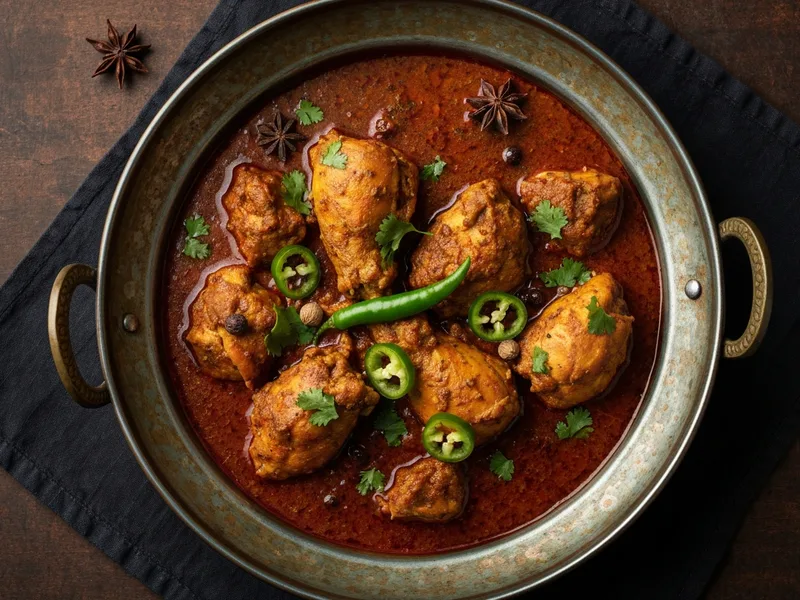
Karachi-style Chicken Karahi is bold, tomato-forward, and cooked on high flame for that signature smoky dhaba (roadside eatery) flavour. This is the karahi that built Karachi's street food reputation — fast, fiery, and absolutely unforgettable.
Sindhi Chicken Karahi
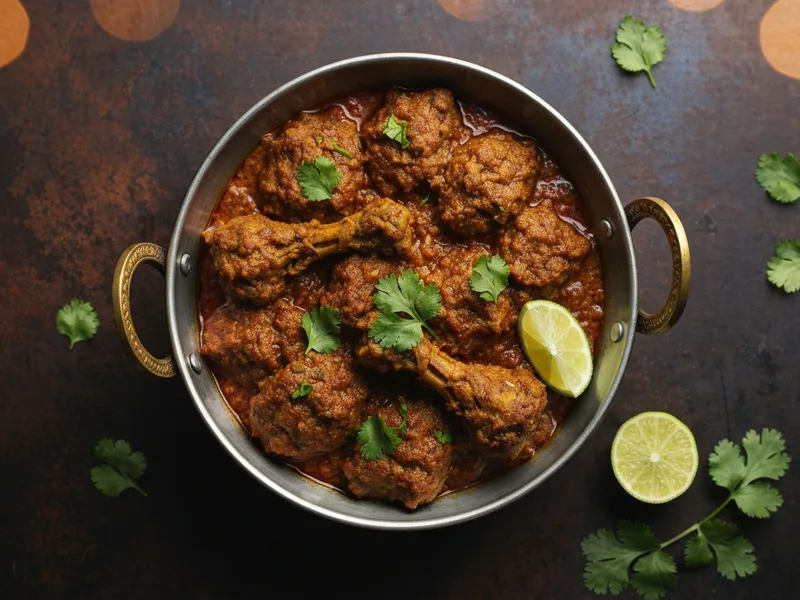
Sindhi Chicken Karahi brings the distinct flavours of interior Sindh — bold spicing, generous use of whole spices, and a rustic cooking style that turns simple ingredients into something deeply satisfying. This is home-cooked karahi with a Sindhi soul.
Balochi Chicken Karahi
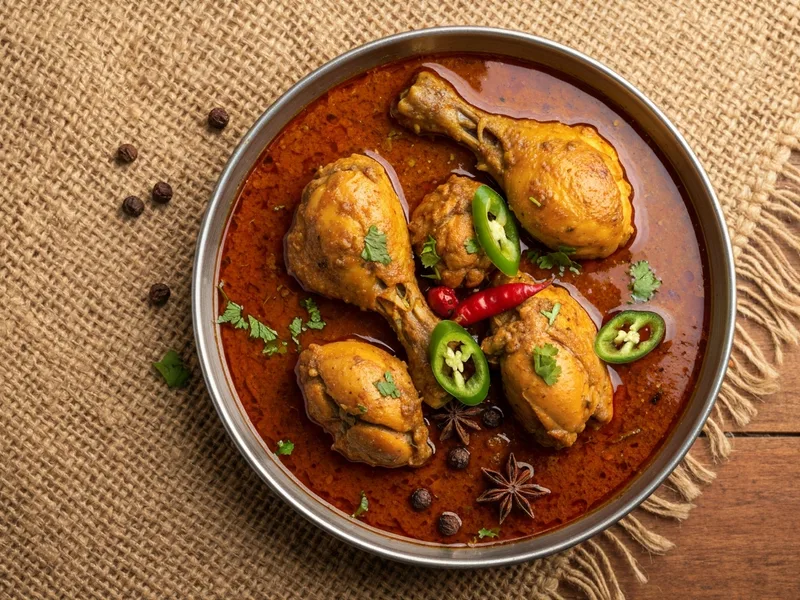
Balochi Chicken Karahi is defined by its minimalist spicing and the incredible quality of the meat — less is more in Balochistan. With whole spices, fresh tomatoes, and clean flavours, this karahi lets the chicken speak for itself.
What Cooks Are Saying
This is now my go-to recipe. Made it three times already.
This recipe is a keeper. Followed it exactly and it turned out perfect.
Leave a Review
Tried this recipe? Share your experience — your review helps other cooks.