
Punjab cuisine
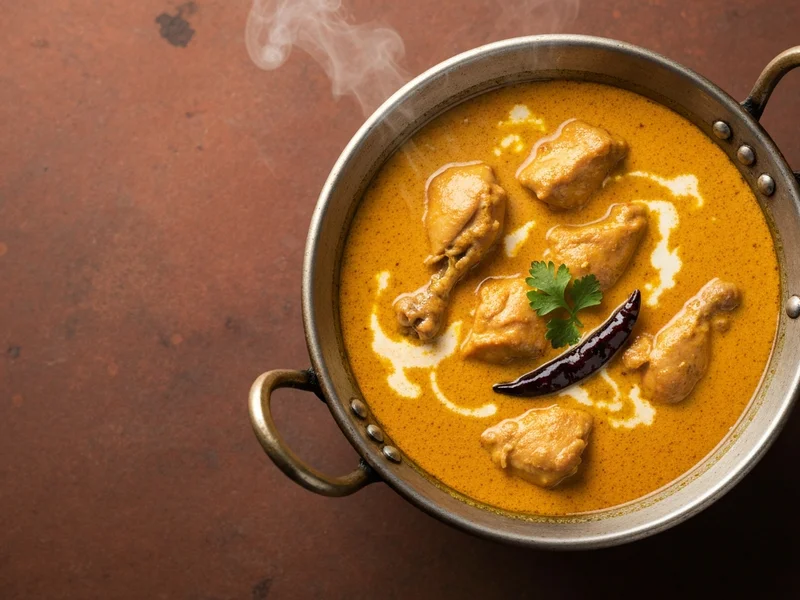
Creamy Chicken Handi
Creamy Chicken Handi is a traditional Punjab Pakistani dish. Chicken Handi is Pakistan's creamiest, richest curry — tender chicken simmered with malai (cream), makhan (butter), and aromatic spices in a traditional handi (clay pot). This mildly spiced dish is the go-to for anyone who wants restaurant-style flavour at home without setting their mouth on fire.
If Pakistani curries had a personality spectrum, Chicken Handi would be the calm, sophisticated one at the party — rich, creamy, and impossible to ignore.
Restaurants in Lahore and Rawalpindi popularised this dish in the 1980s as a milder alternative to the fiery karahi, and it quickly became the dish every family orders when someone's bringing a guest. The magic is in the layering: first you build a tomato-onion base, then you add cream and butter at the very end so they don't split — this two-stage technique is the restaurant secret most home cooks miss.
Ingredients
Instructions
- HEAT YOUR HANDI: Place your handi (clay pot) or a heavy-bottomed karahi (wok) on medium heat. Add 3 tablespoons of tel (cooking oil) and let it heat until it shimmers — you'll see tiny ripples on the surface. HINT: Don't rush this step. Cold oil means onions will steam instead of fry, and you'll end up with a pale, sad gravy instead of the rich golden base you want. FUN FACT: Traditional clay handis are unglazed inside — they absorb flavour from previous cooks, which is why food cooked in them tastes slightly different every time. If you're using a new clay handi, season it first by boiling water in it twice.
- FRY THE PYAZ: Add your sliced pyaz (onions) to the hot oil. Spread them out and let them cook on medium heat, stirring every 2-3 minutes. You're looking for a deep golden colour — like the inside of a toasted bun. This takes 12-15 minutes. Don't rush on high heat; the onions will burn outside while staying raw inside. HINT: If your onions start sticking to the bottom, add a small splash of paani (water) — not more oil — and scrape up those brown bits. Those bits are flavour gold. The kitchen should smell nutty and sweet when the onions are ready.
- BUILD THE MASALA BASE: Add the adrak lahsun paste (ginger-garlic paste) to the golden onions. Stir constantly for 60-90 seconds — it'll sizzle aggressively and turn darker. You'll know it's ready when the raw, sharp smell of garlic has mellowed into something warm and toasty. Now add lal mirch powder, dhaniya powder, and haldi. Stir for another 30 seconds. WHY: Blooming dry spices in hot oil before adding liquid releases fat-soluble flavour compounds that water alone can't unlock — this is the difference between a flat curry and a layered one.
- ADD TOMATOES AND COOK DOWN: Tip in the chopped tamatar (tomatoes). Stir everything together and turn the heat to medium-high. Cook uncovered, stirring occasionally, until the tomatoes break down completely into a thick paste and you can see the tel (oil) separating and floating on the surface — about 12-15 minutes. HINT: This 'tel chorr dena' (oil releasing) moment is your signal that the masala is properly cooked and the raw flavour of tomatoes and spices is gone. Don't skip this or your curry will taste like tinned tomato soup. The masala should look glossy and deep red-orange.
- ADD CHICKEN AND DAHI: Add your chicken pieces to the masala and stir to coat every piece. Cook on high heat for 3-4 minutes, turning the pieces so they sear slightly and absorb the masala colour. Now lower the heat to medium and add the dahi (yoghurt) — stir it in quickly so it incorporates before the heat can split it. HINT: Add dahi in a slow stream while stirring constantly, rather than dumping it all at once. If it splits into grainy white lumps, don't panic — keep stirring on low heat and it usually comes back together. Season with namak (salt) — about 1 teaspoon at this stage.
- SIMMER UNTIL TENDER: Add half a cup of paani (water), stir, then cover the handi with a lid. Cook on low-medium heat for 20-25 minutes until the murgh (chicken) is completely cooked through. Test by pressing the thickest piece — the juices should run clear, not pink. HINT: Resist the urge to open the lid every few minutes. The steam is doing important work. Do open it once halfway through to stir and check there's enough liquid — add a splash of water if it looks too dry. Your kitchen should smell incredible by now — warm spices, cooked chicken, golden onion.
- THE GRAND FINALE — CREAM AND BUTTER: This is the most important step, so take it slow. Turn the heat down to the absolute lowest setting. Add the malai (cream) and stir gently. Then add the makhan (butter) and let it melt into the curry. Stir until everything is combined into a silky, creamy gravy. Taste and adjust namak (salt). WHY: Adding cream on high heat causes it to boil and separate into greasy liquid and grainy white curds. Low heat keeps it emulsified and luxuriously smooth — this is the step that separates restaurant-quality handi from a home attempt. Turn off the heat.
- GARNISH AND REST: Scatter chopped hara dhaniya (fresh coriander) over the top and add a few slit hari mirchein (green chillies) if you like a little heat visible. Let the handi sit covered for 5 minutes off the heat — this resting time lets the cream fully absorb into the chicken and the flavours consolidate. HINT: Don't skip the rest. A curry straight off the flame is hotter on the outside of each piece than inside, and the flavours haven't settled yet. Five minutes makes a genuine difference in how the dish tastes and the texture of the gravy.
Chef's Secrets
- Room temperature dahi (yoghurt) is non-negotiable — take it out of the fridge 20 minutes before you need it. Cold dahi = split gravy.
- The tel chorr dena (oil releasing) moment is the most important signal in Pakistani cooking. If you skip cooking the masala long enough, the curry will taste raw no matter how much cream you add.
- For even richer flavour, marinate the chicken in dahi, adrak lahsun paste, and a pinch of namak for 2-4 hours (or overnight) before cooking.
- Leftover Chicken Handi is even better the next day — the cream thickens overnight and the spices deepen. Reheat gently on low with a tablespoon of water so the cream doesn't split.
- If your gravy is too thin, cook it uncovered on medium heat for 5 minutes before adding the cream — the extra evaporation will concentrate it.
- For a smokier dimension, do a dhuan (coal smoking): place a piece of charcoal on foil in the centre of the handi, pour a teaspoon of ghee on it, cover immediately for 3 minutes.
Common Questions
How long does Creamy Chicken Handi take to make?
Total time is 1h 10m — 15m prep and 55m cooking.
How many servings does this recipe make?
This recipe makes 4 servings, and is rated medium difficulty.
Which region of Pakistan is Creamy Chicken Handi from?
Creamy Chicken Handi is from Punjab, Pakistan — one of the country's most distinctive culinary traditions.
What do you serve with Creamy Chicken Handi?
Serve with fresh naan or roghni roti straight off the tawa. Alongside: kachumber salad (chopped onion, tomato, cucumber, lemon), and a cold glass of lassi. Chicken Handi also works beautifully with plain chawal (steamed rice) if bread isn't an option.
Goes Well With
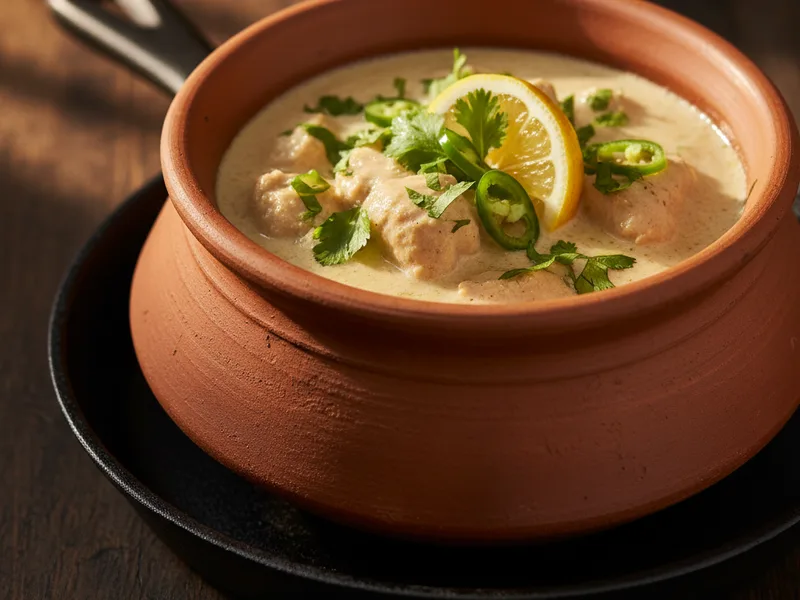
Creamy White Chicken Handi
Punjab's beloved restaurant-style white chicken handi — tender chicken in a creamy, mildly spiced gravy that's become one of Pakistan's most ordered dishes. Silky, indulgent, and surprisingly achievable at home.
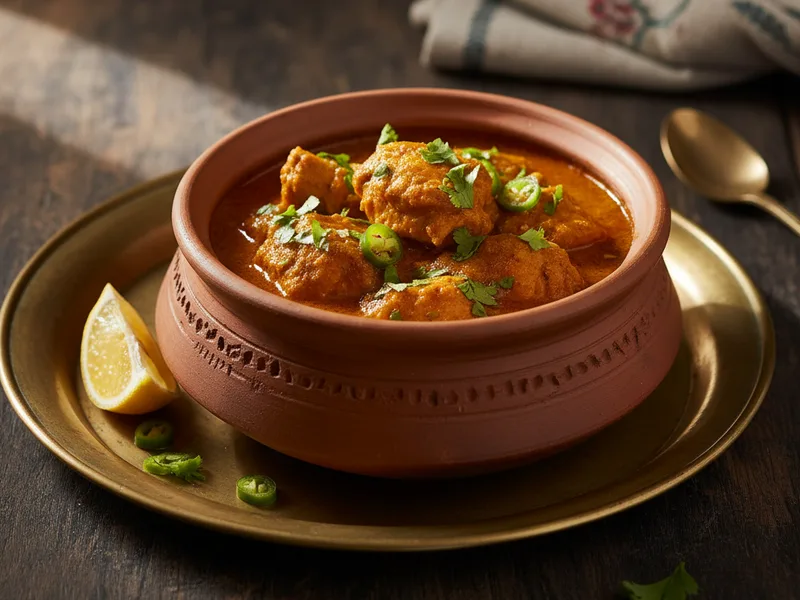
Karachi Chicken Handi
Karachi's bold, tomato-forward chicken handi — red-orange in colour, spicier than the Punjab white version, and finished with fresh herbs and green chillies. Urban street food confidence in a clay pot.
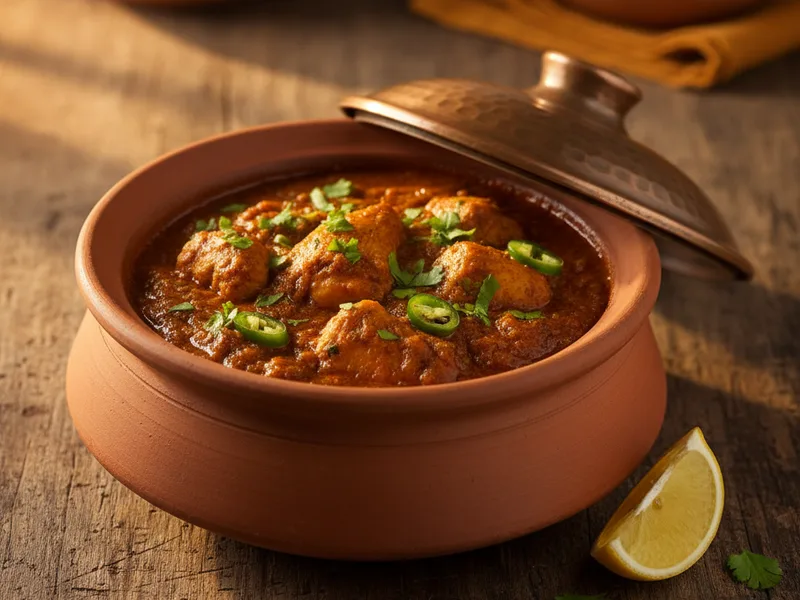
Desi Dhaba Handi
The no-frills, maximum-flavour dhaba-style chicken handi — cooked the way roadside restaurants do it across Punjab. Robust, unpretentious, and reliably delicious.
What Cooks Are Saying
I was nervous to try this but the instructions made it so easy. Turned out amazing.
Better than the restaurant version. The tips in the recipe really make a difference.
I've tried many recipes for this dish but this one is the best by far.
Leave a Review
Tried this recipe? Share your experience — your review helps other cooks.