
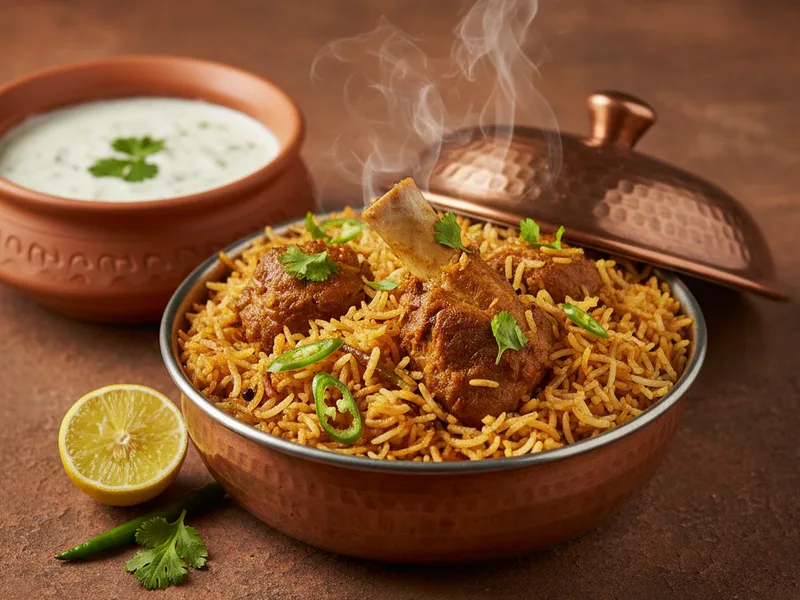
South Punjab cuisine
South Punjab Mutton Biryani
South Punjab Mutton Biryani is a traditional South Punjab Pakistani dish. South Punjab Mutton Biryani is a slow-cooked masterpiece from the region that takes its food as seriously as its chai. Rich with mutton, layered with saffron and fried onions, this is biryani made for special occasions and family gatherings that stretch into the night.
South Punjab — the land of Multan, Bahawalpur, and Dera Ghazi Khan — has a culinary identity that's all its own.
It reflects the cooking preferences of a rice-and-wheat agricultural region rather than a coastal or urban food culture. The food here is richer, the spices more fragrant, and the portions more generous because life in this region has always revolved around hospitality. Mutton biryani from South Punjab is made with maande gosht (young mutton, almost lamb) which is more tender and sweeter in flavour than older goat. Fun fact: In many villages of South Punjab, biryani is still cooked in massive degs buried partially in the ground over wood fire — a method called kund cooking that gives the dish a lightly smoky, earthy depth impossible to replicate on a gas stove. You can get close though, and this recipe will show you how. It takes patience, but every minute is worth it when you lift that lid.
Ingredients
Instructions
- MARINATE THE GOSHT OVERNIGHT: Mix mutton with yogurt, adrak lehsan paste, lal mirch, dhania powder, 1 tsp garam masala, salt, and half the crushed birista. Cover and marinate in the fridge overnight — minimum 4 hours if pressed for time. HINT: Mutton has a stronger flavour than chicken that needs time to be tamed and enriched by the marinade. The yogurt's lactic acid slowly tenderises the muscle fibres while the spices penetrate deeply. Cold marination is always better than room temperature for mutton.
- MAKE GENEROUS BIRISTA: Heat ghee in a large karahi. Add all 5 sliced onions at once. This is a large batch and will take 20-25 minutes to reach the right deep-brown colour. HINT: Stir every 2-3 minutes initially, then every minute as they darken. They'll reduce dramatically in volume — 5 large onions will become about 1.5 cups of birista. When they turn the colour of dark caramel, remove and drain. They'll crisp further as they cool. The ghee left behind is precious — use it for the masala.
- COOK THE MUTTON MASALA: In a large, heavy deg with the birista ghee, add the marinated mutton. Cook on high heat for 8-10 minutes, stirring to prevent sticking. Reduce to medium and add chopped tomatoes. Bhuno (fry) until tomatoes break down completely and oil rises to the surface, about 20 minutes. Add soaked alu bukhara (dried plums) and remaining garam masala. HINT: The plums soften into the masala and almost disappear, but they leave behind a beautiful background note that lifts the whole dish. Add 1 cup hot water and simmer covered for 45-50 minutes until mutton is very tender.
- PARBOIL THE CHAWAL: Bring a very large pot of salted water to a boil. Add mint stalks, 2 cardamom pods, and 1 bay leaf to the water for fragrance. Add soaked basmati and parboil for 7-8 minutes. HINT: With 1kg of rice, you need a really large pot — rice grains need room to move freely in the water or they cook unevenly. Stir once after adding rice to prevent clumping. Drain and spread lightly on a clean surface.
- LAYER THE BIRYANI SOUTH PUNJAB STYLE: In the same deg used for mutton, spread the cooked masala evenly. Add 1/3 of the rice. Sprinkle mint leaves, some birista, a drizzle of kewra, and a few drops of saffron milk. Add another 1/3 rice. Repeat the toppings. Add final 1/3 rice. Top generously with remaining birista, saffron milk, kewra, and several large dollops of ghee. HINT: Three layers instead of the standard two means more even flavour distribution throughout.
- DUM ON LOW HEAT: Seal the deg tightly. If using dough to seal: take 500g atta (flour), add water to make a stiff dough, roll into a thick rope, press around the rim, and press the lid firmly on top. Cook on a tawa on the lowest heat for 30-35 minutes. HINT: You can test if the dum is working by placing your hand near the sealed edges — if no steam escapes, you have a good seal. If steam is escaping, press the dough rope more firmly.
- REST, REVEAL, AND REJOICE: After 35 minutes, turn off heat and rest for 15 minutes before opening. The dough seal might be stuck — use a knife to gently break it. Open the lid and inhale deeply — that saffron and kewra fragrance is your reward. Gently fold the biryani from the bottom in large, slow strokes. Plate generously on a large serving dish. The alu bukhara (plums) scattered throughout are a delightful South Punjab signature — let your guests discover them.
Chef's Secrets
- Overnight marination is the single biggest upgrade you can give this dish — plan ahead
- Alu bukhara (dried plums) are sold at any Pakistani grocery or pansari — they're also great in qorma
- The three-layer technique ensures the flavour from the bottom masala reaches even the top rice
- For a smoky finish, use the coal-and-ghee dhuan method in the last 5 minutes of dum
- This recipe scales beautifully for dawats (parties) — double everything proportionally and increase dum time by 10 minutes
Common Questions
How long does South Punjab Mutton Biryani take to make?
Total time is 3h 15m — 45m prep and 2h 30m cooking.
How many servings does this recipe make?
This recipe makes 8 servings, and is rated hard difficulty.
Which region of Pakistan is South Punjab Mutton Biryani from?
South Punjab Mutton Biryani is from South Punjab, Pakistan — one of the country's most distinctive culinary traditions.
What do you serve with South Punjab Mutton Biryani?
Serve with boondi raita, green chutney, fresh salad with onion rings, and nimbu (lemon) wedges. Finish the meal with meetha chawal or kheer.
Goes Well With
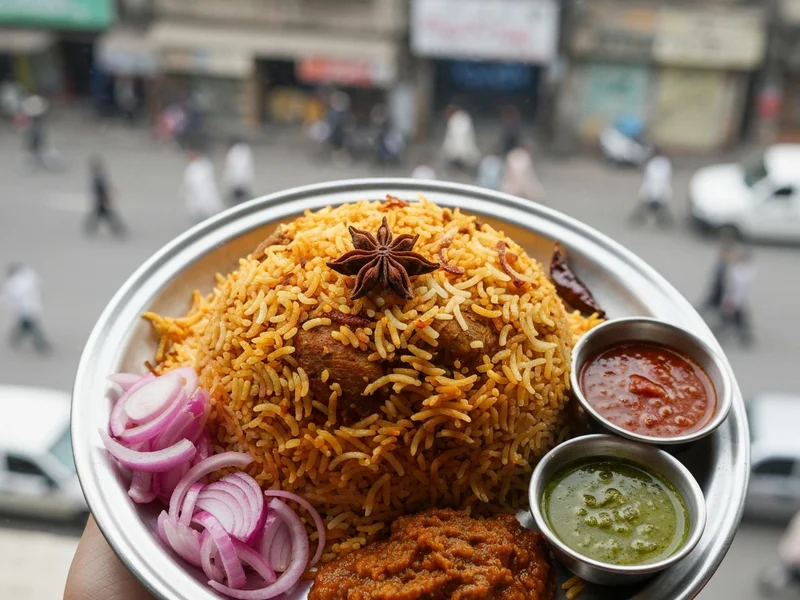
Authentic Karachi Biryani
The iconic Karachi-style biryani — fiery, tangy, loaded with potatoes and prunes. Born in the streets of Karachi, perfected by generations of Muhajir cooks.
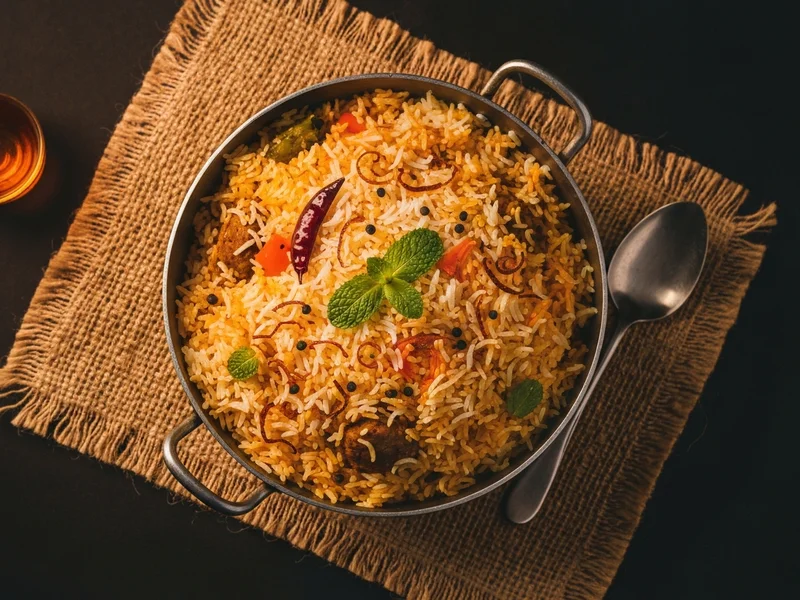
Hyderabadi Biryani
The kacchi biryani of Hyderabad, Sindh — raw marinated meat layered with parboiled rice, sealed, and slow-cooked until every grain absorbs the masala. No pre-cooking the meat.
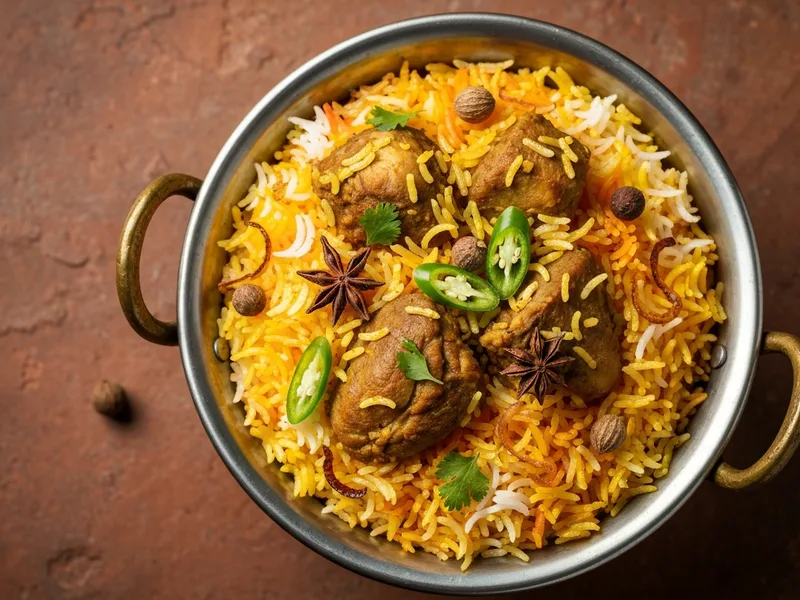
Bombay Biryani (Pakistani Style)
The Muhajir community's answer to Karachi biryani — more fragrant, more Nawabi, with fried potatoes, aloo bukhara (dried plums), kewra water, and a sweeter, more layered aromatic profile. Born in Bombay, perfected in Karachi.
What Cooks Are Saying
My husband said it's the best he's ever had. Coming from him that means everything!
Came out beautifully. Would have given 5 stars but I found the sauce a bit thin — easy fix though.
Leave a Review
Tried this recipe? Share your experience — your review helps other cooks.