
Sindh cuisine
Authentic Karachi Biryani
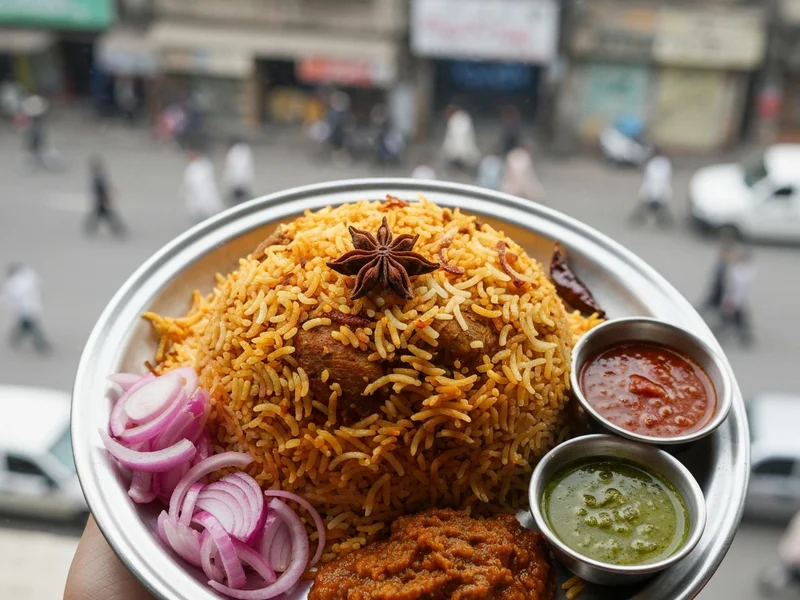
Authentic Karachi Biryani is a traditional Sindh Pakistani dish. The iconic Karachi-style biryani — fiery, tangy, loaded with potatoes and prunes. Born in the streets of Karachi, perfected by generations of Muhajir cooks.
Karachi biryani isn't just food — it's a full-blown identity crisis on a plate.
Every mohalla (neighbourhood) in Karachi has its biryani guy, and arguments about who makes the best one have genuinely ended friendships. The key difference? Aloo (potatoes) — golden, half-crushed, soaking up all that spiced masala — and the aloo gosht (meat-potato curry) base that separates Karachi biryani from every other variant in the country. Don't let the long ingredient list intimidate you. We'll take it step by step, and by the end, you'll have a degh (big pot) of biryani that could rival anything from Burns Garden.
Ingredients
Instructions
- PREP THE BARISTA PYAZ (FRIED ONIONS): Slice all 4 pyaz (onions) into thin half-moons — about the thickness of a coin. Heat 4 tbsp tel (oil) in a deep karahi (wok) or pateela (pot) until a small piece of onion dropped in sizzles immediately (about 30 seconds to float back up). Add the onions in batches — don't overcrowd or they'll steam instead of fry. Stir every 30 seconds. They'll go translucent first (about 3 minutes), then slowly turn golden (another 5-7 minutes). You're looking for a deep amber colour, not pale yellow. HINT: If they're browning unevenly, your flame is too high. Remove with a slotted chamcha (ladle) onto a plate lined with kitchen paper. They'll crisp up more as they cool.
- MARINATE THE GOSHT (MEAT): In a large bowl, combine the mutton pieces with dahi (yoghurt), biryani masala, adrak lehsan paste (ginger-garlic paste), half the barista pyaz (fried onions), and 1 tsp namak (salt). Use your hands to massage everything into the meat — every piece should be coated. Cover with cling film and refrigerate for at least 2 hours. Overnight is better — the dahi's acid breaks down the meat fibres, making them tender. HINT: If you're short on time, 2 hours is the absolute minimum. Anything less and you'll taste the difference.
- PARBOIL THE CHAWAL (RICE): Fill a large degh (heavy-bottomed pot) with water — about 8 cups. Add the kharay masalay (whole spices: tej patta, elaichi, dalchini, laung) and enough namak so the water tastes like the sea. Yes, that salty. Bring to a rolling boil. Add the soaked and drained basmati chawal. We parboil to exactly 70% — this is crucial because the remaining 30% cooks during dum (steam cooking). Fully cooked rice will turn to mush. How to check: fish out a grain after 4-5 minutes and press it between your fingers. The outside should be soft but you should feel a firm, chalky core. That's 70%. Drain immediately in a colander. FUN FACT: The word 'biryani' likely comes from the Persian 'birian' meaning 'fried before cooking' — referring to the parboiling step.
- FRY THE ALOO (POTATOES): In the same degh (or a separate karahi), heat 3 tbsp tel (oil) on medium-high. Add the halved, peeled aloo. Fry them on each side for about 3-4 minutes until they're golden all over — you're not cooking them through, just building a crust that'll hold up during dum. They should look like they've been sunbathing. Remove and set aside on kitchen paper. HINT: Make sure the aloo are dry before they go into hot oil, unless you enjoy oil splatter burns.
- COOK THE MASALA BASE: In the same degh, add the marinated gosht (meat) along with all the marinade. Toss in the chopped tamatar (tomatoes) and hari mirch (green chillies). Turn the heat to high and bhunno (stir-fry) for 10 minutes — you should hear aggressive sizzling, and the tamatar should start breaking down. Then reduce heat to low, cover with a tight lid, and let it cook for 45 minutes. Check every 15 minutes — the meat should slowly become tender and the masala should thicken. You'll know it's ready when the tel (oil) separates and pools on top of the masala. If the gosht is still tough after 45 minutes, give it another 15.
- BUILD THE LAYERS: This is where the magic happens. Spread the cooked gosht and masala evenly across the bottom of the degh. Place the fried aloo on top, pressing them gently into the meat. Scatter the soaked aloo bukhara (dried plums) around the potatoes. Spread a layer of pudina (mint) leaves and hara dhaniya (coriander). Now gently spoon the parboiled chawal (rice) on top in an even layer — use a chamcha (ladle) and don't press down or you'll crush the grains.
- FINAL TOUCHES BEFORE DUM: Drizzle the zafran (saffron) doodh (milk) in thin lines across the rice — this creates those beautiful golden streaks. Scatter the remaining barista pyaz (fried onions) on top. Splash 2-3 tbsp of water around the edges of the pot — this creates steam. HINT: Some cooks add a few drops of kewra water (screwpine extract) or rose water for aroma. It's not essential, but it's a nice touch.
- DUM (STEAM COOKING): This is the step that transforms ingredients into biryani. Tear off a large piece of aluminium foil and press it tightly over the top of the degh — create an airtight seal. Place the lid on top of the foil and press down. If your lid isn't heavy enough, put a heavy object on top (a filled kettle works). Cook on the lowest possible flame for 25-30 minutes. DO NOT OPEN THE LID. Seriously. Every peek releases steam and adds 5 minutes to the cooking time. You should hear very gentle bubbling — if you hear vigorous boiling, your flame is too high. HINT: Place a tawa (flat griddle pan) under the degh to diffuse heat and prevent the bottom layer from burning.
- REST AND SERVE: Turn off the heat but DO NOT open the lid yet. Let the biryani rest for 10 minutes — the residual steam finishes the cooking and lets the flavours settle. Now open the lid (finally!). You should see beautifully fluffy rice with golden saffron streaks. Using a large chamcha (ladle), gently fold from the bottom to the top, bringing up the meat and aloo. Try to keep the layers somewhat intact — this isn't a stir-fry. Serve on a large platter and prepare for compliments. Or arguments about whether your biryani is better than everyone's ammi's. (It's not. Nobody's is.)
Chef's Secrets
- The aloo (potatoes) are non-negotiable in Karachi biryani. They absorb the masala and become the best part of the dish — anyone who tells you to skip them is making a different biryani.
- Use a heavy degh (pot) or Dutch oven — thin aluminium pots burn the bottom layer. The bottom rice, called the 'teh', should be crispy, not charred.
- The dum (steam cooking) phase is where ingredients become biryani. Don't peek. Don't stir. Don't even breathe near the pot. Trust the process.
- Aloo bukhara (dried plums) add a subtle sweetness that balances the hari mirch (green chilli) heat. First-timers always want to skip them — don't. You'll thank us later.
- If using murgi (chicken) instead of mutton, reduce the masala cooking time to 20 minutes before layering — chicken overcooks easily and becomes rubbery.
- The barista pyaz (fried onions) MUST be deep amber, almost mahogany. Pale golden onions won't give the right sweetness or colour to the biryani.
Common Questions
How long does Authentic Karachi Biryani take to make?
Total time is 2h — 30m prep and 1h 30m cooking.
How many servings does this recipe make?
This recipe makes 8 servings, and is rated hard difficulty.
Which region of Pakistan is Authentic Karachi Biryani from?
Authentic Karachi Biryani is from Sindh, Pakistan — one of the country's most distinctive culinary traditions.
What do you serve with Authentic Karachi Biryani?
Serve with a bowl of cooling raita — whisk dahi (yoghurt) with grated kheera (cucumber), a pinch of zeera (cumin) powder, and chopped pudina (mint). Add a plate of kachumber salad — diced pyaz (onion), tamatar (tomato), hari mirch (green chilli), and a squeeze of nimbu (lime). A cold glass of lassi (yoghurt drink) on the side cuts through the heat beautifully.
Goes Well With
Hyderabadi Biryani
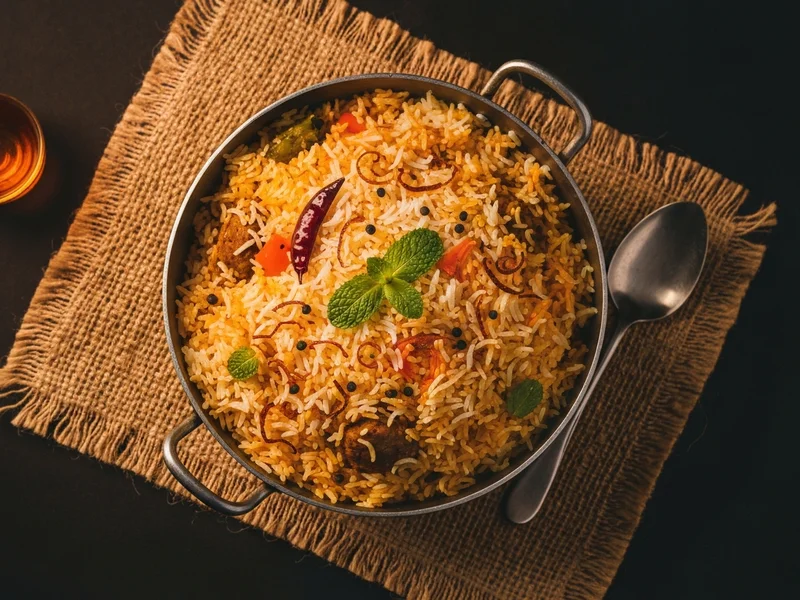
The kacchi biryani of Hyderabad, Sindh — raw marinated meat layered with parboiled rice, sealed, and slow-cooked until every grain absorbs the masala. No pre-cooking the meat.
Bombay Biryani (Pakistani Style)
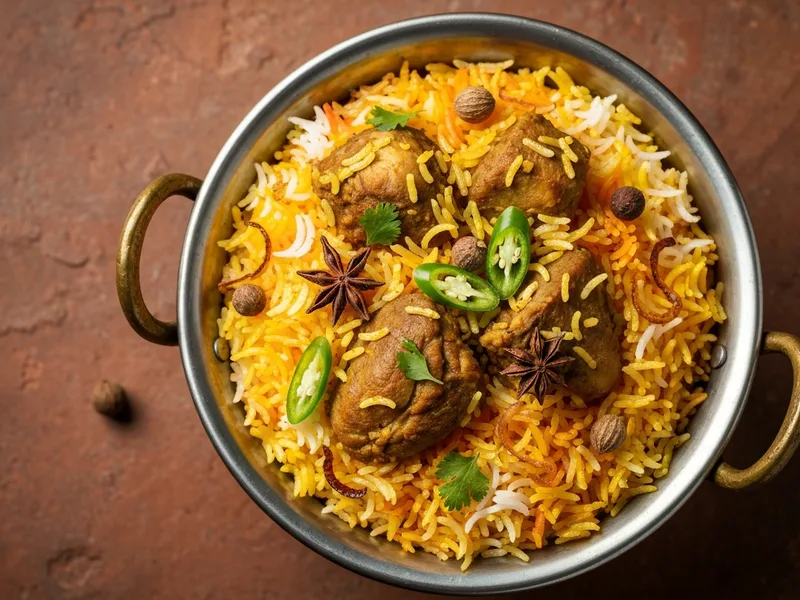
The Muhajir community's answer to Karachi biryani — more fragrant, more Nawabi, with fried potatoes, aloo bukhara (dried plums), kewra water, and a sweeter, more layered aromatic profile. Born in Bombay, perfected in Karachi.
Lahori Biryani
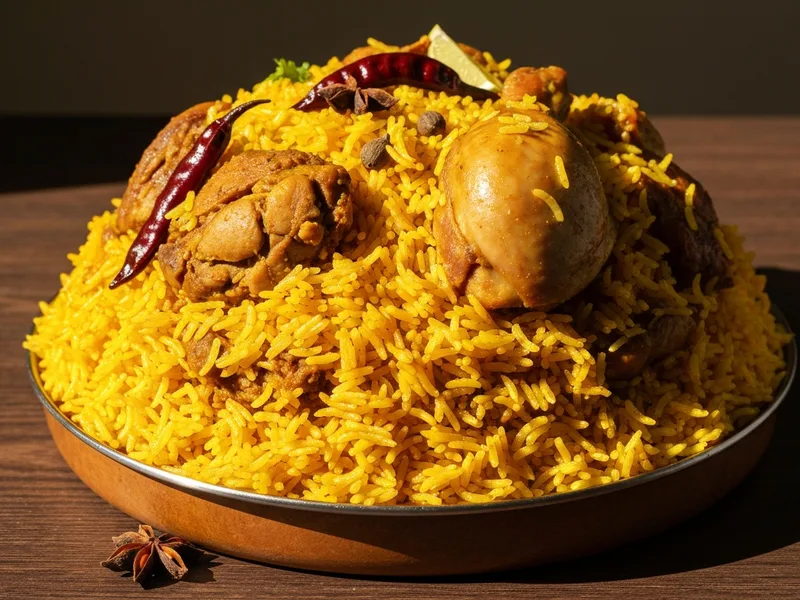
The Punjabi biryani — more aromatic, less fiery, more balanced than its Karachi cousin. Built on overnight-marinated meat, a bouquet of whole aromatic spices, and a dum layer fragrant with saffron, kewra, and rose water. Lahori confidence in every grain.
What Cooks Are Saying
This is now my go-to recipe. Made it three times already.
I've tried many recipes for this dish but this one is the best by far.
Leave a Review
Tried this recipe? Share your experience — your review helps other cooks.