
KP cuisine
Afghani Biryani (Ruz Bukhari)
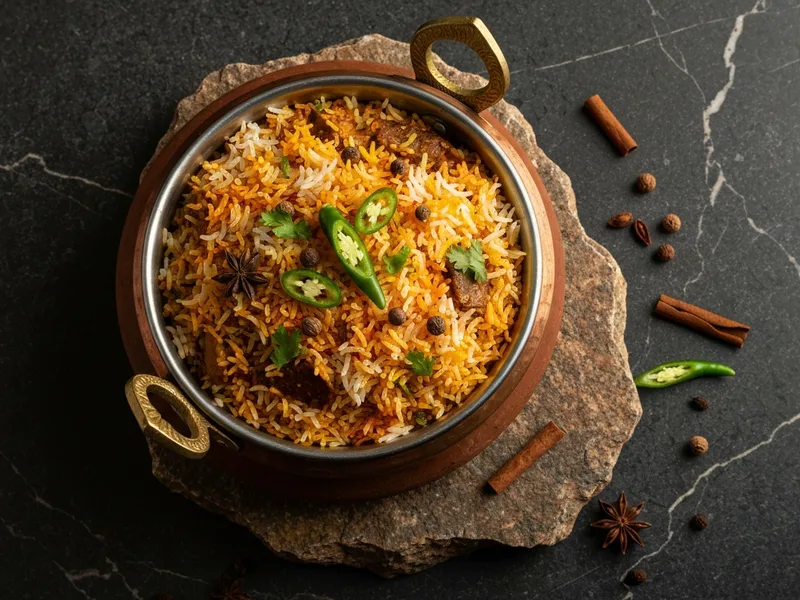
Afghani Biryani (Ruz Bukhari) is a traditional KP Pakistani dish. A completely different universe from Pakistani biryani — pale, mild, dairy-forward, with no tomatoes, no chilli masala, and a breathtaking garnish of caramelized carrot, plump raisins, and toasted almonds. Central Asian comfort food at its most beautiful.
If you show up to a Karachi dawat (dinner party) expecting Sindhi biryani and someone serves Ruz Bukhari, there will be a moment of confused silence followed by the best food conversation of the evening. These two dishes share the word 'biryani' and that is approximately where the similarity ends.
This recipe traveled from Central Asia through Afghanistan and arrived in Pakistan's KP (Khyber Pakhtunkhwa) province carried by the millions of Afghan refugees who crossed the border from 1979 onwards. The Afghans brought with them Kabuli Pulao, their national dish — and the Pakistani version, adapted in the kitchens of Peshawar and the refugee camps of the NWFP, became what we now call Afghani Biryani. The dish's entire flavour logic is opposite to South Asian biryani: no tomatoes, no red chilli, no masala layers. Instead: yoghurt, cream, whole spices (char masala — cumin, coriander, black pepper, cardamom), and a defining garnish of julienned carrots caramelized in oil with raisins and nuts. The result is a gentle, fragrant, sweet-savoury rice dish that tastes like Central Asia smells — warm spices, dried fruit, and something ancient traveling a long road.
Ingredients
Instructions
- CARAMELIZE THE GARNISH CARROTS: This step can be done first and kept warm — it will hold for hours. Heat 2 tablespoons of ghee in a frying pan over medium heat. Add the julienned carrots. Stir occasionally for 8-10 minutes until they soften and begin to turn slightly golden at the edges. Sprinkle the 2 teaspoons of sugar over the carrots and stir. The sugar will caramelize and coat the carrot strips in a light sweet glaze. Cook 2 more minutes. Add the raisins in the last 2 minutes — they will puff up and turn glossy. Remove from heat. Add the toasted slivered almonds. Set this garnish aside in the pan — it is ready.
- FRY ONIONS AND TOAST SPICES: Heat 3 tablespoons of ghee in a large heavy-bottomed degh (pot) over medium heat. Add the sliced onions. Fry, stirring, for 12-15 minutes until golden (not dark brown like birista — just golden and soft). Add the char masala whole spices: cumin, coriander seeds, black peppercorns, and green cardamom. Stir for 1 minute — the spices will sizzle and toast in the onion ghee. The kitchen should smell like Peshawar. WHY toast in oil? Toasting whole spices in fat releases their fat-soluble aromatic compounds far more effectively than adding them to water.
- COOK THE MEAT IN CREAMY STOCK: Add the meat pieces to the pot with the spiced onions. Stir to coat in the ghee and spices. Cook on medium-high heat for 5 minutes, turning the meat. Whisk the yoghurt smooth and add it to the pot. Add the cream. Season with salt. Add enough water to cover the meat — about 1.5 cups. Bring to a gentle simmer. Cover and cook on low-medium heat for 25-30 minutes for chicken, 50-60 minutes for mutton, until the meat is completely tender. HINT: This is not a masala — do not let the liquid reduce to a thick paste. You want a creamy, mild, fragrant broth. Keep adding a splash of water if needed.
- REMOVE MEAT, RESERVE STOCK: When the meat is fully tender, remove the pieces carefully from the pot. Strain the remaining creamy broth — you should have about 1 cup of fragrant, milky stock. This stock will be used to cook the rice (instead of plain water) to infuse it with the char masala flavour from the inside. This is the technique that makes Afghani biryani different: the rice itself absorbs the meat stock. Taste the stock and adjust salt. Set the meat pieces aside.
- PARBOIL THE RICE: In a large pot, bring 3 litres of salted water to a rolling boil. Drain the soaked rice and cook for 5-6 minutes until 65% done — the grain should bend but snap if you press it firmly. Drain through a colander. Do not rinse. The parboiled rice will finish cooking in the dum phase.
- LAYER THE BIRYANI: In the same degh or a fresh heavy pot, layer as follows. Bottom layer: spread the cooked meat pieces evenly. Middle layer: spread the parboiled rice. Pour the reserved creamy stock over the rice evenly — it will sink through and begin moistening the lower layers. Drizzle the saffron (soaked in warm milk) or rose water over the rice in a spiral. Cover the top with a clean kitchen cloth, then place the lid on top. The cloth absorbs excess steam and prevents condensation from dripping onto the rice.
- DUM COOK: Place the pot on high heat for 3 minutes until you hear vigorous steaming. Reduce to minimum heat. Place a tawa (flat griddle) or folded cloth between the pot and flame as a heat diffuser. Cook for 20-22 minutes on minimum heat. Remove from heat and rest 10 minutes without opening. The rest period is when the bottom meat layer steams through any remaining moisture — it is cooking even after the heat is off.
- PLATE THE AFGHANI WAY: Gently turn the biryani onto a large flat serving platter — the meat should come out on top as you invert (this is intentional). The white, slightly golden rice forms a mound. Now scatter the caramelized carrot-raisin-almond garnish generously over the entire surface. The contrast is the point: pale rice, orange-gold carrots, dark raisins, cream-coloured almonds. This is one of the most visually beautiful rice dishes in the Pakistani repertoire. No raita, no chutney — serve as-is. The garnish provides all the contrast and complexity.
Chef's Secrets
- The garnish — caramelized carrots, raisins, almonds — is not decoration. It is half the dish. Be generous. A sparse garnish looks mean and tastes unbalanced. Cover the rice surface completely.
- No tomatoes, no red chilli, no masala powder in the meat cooking. These are common mistakes when people try to 'improve' Afghani biryani. The entire character of the dish depends on the absence of these things.
- The reserved meat stock is liquid gold. Do not discard it and do not substitute plain water for the dum layer. The creamy, spiced stock soaks into the rice during dum and is what gives Afghani biryani its distinctive flavour from within.
- For an even more authentic Kabuli Pulao style, increase the sugar in the carrot garnish to 1 tablespoon and add a pinch of saffron to the carrot oil while caramelizing. The deeper caramelization and saffron-tinted carrots are the signature of Kabul restaurant-style presentation.
- This dish is remarkably freezer-friendly. The cooked meat in its creamy stock freezes beautifully for up to a month. On the day, thaw the meat stock, cook fresh rice, layer, and dum — and the dish tastes freshly made.
Common Questions
How long does Afghani Biryani (Ruz Bukhari) take to make?
Total time is 2h 5m — 45m prep and 1h 20m cooking.
How many servings does this recipe make?
This recipe makes 6 servings, and is rated medium difficulty.
Which region of Pakistan is Afghani Biryani (Ruz Bukhari) from?
Afghani Biryani (Ruz Bukhari) is from KP, Pakistan — one of the country's most distinctive culinary traditions.
What do you serve with Afghani Biryani (Ruz Bukhari)?
Serve alone — this biryani needs no accompaniment. If you must add something: a small bowl of plain yoghurt with a pinch of dried mint, and fresh naan (bread). Afghans traditionally serve Kabuli Pulao as the centrepiece of a meal with nothing more than yoghurt and fresh herbs on the side. Honour that tradition.
Goes Well With
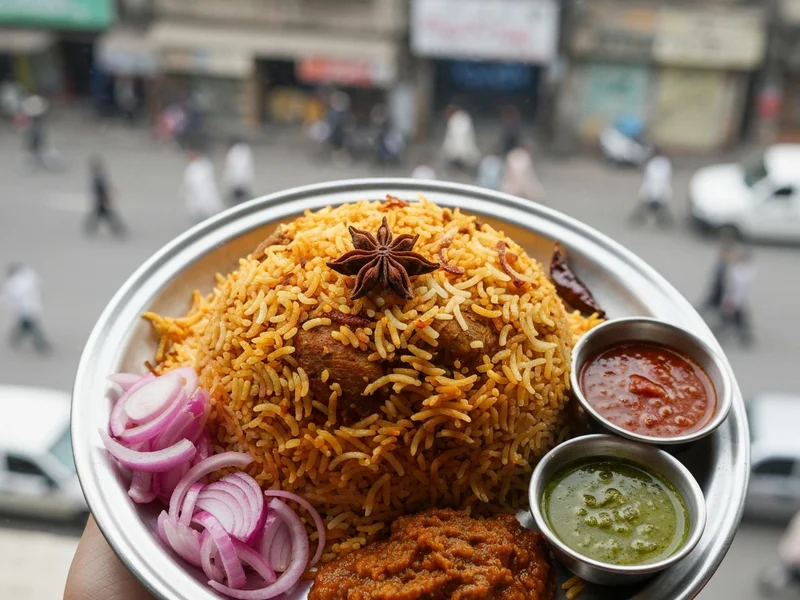
Authentic Karachi Biryani
The iconic Karachi-style biryani — fiery, tangy, loaded with potatoes and prunes. Born in the streets of Karachi, perfected by generations of Muhajir cooks.
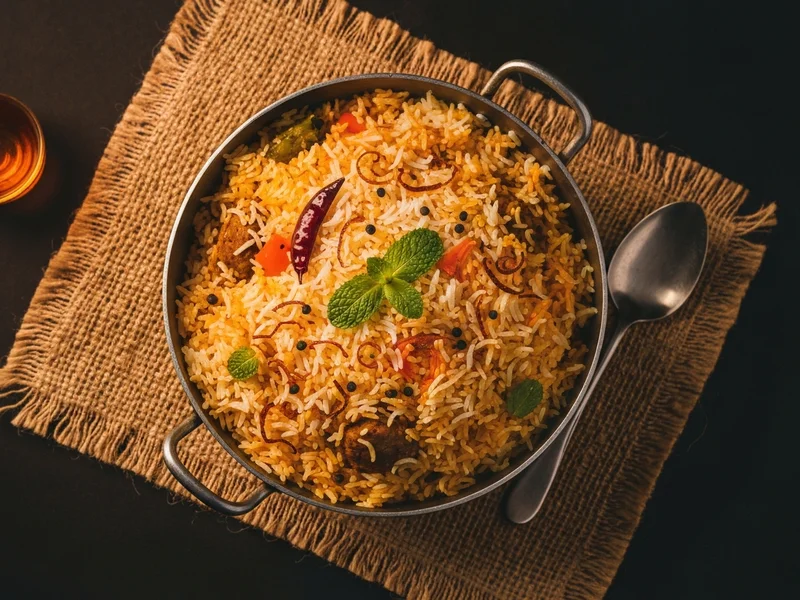
Hyderabadi Biryani
The kacchi biryani of Hyderabad, Sindh — raw marinated meat layered with parboiled rice, sealed, and slow-cooked until every grain absorbs the masala. No pre-cooking the meat.
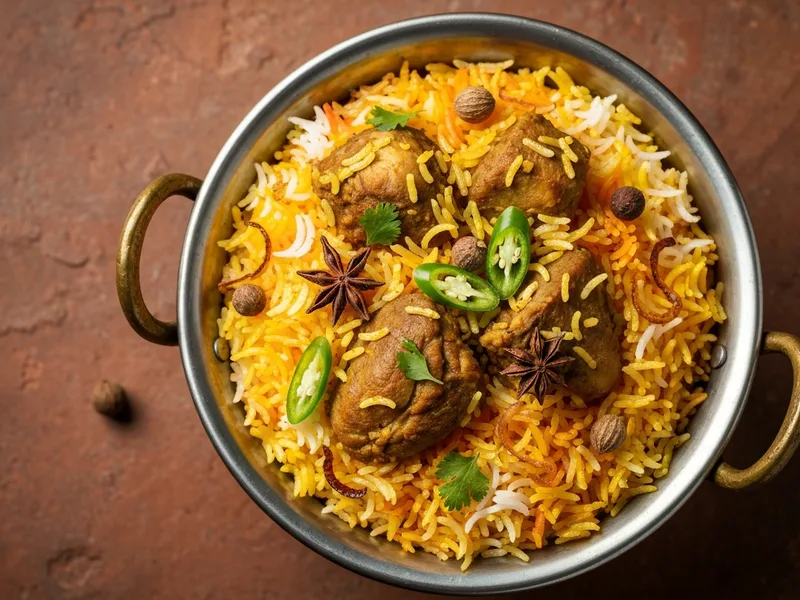
Bombay Biryani (Pakistani Style)
The Muhajir community's answer to Karachi biryani — more fragrant, more Nawabi, with fried potatoes, aloo bukhara (dried plums), kewra water, and a sweeter, more layered aromatic profile. Born in Bombay, perfected in Karachi.
What Cooks Are Saying
My husband said it's the best he's ever had. Coming from him that means everything!
Came out beautifully. Would have given 5 stars but I found the sauce a bit thin — easy fix though.
Leave a Review
Tried this recipe? Share your experience — your review helps other cooks.